
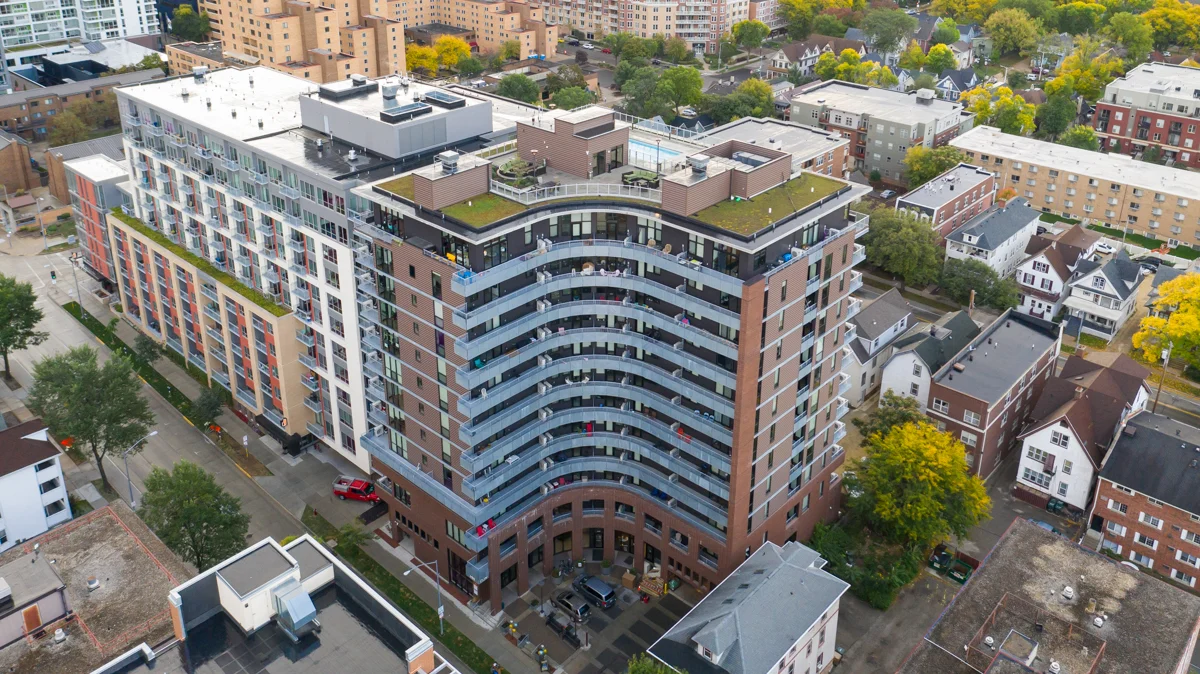
120-space Rack & Rail system beneath a 12-story Madison tower
The Lux is a 12-story mixed-use building at 433 W Johnson St in Madison, Wisconsin. ParkPlus designed and installed a 120-space Rack & Rail Automated Parking System across two subterranean levels, completed in 2020. The system uses Parktronic technology — ParkPlus’s latest generation of fixed-rail robotic shuttle hardware at the time of installation.
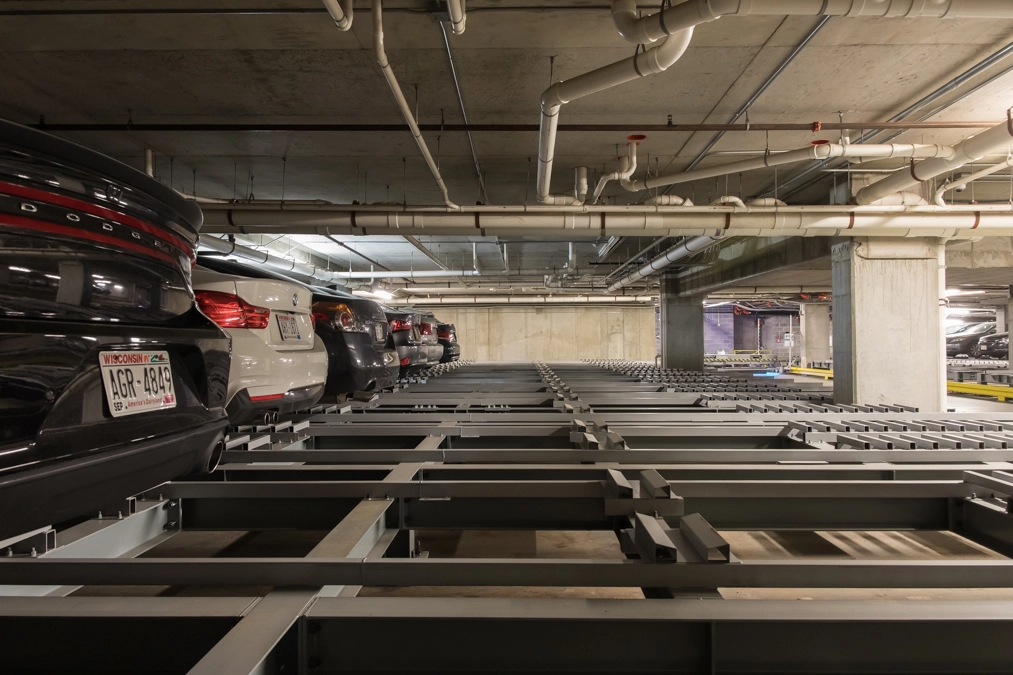
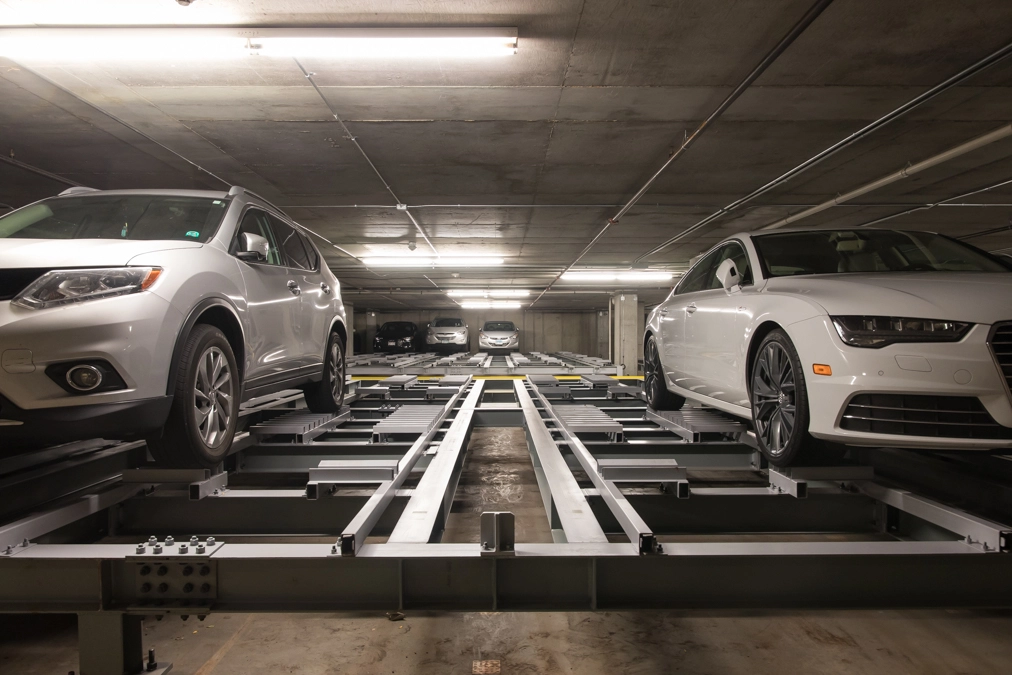
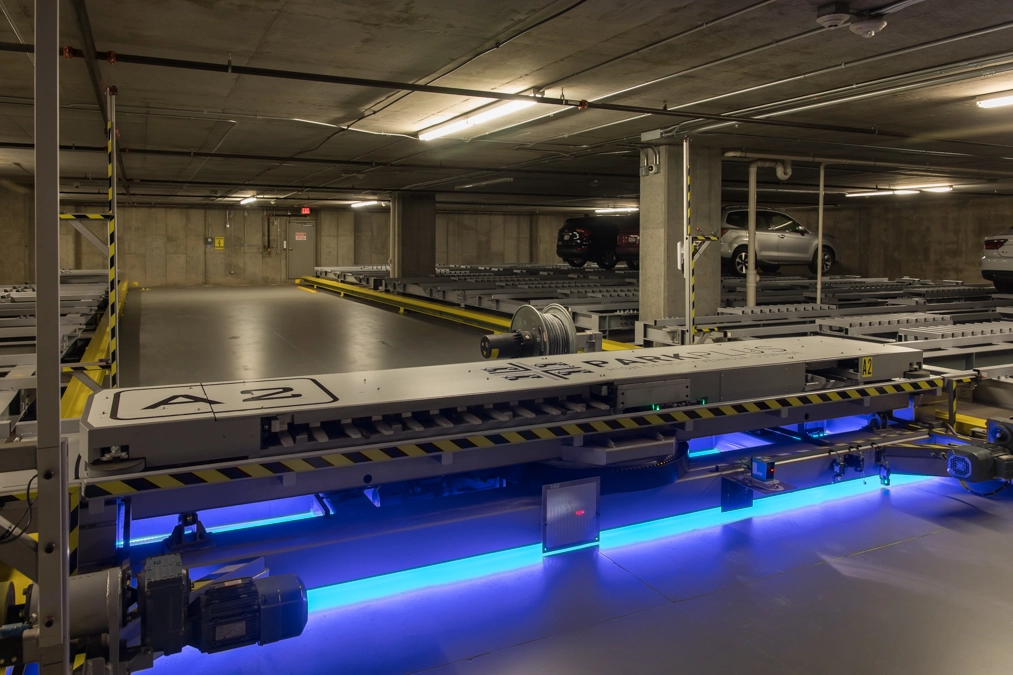
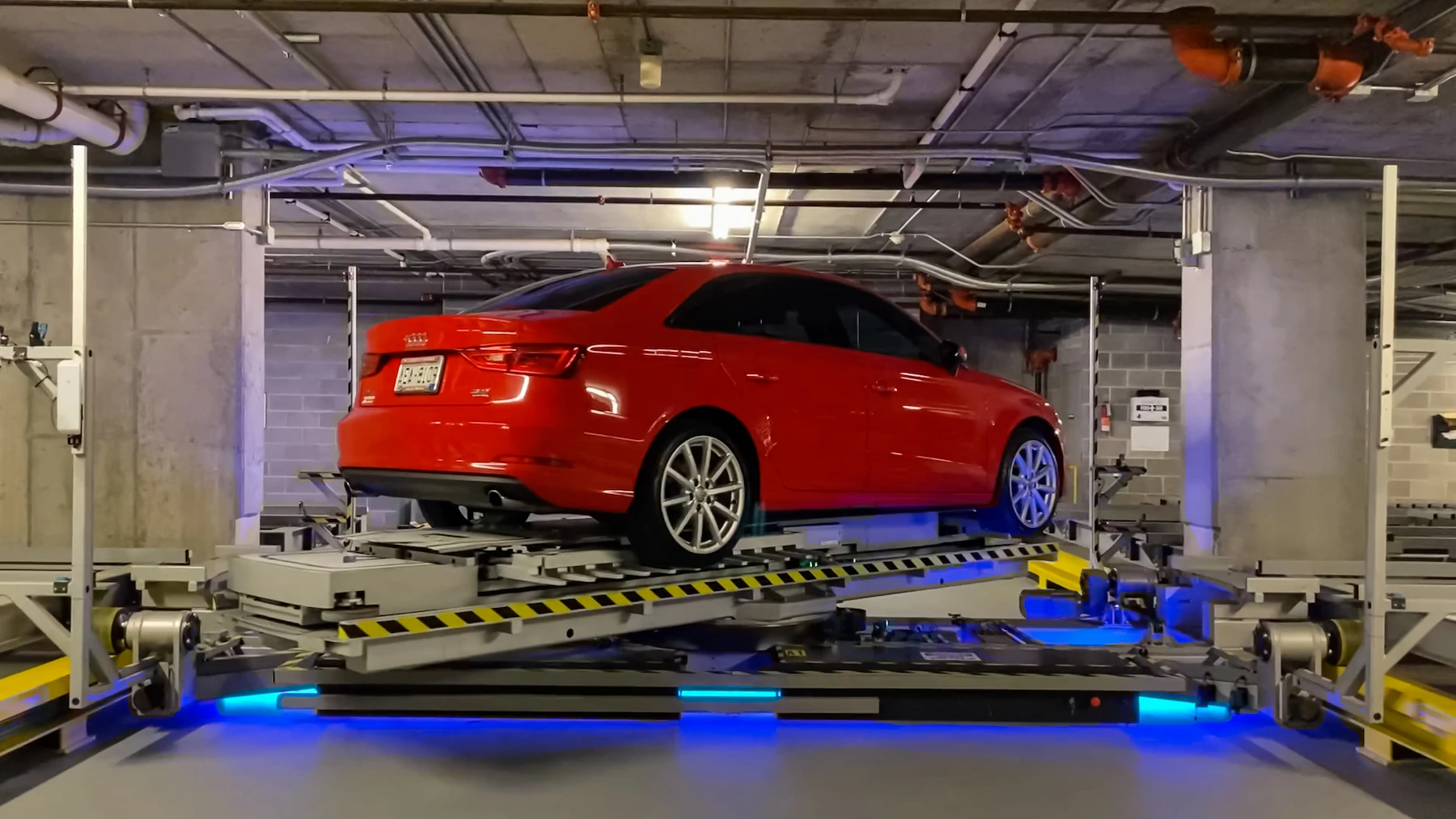
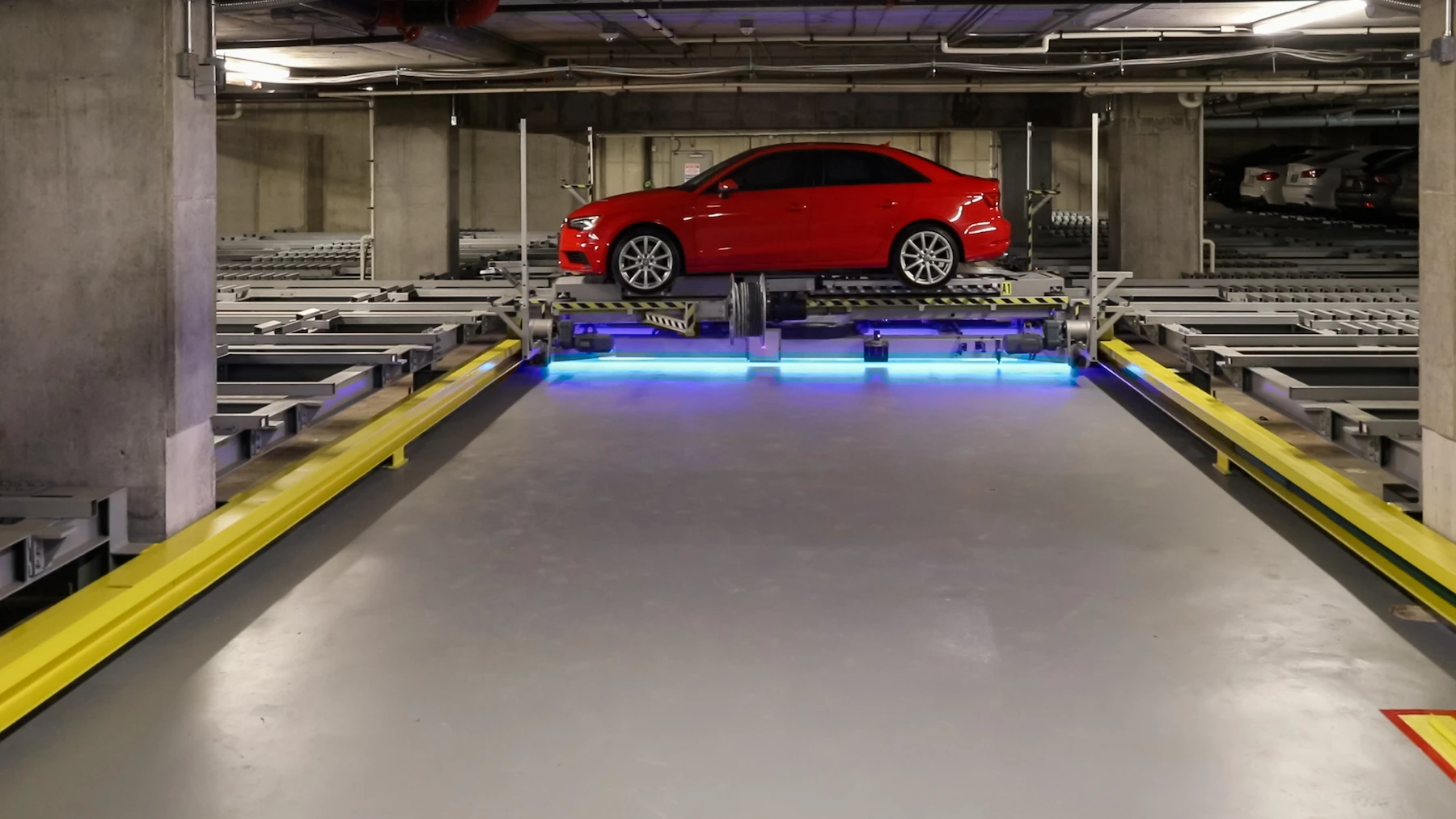
Fixed-rail robotic shuttles use a comb-exchange mechanism to transfer vehicles, guided by traffic management software, limit switches, and lasers across a regular-grid configuration. The Parktronic shuttle is a multifunctional unit: it rotates and moves laterally simultaneously at 6 feet per second, using conductive power and wireless communication. Storage and retrieval are fully automated with no human involvement below the entry level.
The system’s freestanding steel structure is a significant practical advantage: it is self-supporting within the parking volume and can be integrated into a new build or retrofitted into an existing building without structural modification to the host structure. The system is EV-compatible and remotely monitored 24/7 by the ParkPlus Command Center, with live video and on-call technicians available continuously.
120 spaces subterranean. Zero ramps. Freestanding structure.
Delivering 120 parking spaces within a dense urban site in Madison required a system that could maximize subterranean volume without consuming the structural and circulation area that conventional garage layouts demand. The Rack & Rail system’s regular-grid configuration eliminates ramps and drive aisles entirely — the two subterranean levels hold 120 vehicles in a footprint a conventional structure could not match.
The freestanding steel structure is the Rack & Rail system’s most practically significant feature for developers. It is self-supporting within the parking volume, which means it can be installed in new construction or retrofitted into an existing building without requiring the host structure to bear the system’s loads. For projects working with existing buildings or constrained new-build programs, this opens opportunities that AGV systems — which typically require closer structural integration — do not.
The 24/7 ParkPlus Command Center eliminates on-site parking staff entirely. Remote monitoring, live video, and on-call technical support mean the system operates without the management overhead that conventional or attended parking requires.
Footprint reduction figures based on comparison with conventional parking structures of equivalent capacity. Retrofit applicability is site-dependent and subject to ParkPlus engineering assessment.
Project Photos
See It in Action
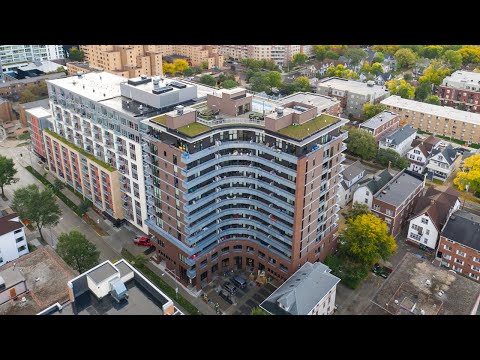
120 spaces below grade on a constrained urban site
The Lux required 120 parking spaces on a constrained site in central Madison. A conventional subterranean garage for that number of spaces would have consumed significant excavation volume and required ramp structures, drive aisles, and turning radii that reduced effective storage density. Site geometry and the building’s footprint left limited room for conventional garage infrastructure.
The project also needed a system that could operate without on-site staff, integrate with a resident smartphone experience, accommodate EV adoption, and avoid placing structural loads on the host building — a constraint that ruled out systems requiring building-integrated structural support.
Parktronic Rack & Rail with freestanding steel structure
ParkPlus installed a 120-space Rack & Rail system using Parktronic robotic shuttle technology across two subterranean levels. Fixed-rail shuttles operate at 6 feet per second via comb-exchange mechanism, guided by traffic management software, limit switches, and lasers in a regular-grid configuration that maximizes every square foot of vault space.
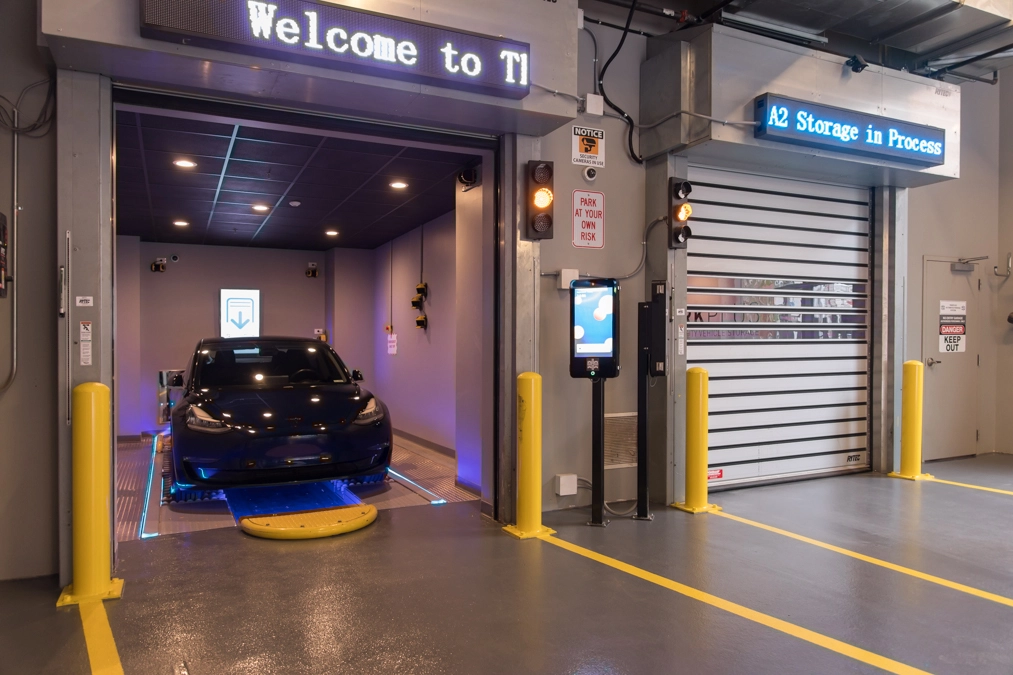
The freestanding steel structure meant the system was self-supporting within the parking volume, with no structural dependency on the host building. The ParkPlus Command Center handles all remote monitoring, 24/7. Residents interact only with the entry lobby and loading bay kiosks, or the smartphone app, for all storage and retrieval.
System Specifications
Common questions about Rack & Rail automated parking
How does a Rack & Rail Automated Parking System work?
The driver pulls into a ground-level loading bay, parks the vehicle on the entry platform, and exits. The system is activated via a kiosk outside the loading bay or the smartphone app. Fixed-rail robotic shuttles retrieve the vehicle on its tray and transport it to a designated space within the automated grid, guided by traffic management software, limit switches, and lasers.
Retrieval works in reverse: the resident requests their vehicle via kiosk or app, the shuttle locates the tray, transports it to the loading bay, and the resident drives out. No human involvement is required below the entry level at any point.
What is the difference between Rack & Rail and AGV automated parking?
Both systems fully automate vehicle storage and retrieval. The core difference is in how vehicles move through the system. AGV systems use free-roaming, self-charging robots that navigate without fixed rails. Rack & Rail systems use robotic shuttles that operate on a fixed-rail infrastructure, moving along defined paths at high speed and precision.
Rack & Rail’s freestanding steel structure is self-supporting, making it well-suited to retrofit applications in existing buildings — something AGV systems, which typically require closer structural integration, cannot always match. Both systems eliminate ramps, drive aisles, and on-site staff. Both are EV-compatible. Both are appropriate for high-density residential and mixed-use development. The right choice depends on site conditions, building structure, and program requirements.
Can Rack & Rail be retrofitted into an existing building?
Yes. The Rack & Rail system uses a freestanding steel structure that is self-supporting within the parking volume. It does not require the host building to bear the system’s structural loads, which means it can be installed in an existing building’s subterranean or above-grade levels without structural re-engineering of the building. Retrofit feasibility is always subject to a ParkPlus engineering assessment, but the freestanding structure design makes Rack & Rail one of the most retrofit-compatible automated parking systems available.
How does the 24/7 remote monitoring work?
The ParkPlus Command Center monitors all installed systems remotely and continuously. Live video covers the loading bays and system interior. On-call technicians are available 24/7 to respond to operational alerts. In most cases, issues can be diagnosed and resolved remotely without a site visit. This eliminates the need for on-site parking staff while maintaining the operational reliability residents and building managers expect.
Is Rack & Rail appropriate for luxury residential development?
Yes. Rack & Rail Automated Parking is appropriate for any multi-unit residential or mixed-use development where high-density automated parking is required: luxury condominiums, market-rate apartments, mixed-use towers, and student housing. The resident experience is the same regardless of building type — a loading bay entry, kiosk or smartphone app, and a vehicle delivered ready to drive. The Lux demonstrates the technology at scale; the same system is available for projects across the residential market. ParkPlus has also received city approval for a Rack & Rail installation at a Mercedes-Benz dealership in Palo Alto, CA, demonstrating its range beyond residential applications.
How much space does a Rack & Rail system save compared to a conventional garage?
By eliminating ramps, drive aisles, and pedestrian clearances, a Rack & Rail system significantly reduces the floor area required for a given number of parking spaces. The footprint reduction typically falls in the range of 40 to 60 percent versus a conventional garage, depending on site geometry, grid configuration, and vehicle profile. ParkPlus engineers assess each project individually to determine the optimal configuration for the available volume and program requirements.
Ready to discuss your project?
Every ParkPlus system is custom-engineered to the site. Talk to our team about your project requirements, site constraints, and system options.