
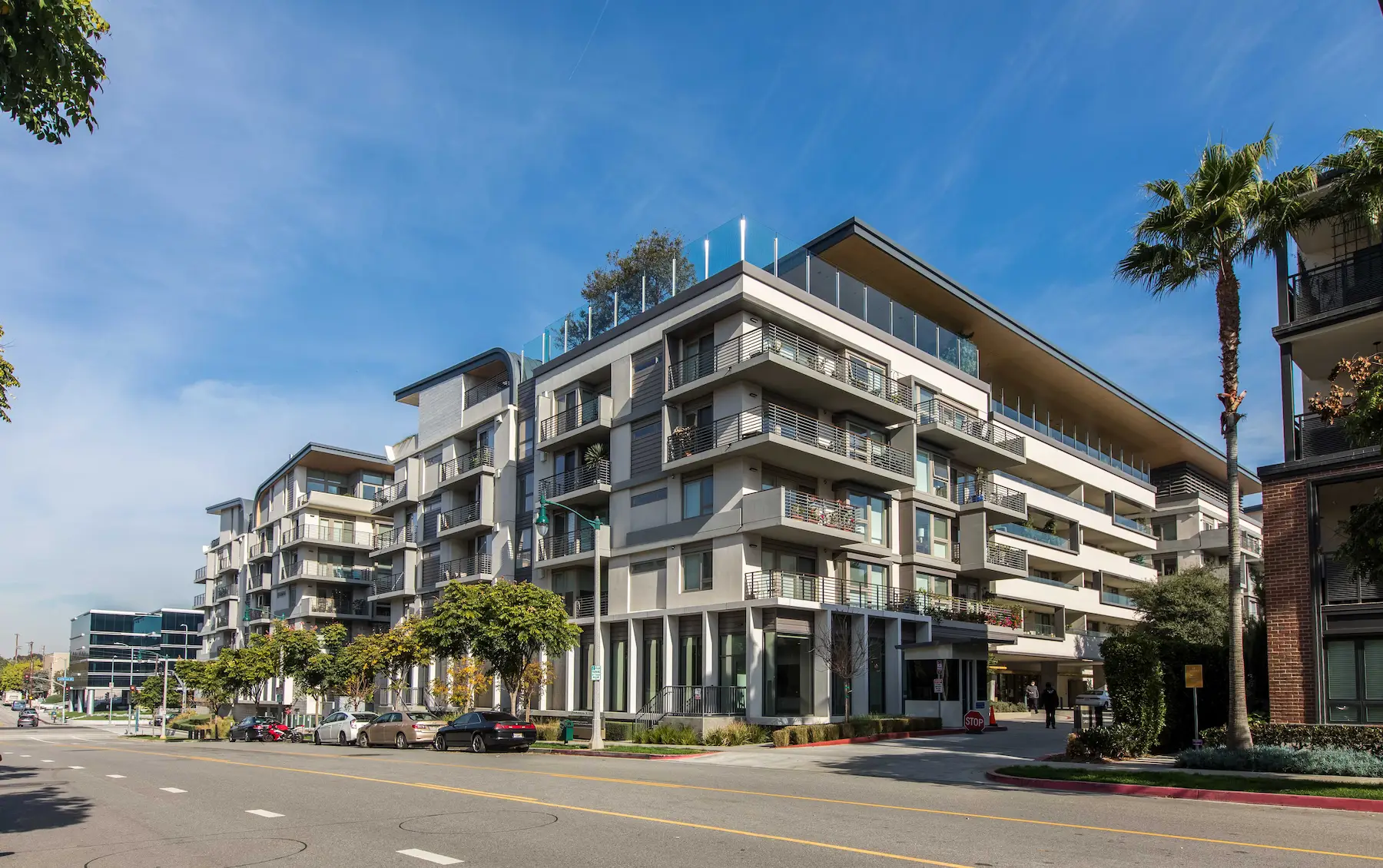
Double stacker parking lifts that saved a basement level
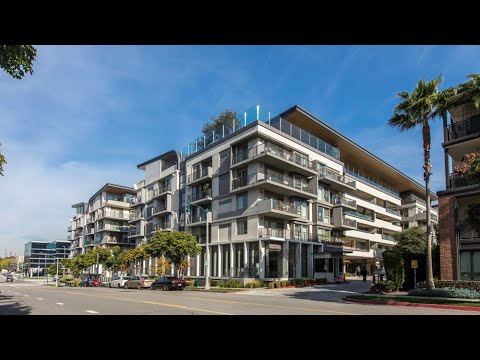
Fountainview Senior Living is a luxury residential community in Playa Vista, California, serving residents who expect both quality and convenience. Providing adequate parking within the building’s basement garage presented a structural challenge that conventional parking design could not solve without significant additional cost and construction risk.
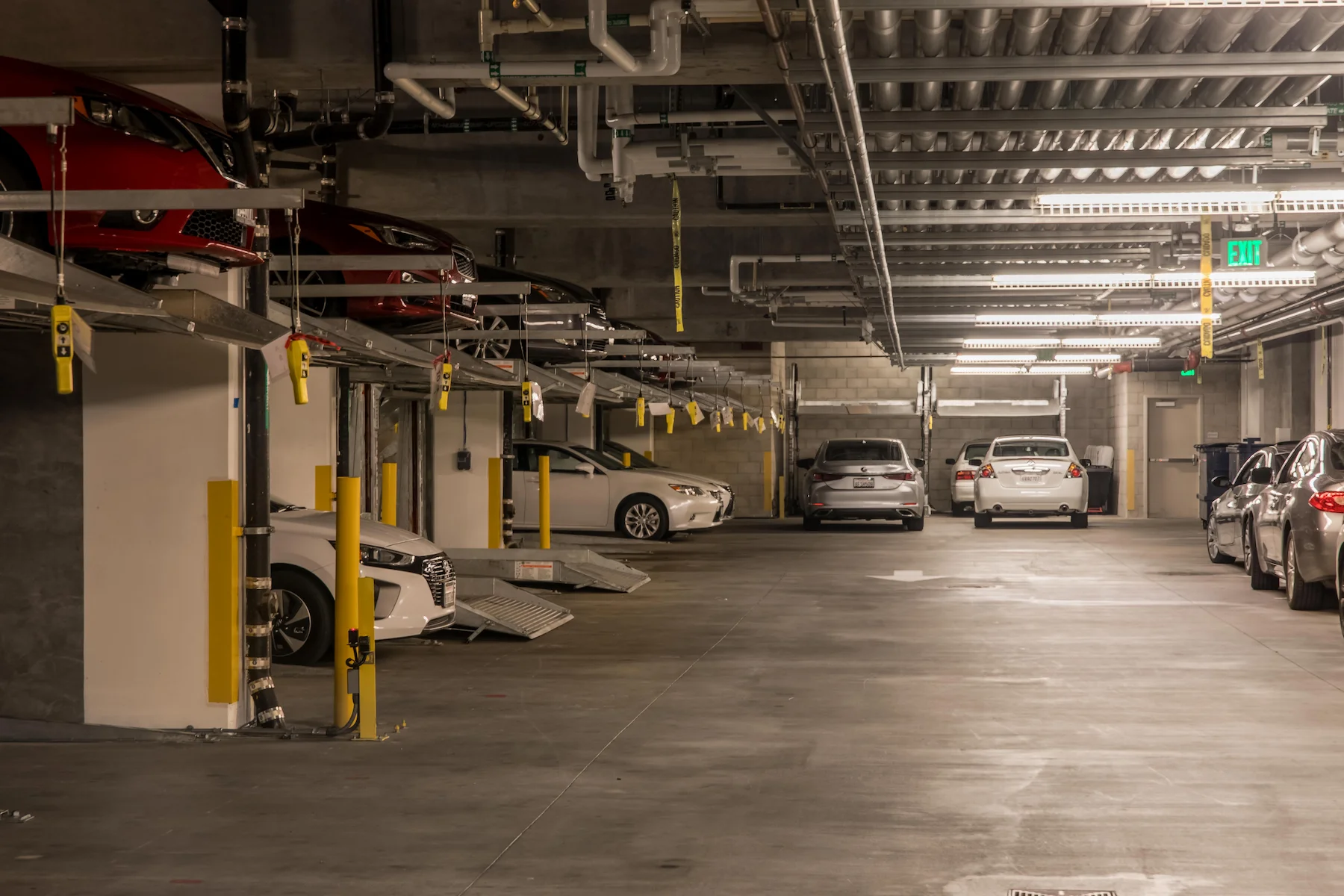
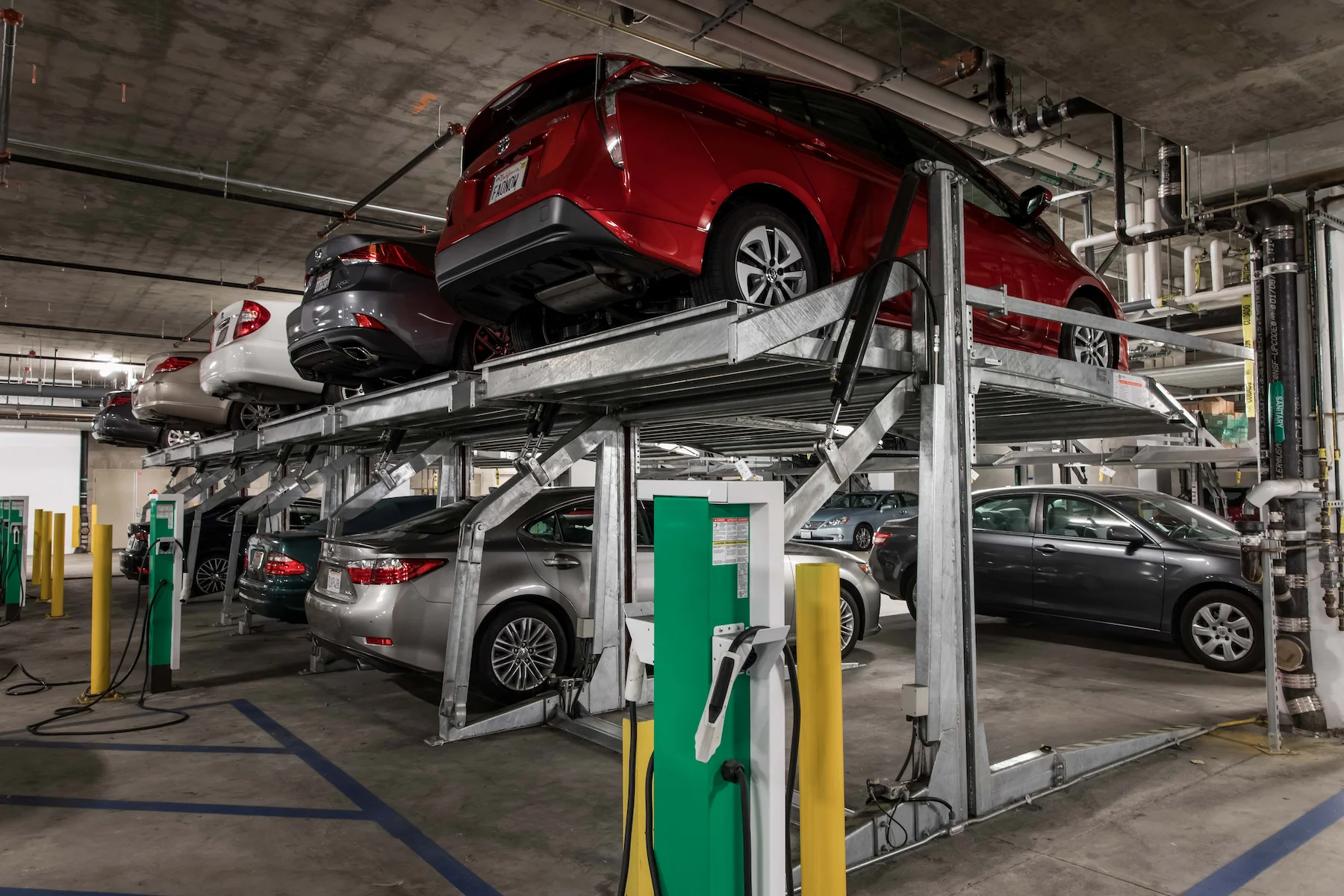
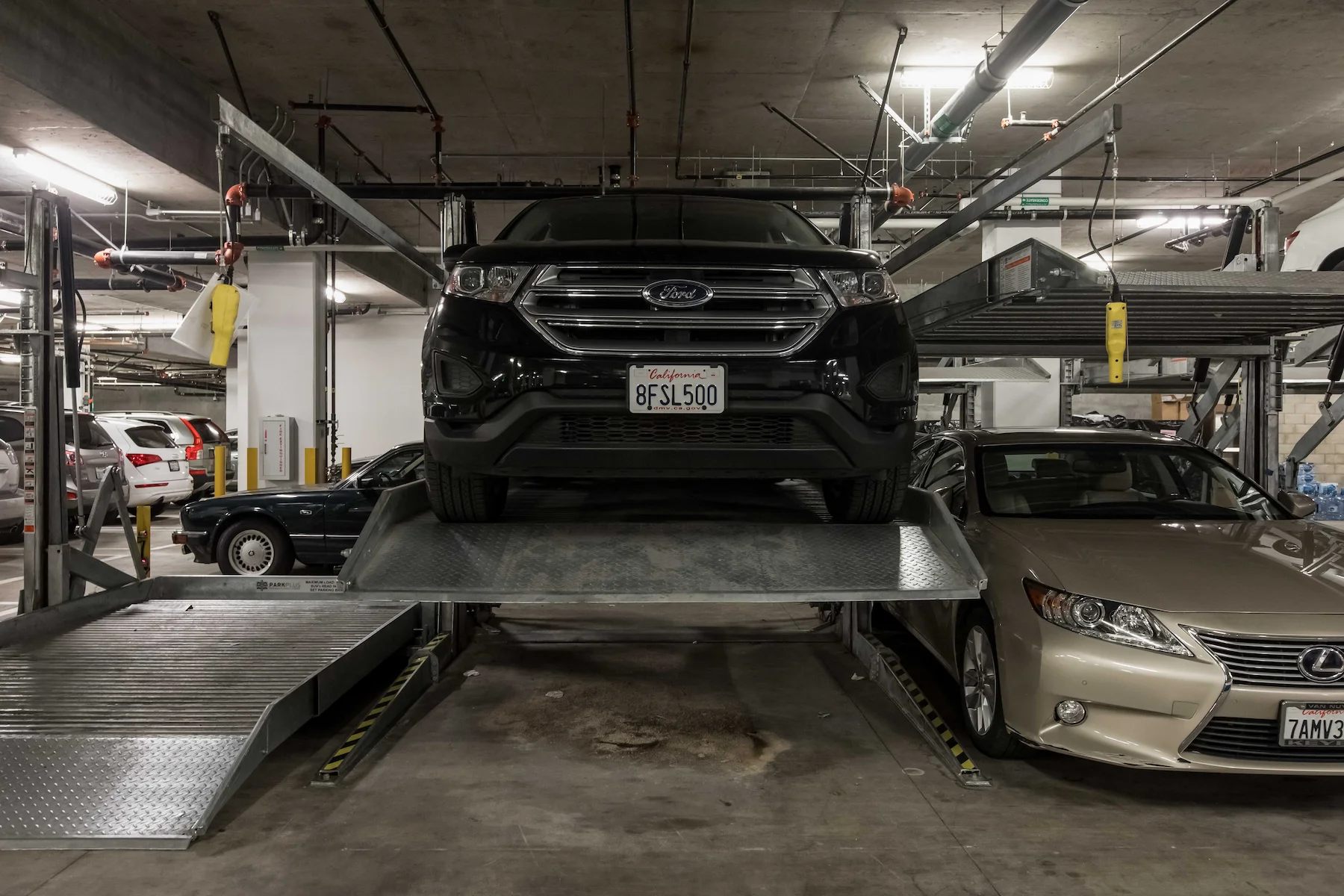
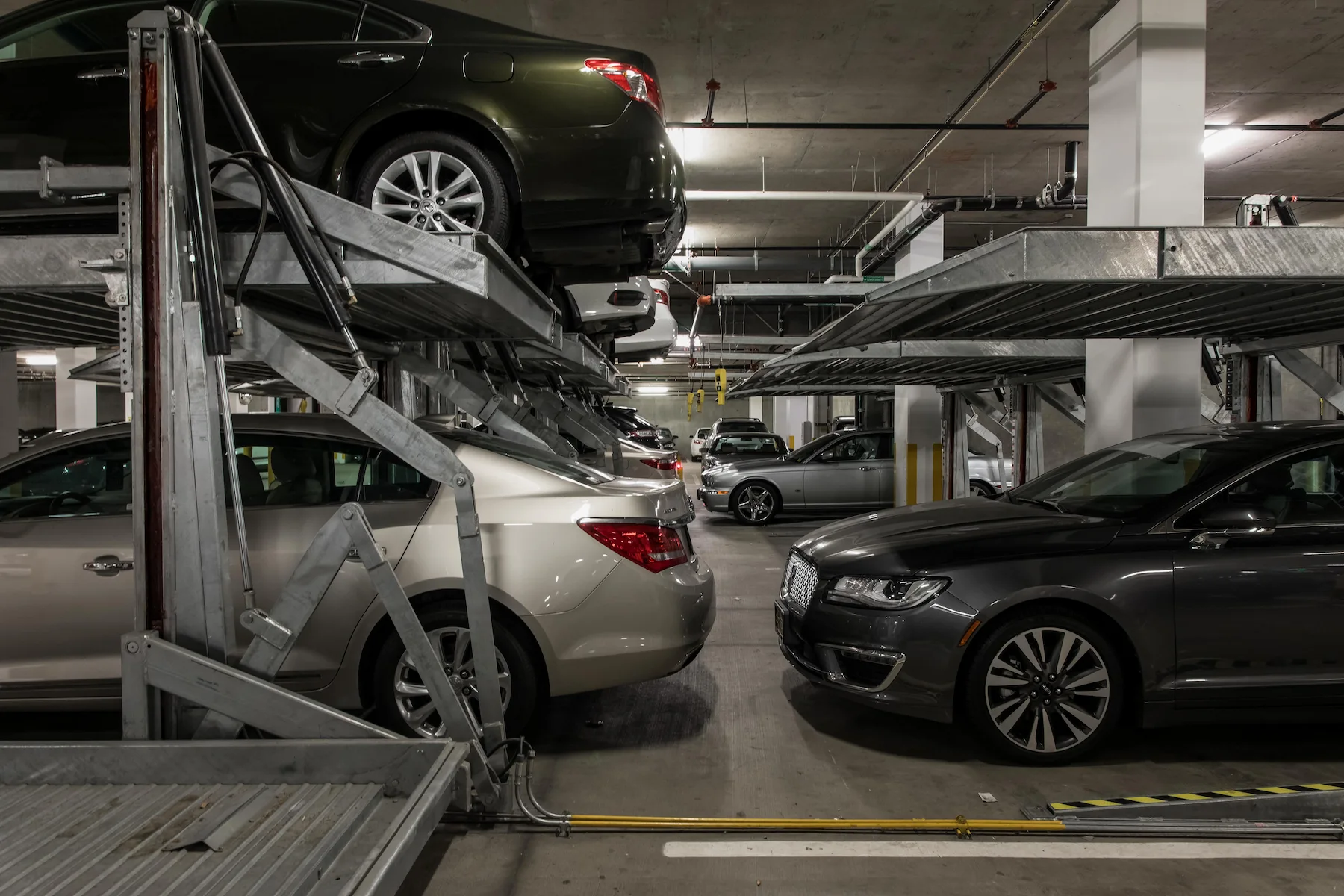
ParkPlus installed 75 DP003 Double Stacker parking lifts throughout the basement garage, delivering 150 parking spaces from 75 bays. Each double stacker creates two positions within the footprint of one, stacking vehicles vertically within the existing garage envelope. The installation eliminated the need to excavate an additional underground level — a decision that directly avoided the substantial cost and engineering complexity of building into Playa Vista’s high water table.
The alternative was another level underground
Meeting the parking requirement at Fountainview without mechanical lifts would have meant excavating a second basement level beneath an already-built structure in Playa Vista, a coastal area with a notoriously high water table. That level of excavation carries significant engineering cost, waterproofing complexity, extended construction timelines, and substantial risk.
Installing double stacker parking lifts in the existing basement garage achieved the same parking count without any of that exposure. The mechanical lift approach delivered 150 spaces within the space already available, kept the project on schedule, and eliminated a construction risk that would have run into the millions to mitigate.
Cost avoidance figures are project-specific estimates based on comparable below-grade excavation and waterproofing costs in this coastal California market at time of construction.
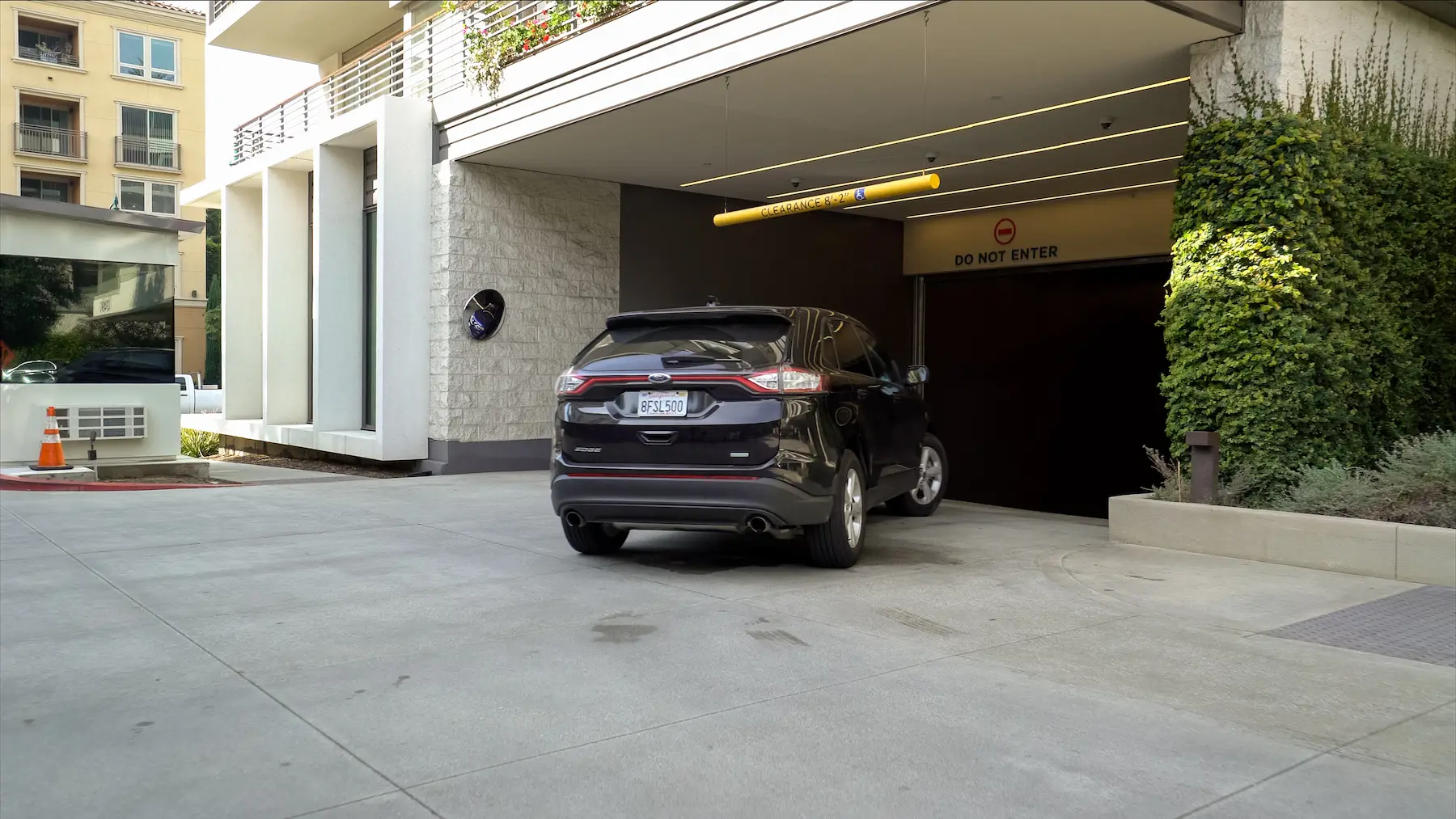
Project Photos
See It in Action
High water table, no room to dig deeper
Playa Vista sits on coastal fill land with a water table that rises significantly below grade. The parking requirement for a luxury senior living community at this scale demanded more spaces than the single basement level could provide using conventional parking layouts. Excavating a second level was technically possible but would have required deep waterproofing systems, dewatering operations during construction, and structural engineering well beyond standard below-grade design, adding millions to the project budget and months to the schedule.
Mechanical parking lifts within the existing basement
ParkPlus resolved the parking shortfall entirely within the footprint of the existing basement garage using DP003 Double Stacker parking lifts. Each unit stacks two vehicles vertically within a single bay, doubling the capacity of the basement without any additional excavation. The 75-unit installation delivered 150 parking spaces, meeting the full project requirement while keeping construction below grade limited to what had already been built. No water table mitigation was required, and no additional structural work was needed.
System Specifications
Parking lifts for below-grade and residential garages
How does a double stacker parking lift work in a basement garage?
A double stacker parking lift creates two parking positions within the footprint of one bay. The upper platform lowers to ground level to receive a vehicle, then raises to its stored position, leaving the lower bay fully accessible for a second vehicle. In a basement garage, this effectively doubles the usable capacity of the existing space without requiring any structural modification, additional excavation, or expansion of the garage footprint.
At Fountainview Senior Living, ParkPlus installed 75 DP003 double stacker units throughout the basement garage, converting 75 single bays into 150 parking positions entirely within the existing structure.
Can parking lifts be used to avoid underground excavation?
Yes, and it is one of the most impactful applications for mechanical parking lifts in new construction and renovation projects. When a building’s parking requirement exceeds what a single below-grade level can accommodate with conventional layouts, the typical alternative is to excavate deeper. Mechanical parking lifts deliver the required number of spaces within the existing structure, eliminating the need for that additional excavation and the cost that comes with it.
This is particularly valuable on sites with challenging subsurface conditions such as high water tables, bedrock, or existing underground utilities, where deeper excavation carries both cost and engineering risk well above standard below-grade construction.
What is the cost advantage of parking lifts over excavating an additional parking level?
The cost advantage depends on site conditions, but in markets with high water tables, dense urban cores, or challenging subsurface geology, the savings from avoiding additional excavation can run into the millions. Excavating and waterproofing an additional below-grade level requires structural engineering, shoring, dewatering, waterproofing membranes, and extended construction time, all of which carry significant cost and schedule risk.
Mechanical parking lifts installed in an existing or planned single basement level deliver the equivalent parking count at a fraction of that cost, with a faster installation timeline and no subsurface construction risk. At Fountainview Senior Living in Playa Vista, the DP003 installation avoided excavation into a high water table, saving the project millions in construction costs.
Are parking lifts appropriate for senior living and luxury residential buildings?
Double stacker and suspended platform parking lifts are widely used in luxury residential and senior living developments across the United States. They integrate cleanly into both above-grade and below-grade parking structures, and the operation is straightforward enough for resident self-use without dedicated attendant staffing.
ParkPlus has completed installations across luxury condominiums, senior living communities, and multifamily residential buildings. View the full project portfolio for examples across residential segments.
How does a high water table affect parking garage construction?
Building below the water table requires active dewatering during construction, continuous waterproofing systems rated for hydrostatic pressure, and structural design that accounts for uplift forces from groundwater. Each of these adds cost, complexity, and schedule risk. In coastal markets like Playa Vista, where the water table is relatively shallow, these challenges are compounded by the proximity to the ocean and the nature of the land itself.
Mechanical parking lifts offer a direct alternative: by maximizing the capacity of a single below-grade level, they remove the need to build into the water table at all. The structural and financial risk stays above the waterline.
Ready to discuss your project?
Every ParkPlus system is custom-engineered to the site. Talk to our team about your project requirements, site constraints, and system options.