
AGV automated parking at one of Florida’s most significant residential addresses
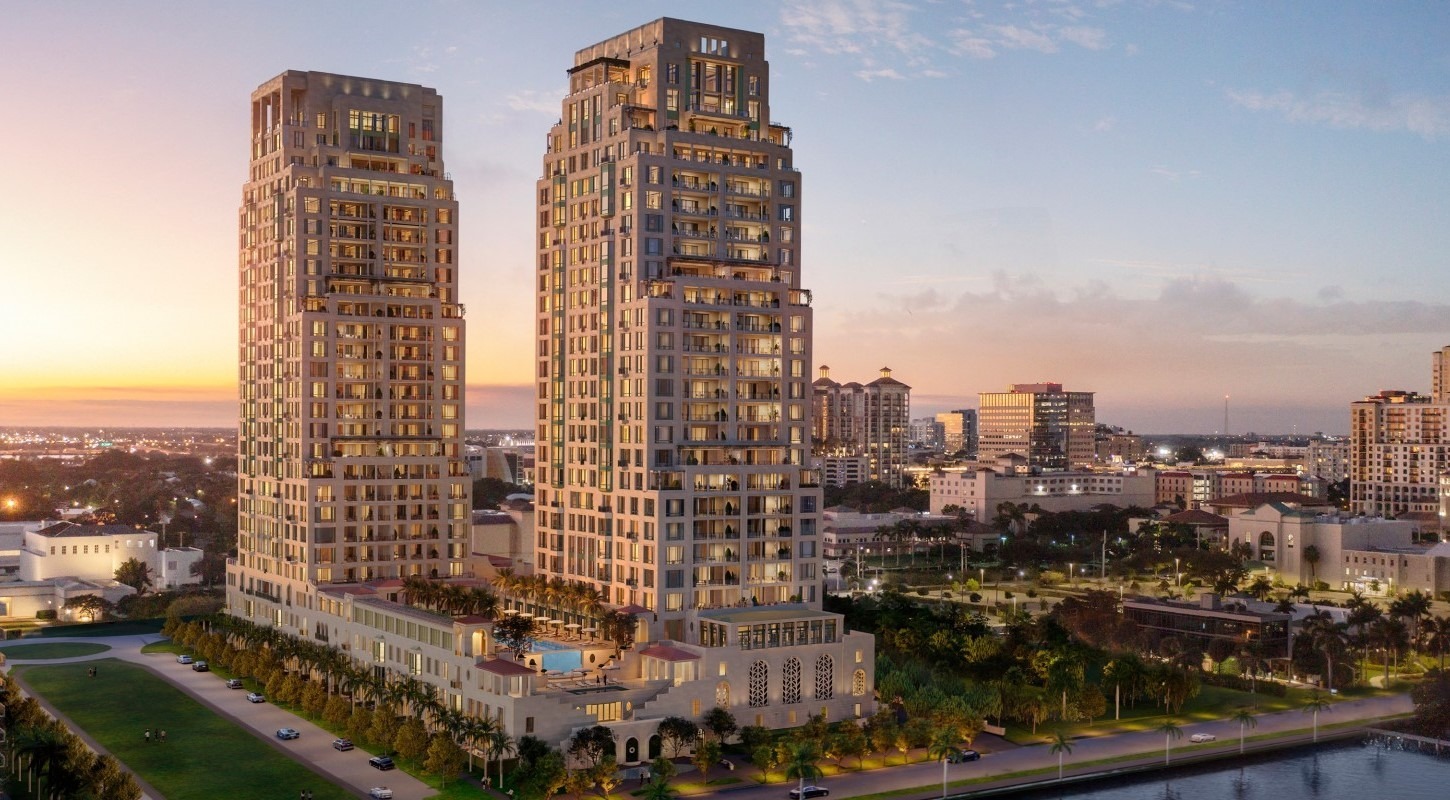
South Flagler House is a landmark waterfront condominium rising on South Flagler Drive in West Palm Beach, developed by Related Ross and designed by Robert A.M. Stern Architects. The 108-residence tower occupies one of the last premier waterfront sites on Florida’s Gold Coast, offering residences with direct views across the Intracoastal Waterway to Palm Beach Island and the Atlantic Ocean.
ParkPlus is delivering a 312-space AGV Automated Parking System integrated into the development — one of the largest AGV installations in a residential setting in Florida. The system uses robotic vehicle carriers operating on a precision grid, eliminating the need for occupants to drive within the garage entirely. Residents summon their vehicles from a lobby terminal and the system delivers to the retrieval bay automatically.
At a property where every detail has been designed to the standard of the world’s most refined residences, the parking system is not a utility afterthought. It is a resident experience — frictionless, invisible, and engineered to the same level of finish as everything above it.
Architectural rendering. Construction in progress at 1355 South Flagler Drive, West Palm Beach, FL.
Parking that matches the building’s standard
At a development where residences are priced at $6M and above, the parking experience is part of the product. Conventional garage parking — with ramps, lanes, and attendant coordination — is a misalignment with what buyers at this level expect. The AGV system removes every friction point: no driving, no searching, no attendant. A terminal request. A delivered vehicle.
The 312-space automated system also delivers meaningful density advantages over a conventional structured garage. The robotic grid operates without the minimum turning radii and lane widths that drive up the footprint of a conventional structure, recovering substantial floor area within the building envelope and allowing the above-grade program to be maximized for the residential and amenity uses the development demands.
Capacity and footprint figures based on contracted system configuration. Project currently under construction.
Delivering 312 parking spaces without compromising the residential experience
A 108-residence ultra-luxury tower demands a parking ratio well above a standard residential development. Delivering 312 spaces on a premium waterfront site — where every square foot of the building envelope carries extraordinary value — creates a structural tension between parking density and the architectural and amenity program above it. A conventional garage structure large enough to hold 312 cars would consume floor area, ceiling height, and ground-level presence that the development cannot afford to sacrifice.
Equally important is the resident experience. At a property designed to surpass the world’s most exclusive private clubs, the parking journey cannot be a friction point. Ramps, lanes, and garage navigation are incompatible with the standard of living South Flagler House is built to deliver.
A fully automated robotic parking system built into the tower
ParkPlus’s AGV Automated Parking System resolves both constraints simultaneously. The robotic carrier grid operates without the turning radii, lane widths, or ramp requirements of a conventional garage, compressing the parking program into a smaller structural footprint and freeing above-grade area for the residential and amenity uses that define the building’s value. The 312-space system fits within the envelope at a density a conventional structure cannot approach.
For residents, the experience is entirely frictionless. Vehicles are driven to the entry bay on the way in; the system handles everything from there. On retrieval, a terminal request at the lobby level brings the vehicle to the exit bay. No driving inside the structure. No attendants. No waiting for a lane to clear.
System Specifications
Common questions about AGV automated parking
How does an AGV Automated Parking System work?
An AGV (Automated Guided Vehicle) parking system uses robotic carriers that move independently on a precision grid within the parking structure. The driver pulls into a ground-level entry bay and exits the vehicle. The AGV carrier then lifts the vehicle and transports it to an available storage position within the grid, with no human involvement required once the car is handed off at entry.
Retrieval is initiated by the resident at a lobby or entry terminal. The system locates the vehicle, dispatches an AGV carrier to retrieve it, and delivers it to the designated exit bay — typically within a few minutes. At no point does the resident or a valet attendant drive within the parking structure.
What are the advantages of AGV parking in a luxury residential building?
For residents, the primary advantage is the elimination of any friction in the parking experience. There is no driving inside the garage, no searching for a space, and no interaction with attendants. The system delivers the vehicle to the exit point on demand, which aligns with the level of service expected in an ultra-luxury residential building.
For the developer, AGV systems deliver significantly higher parking density per unit of floor area than a conventional garage, because the robotic grid does not require the turning radii, lane widths, or ramp structures that consume space in a conventional design. This allows the same parking program to be achieved in a smaller structural envelope, recovering floor area for higher-value uses.
How long does it take to retrieve a vehicle from an AGV system?
Retrieval times in AGV systems depend on the vehicle’s storage position and the number of active requests at the time. In a well-designed system with appropriate throughput capacity, average retrieval times typically range from two to four minutes from the time the request is submitted at the terminal. Systems designed for luxury residential use are engineered for retrieval speed as a resident experience priority, not just a technical specification.
Can an AGV system accommodate EVs and oversized vehicles?
Yes, with appropriate specification. AGV platforms can be sized to accommodate the range of vehicles expected in a given building’s resident profile, including larger SUVs and performance vehicles common in ultra-luxury residential developments. EV charging integration within the storage grid is also available, allowing vehicles to charge while parked without requiring residents to manage the process manually. Specific capacity and EV charging configurations for South Flagler House are confirmed with the project team during the design and engineering phase.
What happens if the AGV system requires maintenance or experiences a fault?
AGV systems are designed with redundancy: multiple carriers operate within the same grid, so a single carrier fault does not take the entire system offline. The control software re-routes active tasks to available carriers automatically. For planned maintenance, ParkPlus schedules service during low-demand periods to minimize impact on residents. ParkPlus’s service infrastructure provides ongoing preventive maintenance and remote monitoring, with response protocols established as part of the service agreement for each installation.
Ready to discuss your project?
Every ParkPlus system is custom-engineered to the site. Talk to our team about your project requirements, site constraints, and system options.