
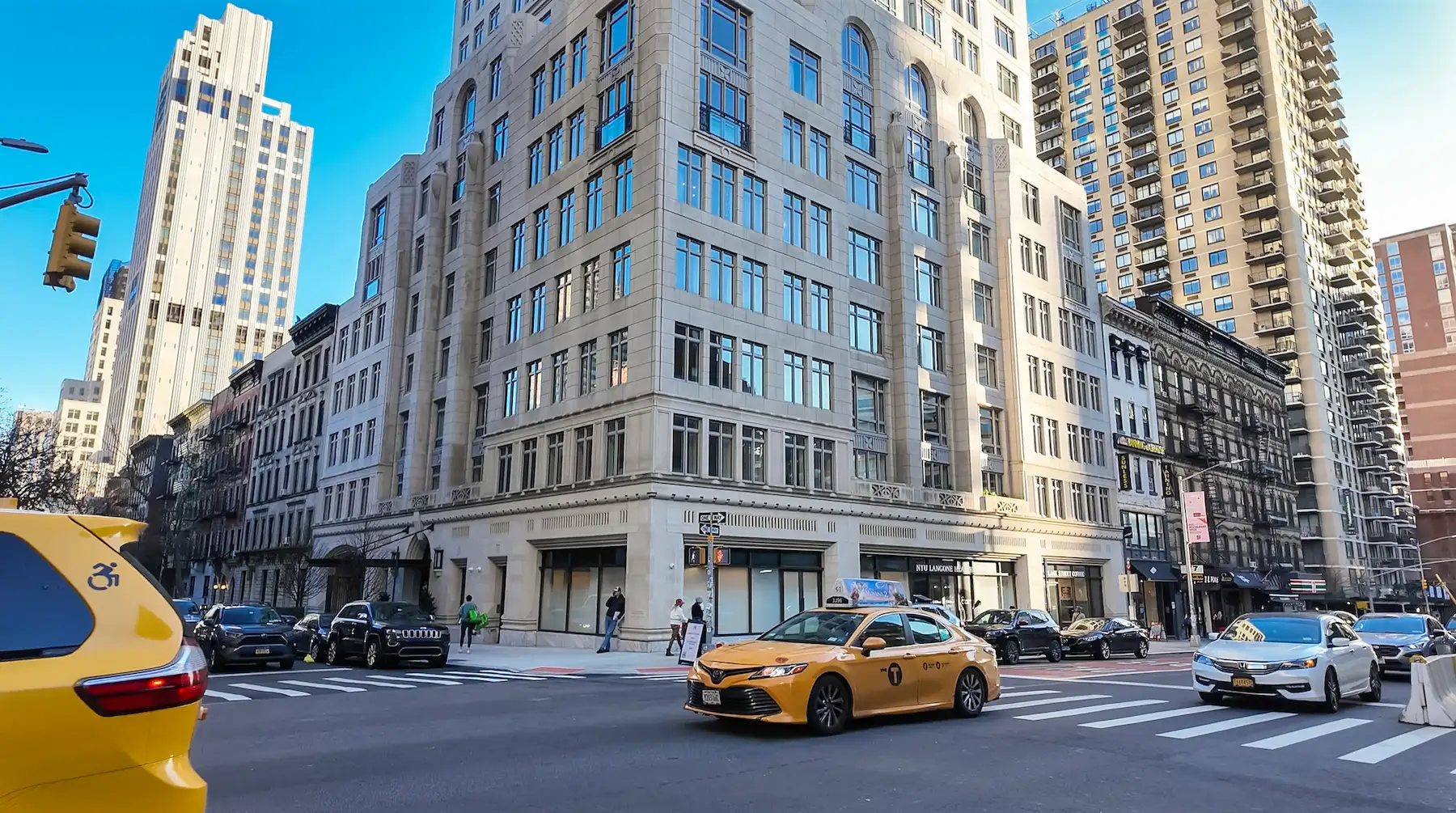
Robotic parking with EV charging beneath a landmark Upper East Side tower
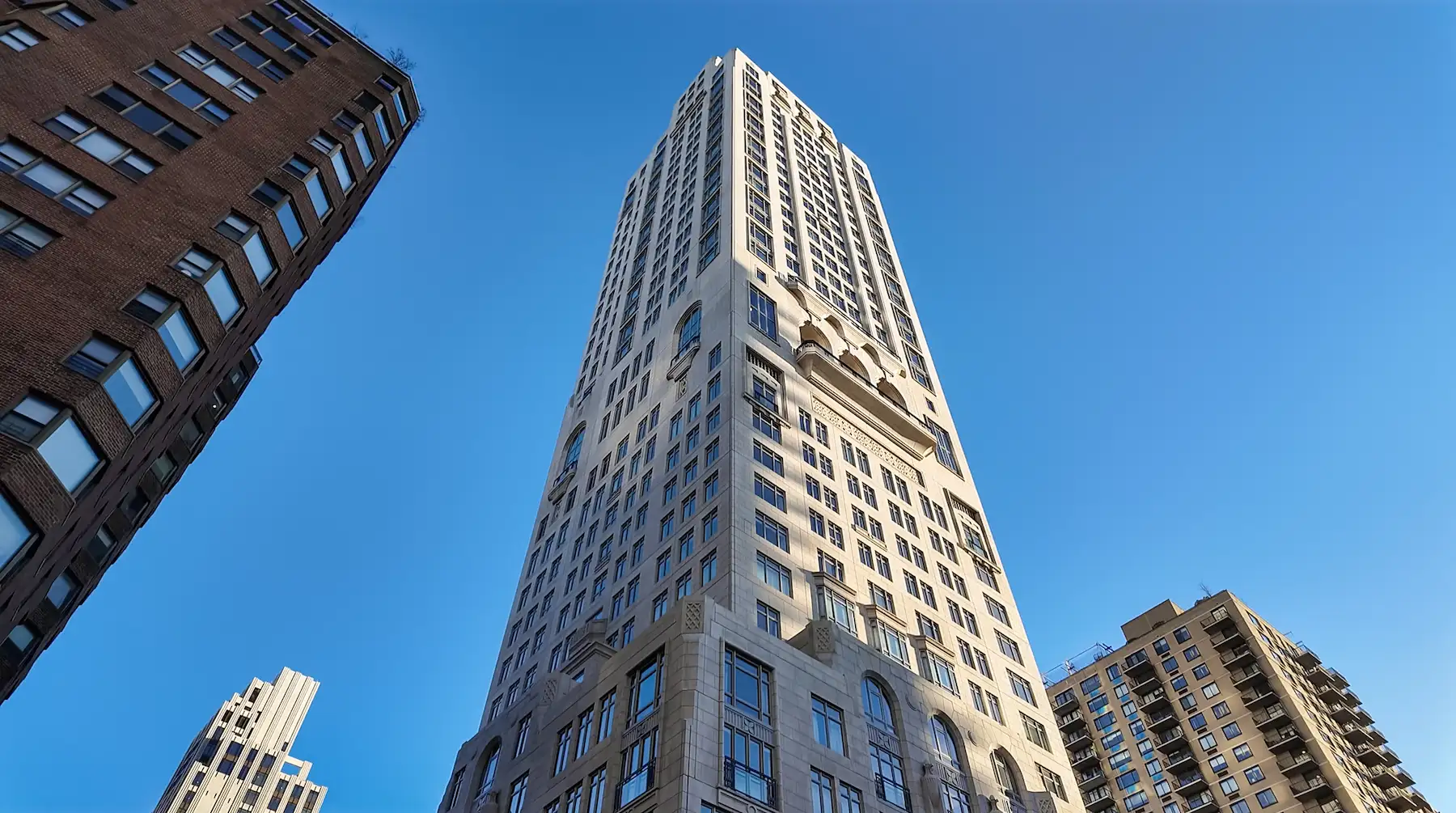
200 East 83rd Street is a 35-story luxury condominium on New York’s Upper East Side, co-developed by Naftali Group and the Rockefeller Group and designed by Robert A.M. Stern Architects. ParkPlus completed the installation of a 30-space AGV Automated Parking System across three subterranean floors — segregated by vehicle type — in 2024.
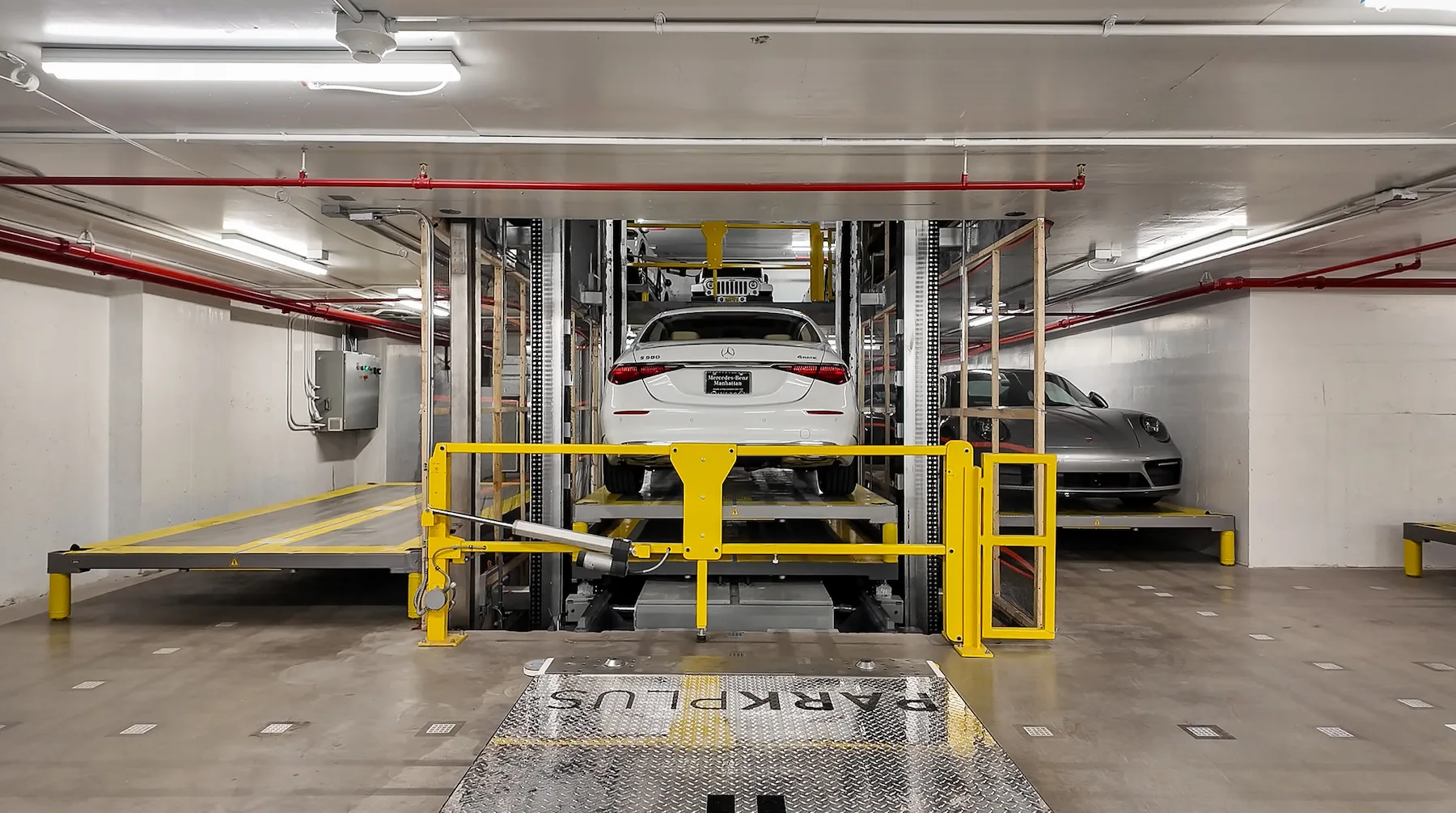
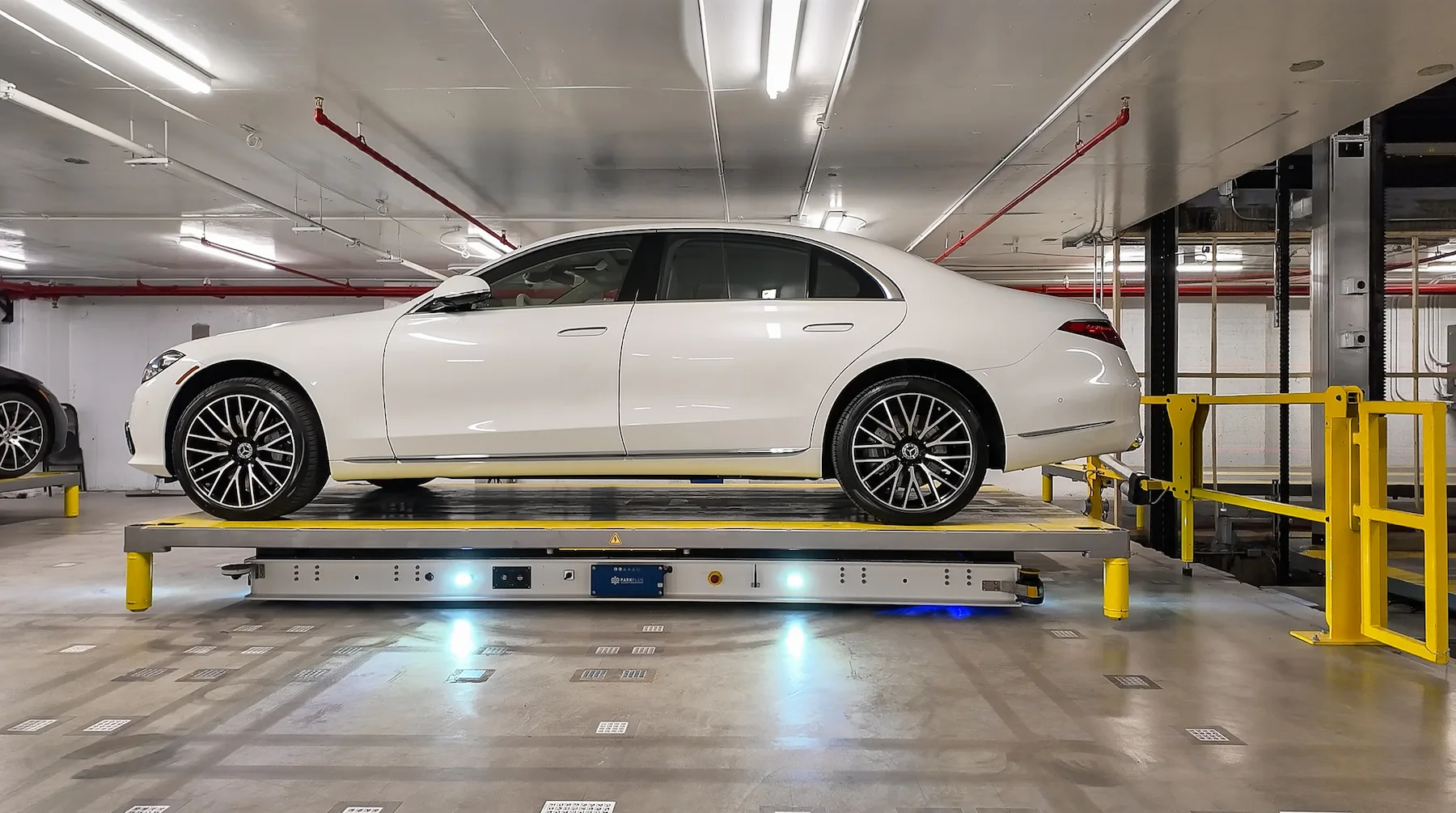
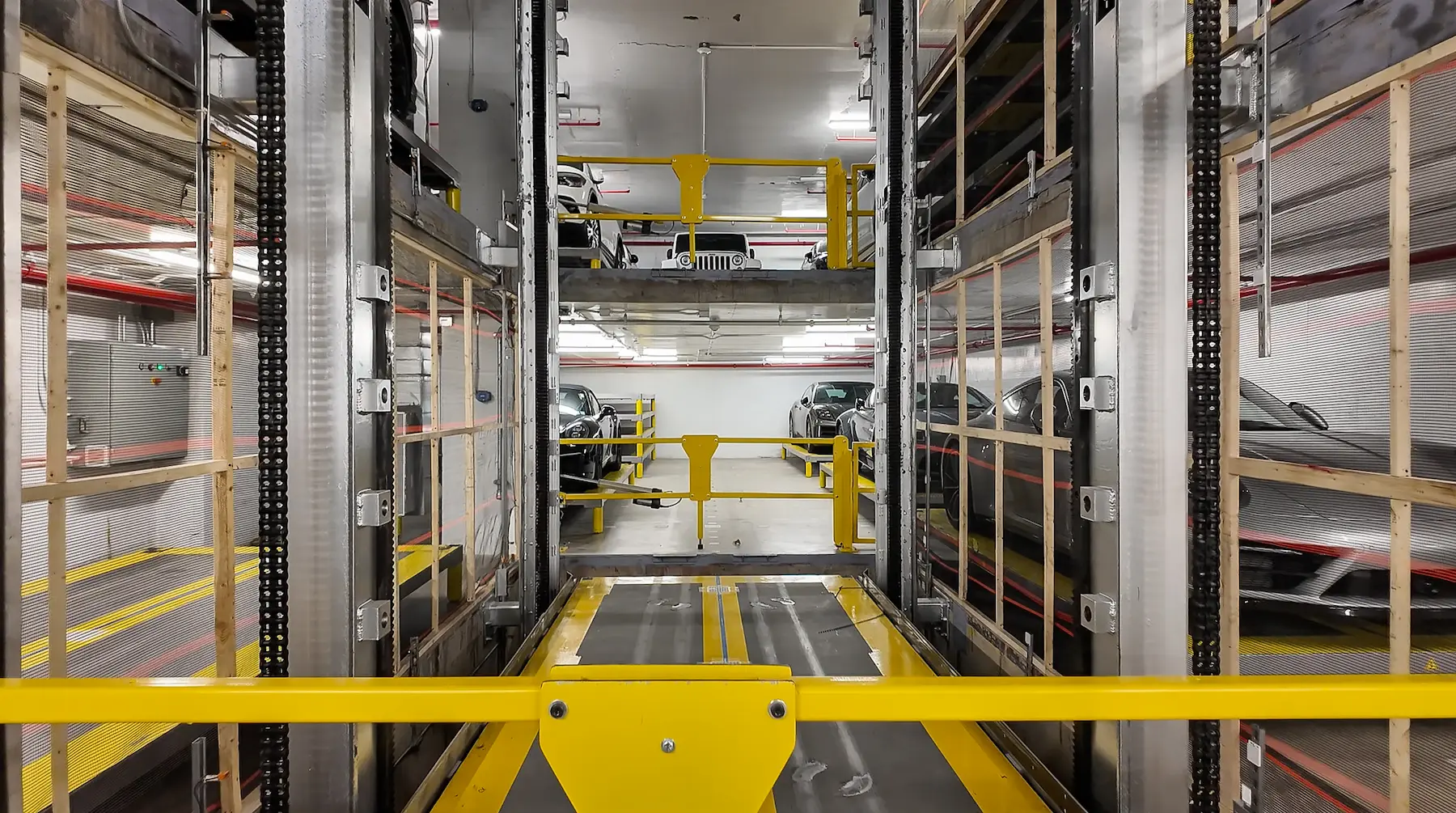
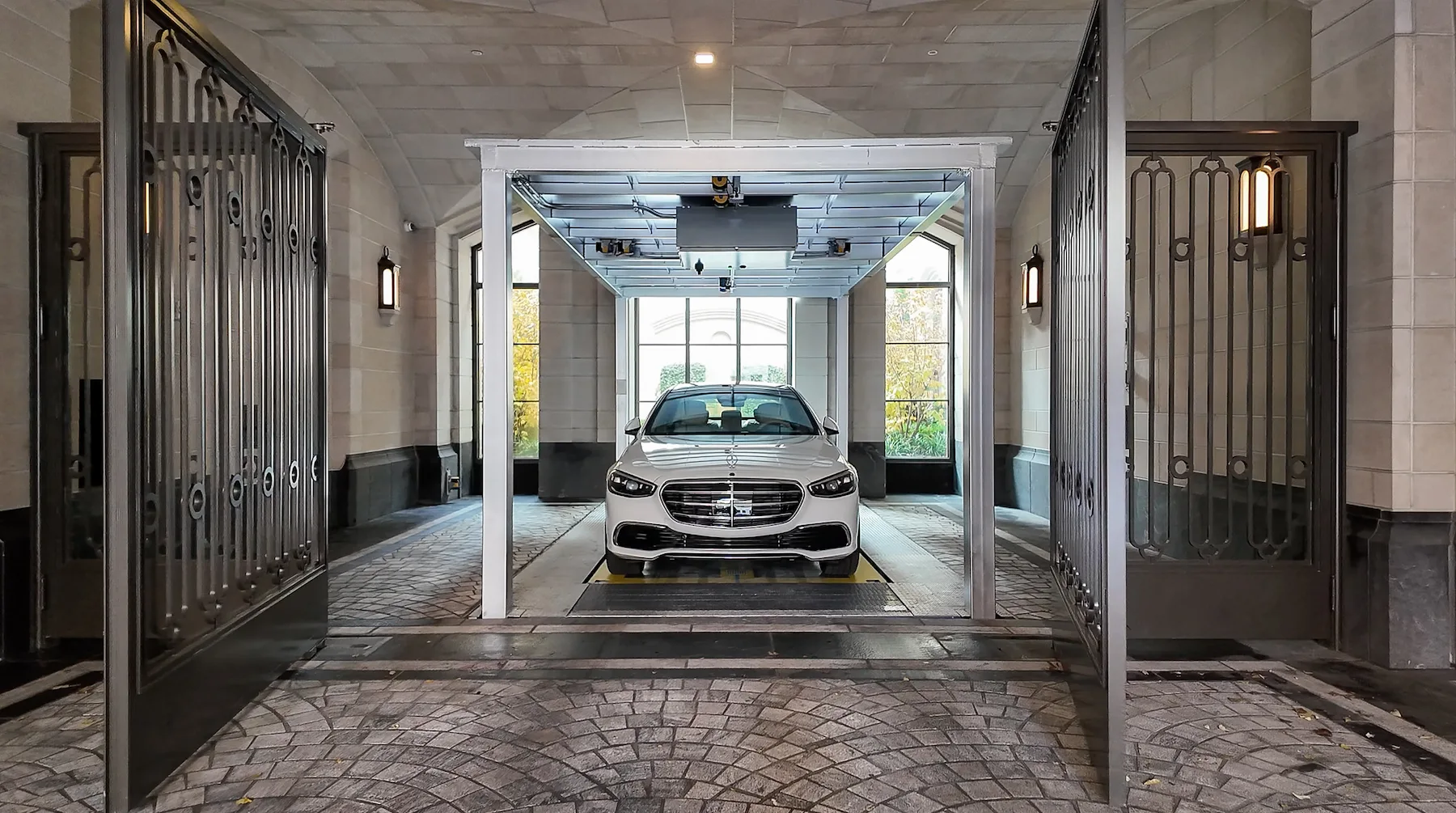
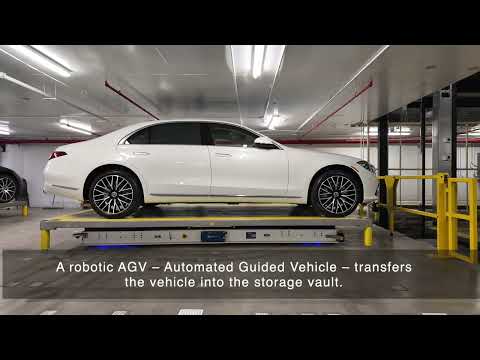
The resident experience is frictionless from the moment of arrival. Residents pull into the porte cochere, press a remote, and a vertical reciprocating conveyor canopy lifts to allow them to drive in and leave the vehicle. The AGV robots handle everything from there: free-roaming, self-charging, omni-directional carriers use traffic management software, embedded markers, and vision systems to retrieve each vehicle’s tray and store it below grade until retrieval is requested.
18 of the 30 spaces include integrated EV charging — 60 percent of the system’s capacity — reflecting the direction of New York City’s regulatory environment and the expectations of buyers at this level of the market. The installation is one of five EV-enabled AGV systems ParkPlus has completed in New York, alongside Jardim, Greenwich West at 110 Charlton St, 111 Varick St, and 70 Vestry St.
60% EV-ready, zero footprint expansion
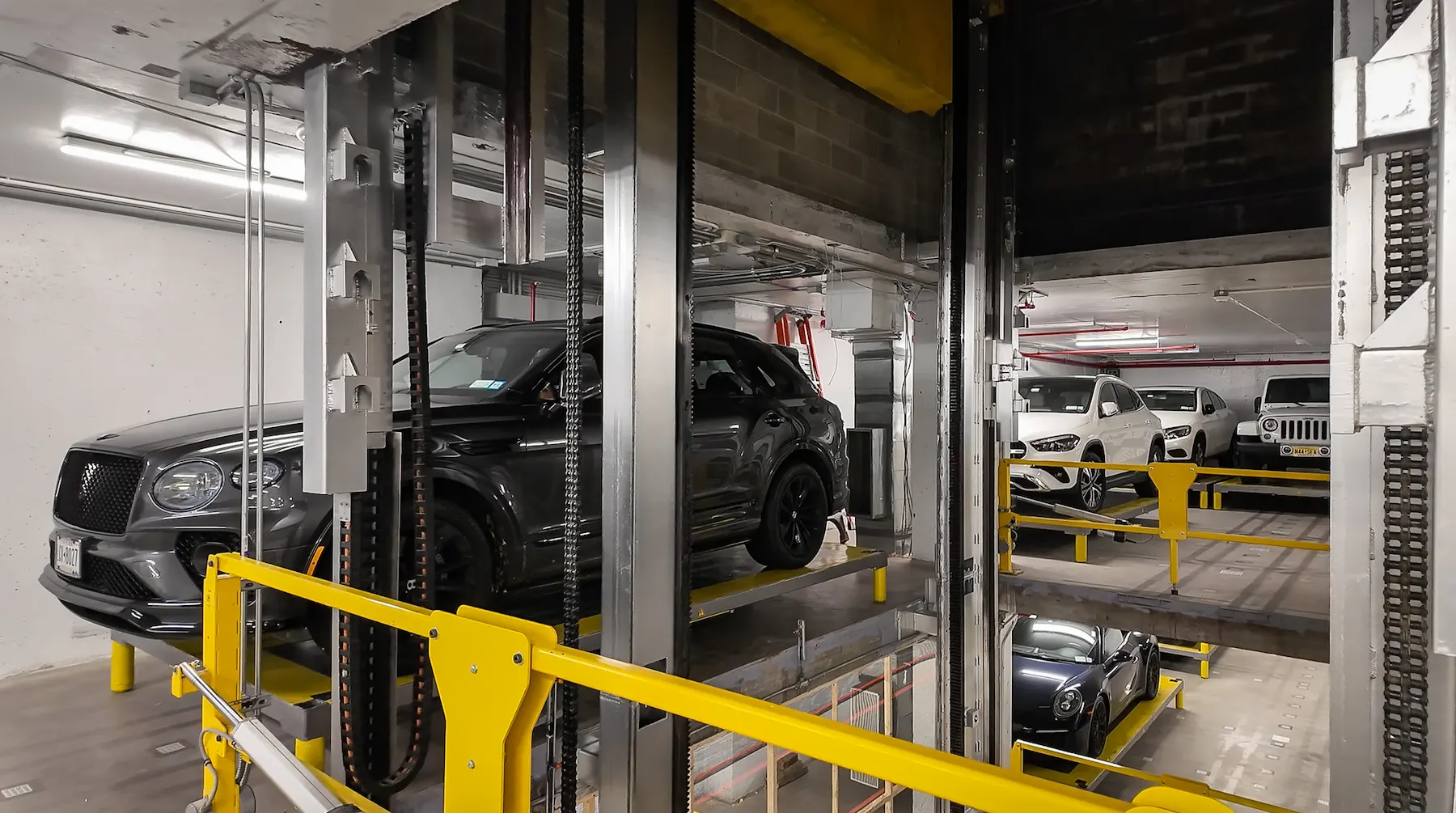
The three-level subterranean AGV grid eliminates the need for ramps, drive aisles, or turning lanes within the parking structure. By removing those spatial requirements, the system reduces the parking footprint by 60 to 80 percent compared to a conventional garage delivering the same number of spaces — recovering floor area within the building envelope for the residential program above.
The EV charging integration at 18 of 30 spaces is the more forward-looking value driver. As New York City progressively mandates EV provisioning in new residential construction, a system where charging is built into the storage infrastructure — invisible to residents, automatic in operation — is the appropriate long-term solution. The 200 East 83rd installation demonstrates the model at scale: automated parking and EV readiness as a single integrated system, not a retrofit.
Footprint reduction figures based on comparison with conventional parking structures of equivalent capacity. EV space count per installed configuration.
Project Photos
See It in Action
30 spaces below grade with EV charging in a Robert A.M. Stern tower
Upper East Side luxury residential development leaves almost no margin for conventional parking infrastructure. The subterranean program at 200 East 83rd needed to deliver 30 spaces across three floors without consuming the ceiling clearance and structural area that ramps, lanes, and turning radii require. And it needed to do it in a building where the resident experience — from lobby to bedroom — is designed to the highest standard in New York.
The growing EV provisioning requirement added a second dimension: a meaningful share of the spaces needed integrated charging, without creating the management complexity of a plug-in-yourself garage environment. The residents of a building at this price point will not be walking down to the subterranean level to manage a charging cable.
Three-level AGV grid with vehicle-type segregation and integrated EV
ParkPlus configured the three subterranean floors by vehicle type, with the AGV carrier system operating across all three levels and routing vehicles to the appropriate floor automatically based on vehicle profile. Residents interact only with the porte cochere entry point — the vertical reciprocating conveyor canopy lifts on remote, the vehicle is driven in, and the system takes over entirely.
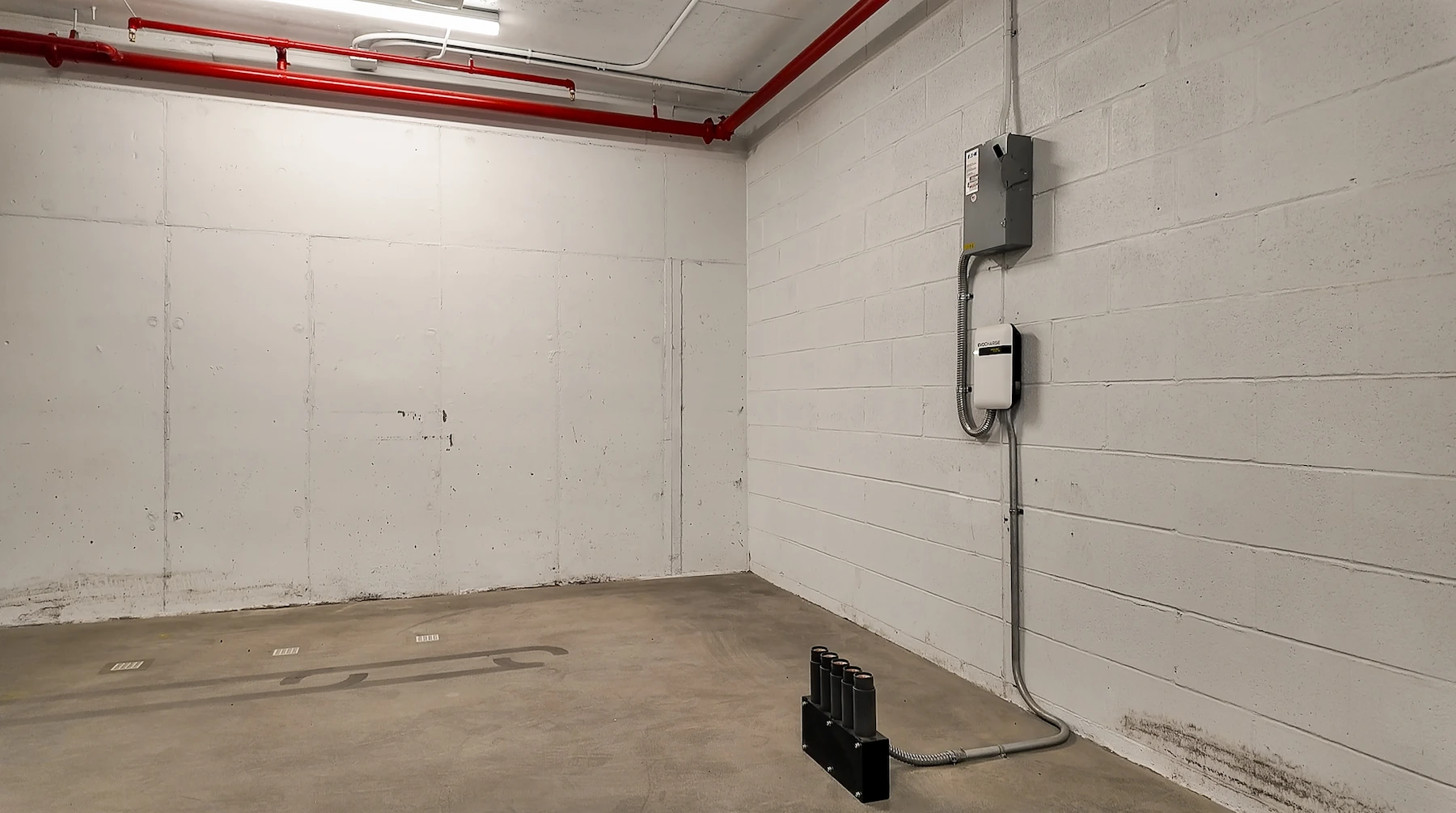
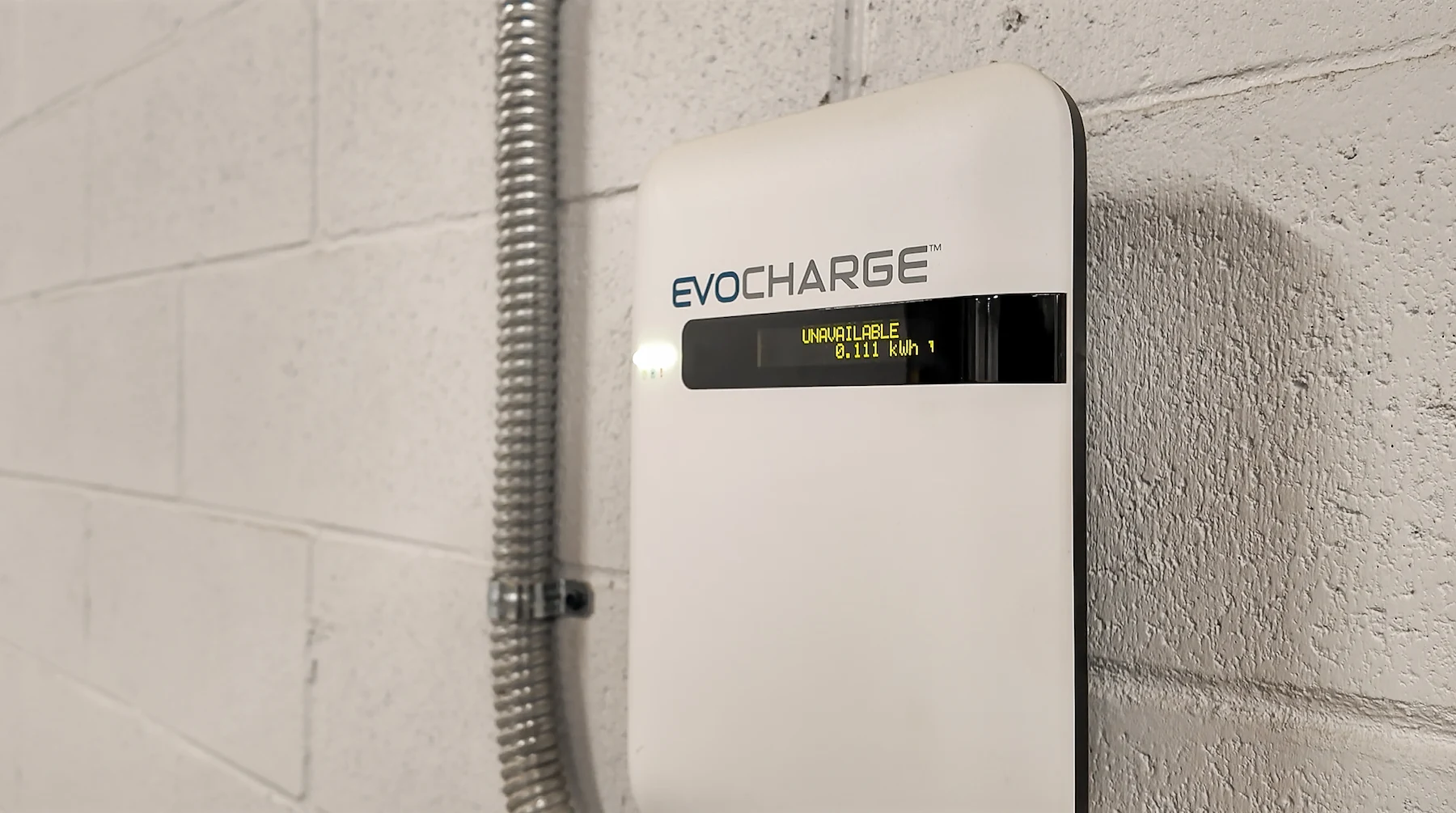
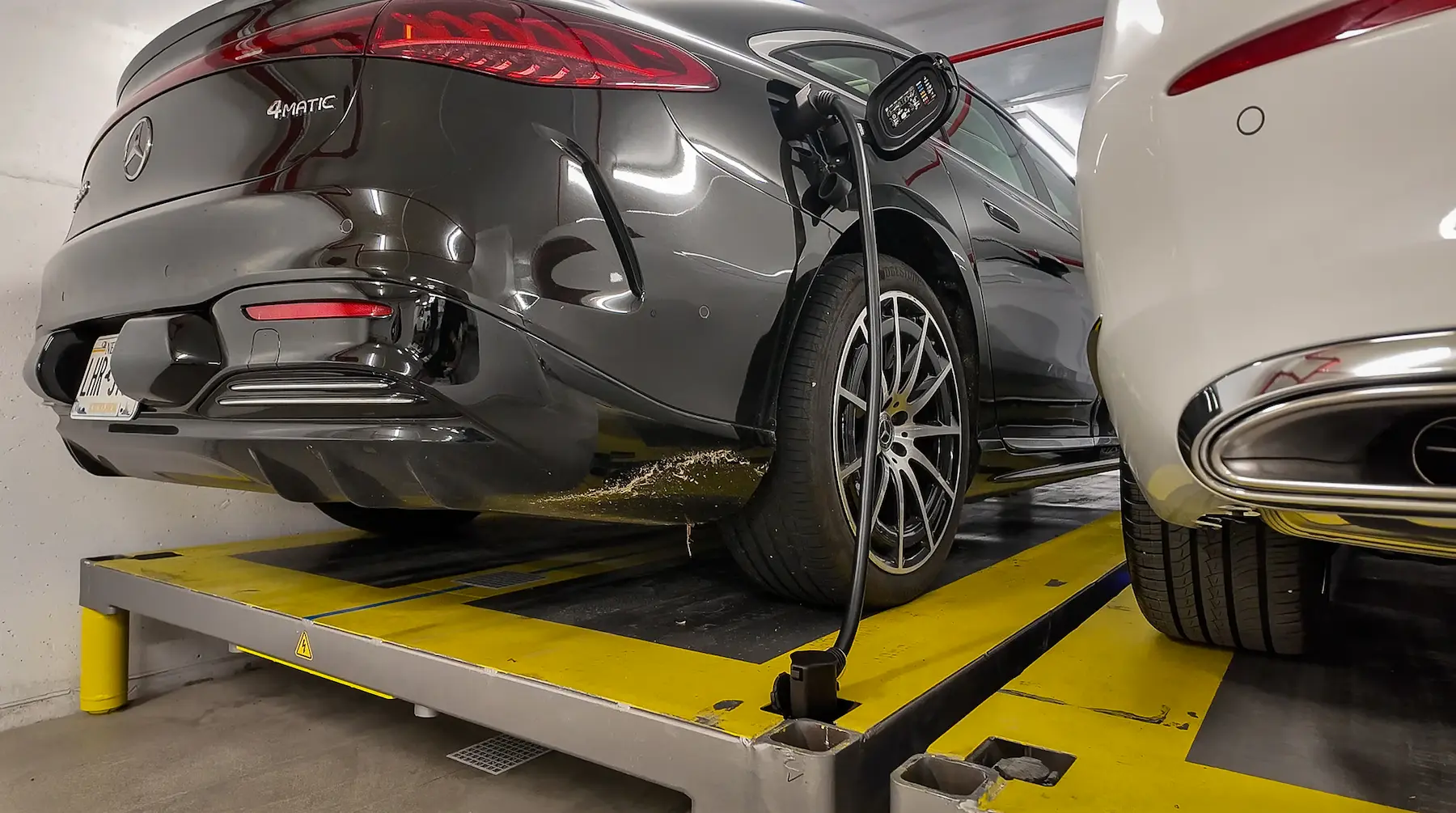
EV charging is integrated into 18 of the 30 parking trays, activating automatically when a qualifying vehicle is stored. No resident involvement required. The system charges the vehicle while it is parked and delivers it ready to drive. At 60 percent EV-ready capacity, the installation is positioned well ahead of New York City’s regulatory trajectory.
Charging built in. Nothing for residents to manage.
18 of 30 spaces at 200 East 83rd include integrated EV charging — built into the parking trays, not mounted to walls. When a qualifying vehicle is stored, the charging connection is made automatically as part of the storage sequence. The vehicle charges while parked. When retrieval is requested, it arrives ready to drive.
200 East 83rd is one of several EV-enabled AGV systems ParkPlus has completed in New York City, including Jardim, Greenwich West, 111 Varick St, and 70 Vestry St. The model is proven and ready to scale.
System Specifications
Common questions about AGV parking with EV charging
How does the AGV parking entry process work at 200 East 83rd?
Residents pull into the porte cochere and press a remote to activate the entry sequence. A vertical reciprocating conveyor canopy lifts, and the resident drives the vehicle onto the entry platform and exits. From that point, the AGV system takes over: free-roaming robotic carriers retrieve the vehicle’s tray and transport it to the assigned storage position on the appropriate subterranean level. The resident has no further interaction with the parking structure until retrieval.
Retrieval is initiated from a lobby terminal or remote. The system locates the vehicle, dispatches a carrier, and delivers it to the exit platform. The canopy opens and the resident drives out.
How does integrated EV charging work in an AGV parking system?
EV charging is built into the parking trays themselves rather than into fixed wall or floor-mounted charge points. When an EV is stored on a charging-enabled tray, the charging connection is made automatically as part of the storage sequence. The vehicle charges while parked, and the system manages the charging cycle without any resident involvement. At 200 East 83rd, 18 of the 30 trays are EV-enabled, meaning qualifying vehicles begin charging automatically when stored on those trays.
This approach eliminates the inconvenience of manual plug-in, and avoids the access management complexity of a conventional EV charging garage where residents need to move vehicles when charging is complete.
Why are the three subterranean levels segregated by vehicle type?
Sedans and SUVs have meaningfully different height and weight profiles. Configuring each level for a specific vehicle type allows the structural clearances and carrier specifications on each floor to be optimized for that vehicle class, rather than sizing all three floors to the maximum SUV envelope. This improves storage density and allows the AGV carrier system to operate efficiently within each level’s geometry. Residents register their vehicle type at enrollment, and the system routes each vehicle to the correct level automatically on every storage cycle.
How much space does an AGV system save compared to a conventional garage?
AGV systems eliminate the primary space consumers in a conventional garage: drive aisles, turning radii, and ramp structures. Because robotic carriers can navigate the full grid at low speed without the clearances a human driver requires, the same number of spaces can be achieved in 60 to 80 percent less floor area. In a subterranean installation like 200 East 83rd, that footprint reduction translates directly into reduced excavation and structural cost, and more usable building envelope above grade.
Is AGV parking with integrated EV charging available for new residential developments?
Yes. ParkPlus has completed five AGV installations with integrated EV charging in New York City, including 200 East 83rd Street, Jardim, Greenwich West at 110 Charlton St, 111 Varick St, and 70 Vestry St. The system is available for new residential construction and is designed to be integrated during the development process rather than retrofitted. Early engagement with ParkPlus during the design phase allows the parking program to be optimized for the specific building footprint, vehicle profile, and EV provisioning requirements of the project. ParkPlus is also delivering a 312-space AGV system at South Flagler House in West Palm Beach, one of the largest AGV residential installations in Florida.
Ready to discuss your project?
Every ParkPlus system is custom-engineered to the site. Talk to our team about your project requirements, site constraints, and system options.