

The first pallet-less automated parking system in the United States
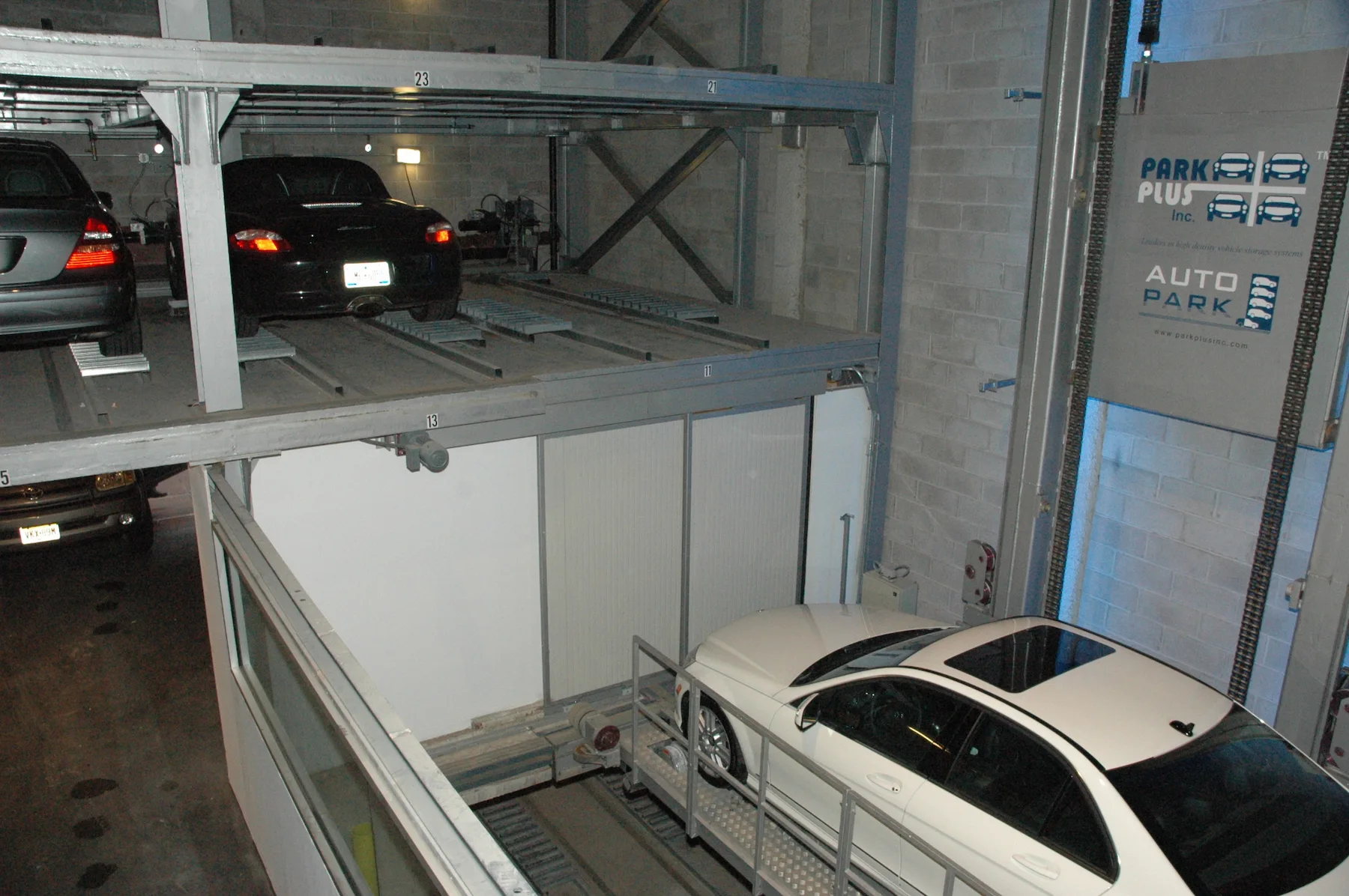
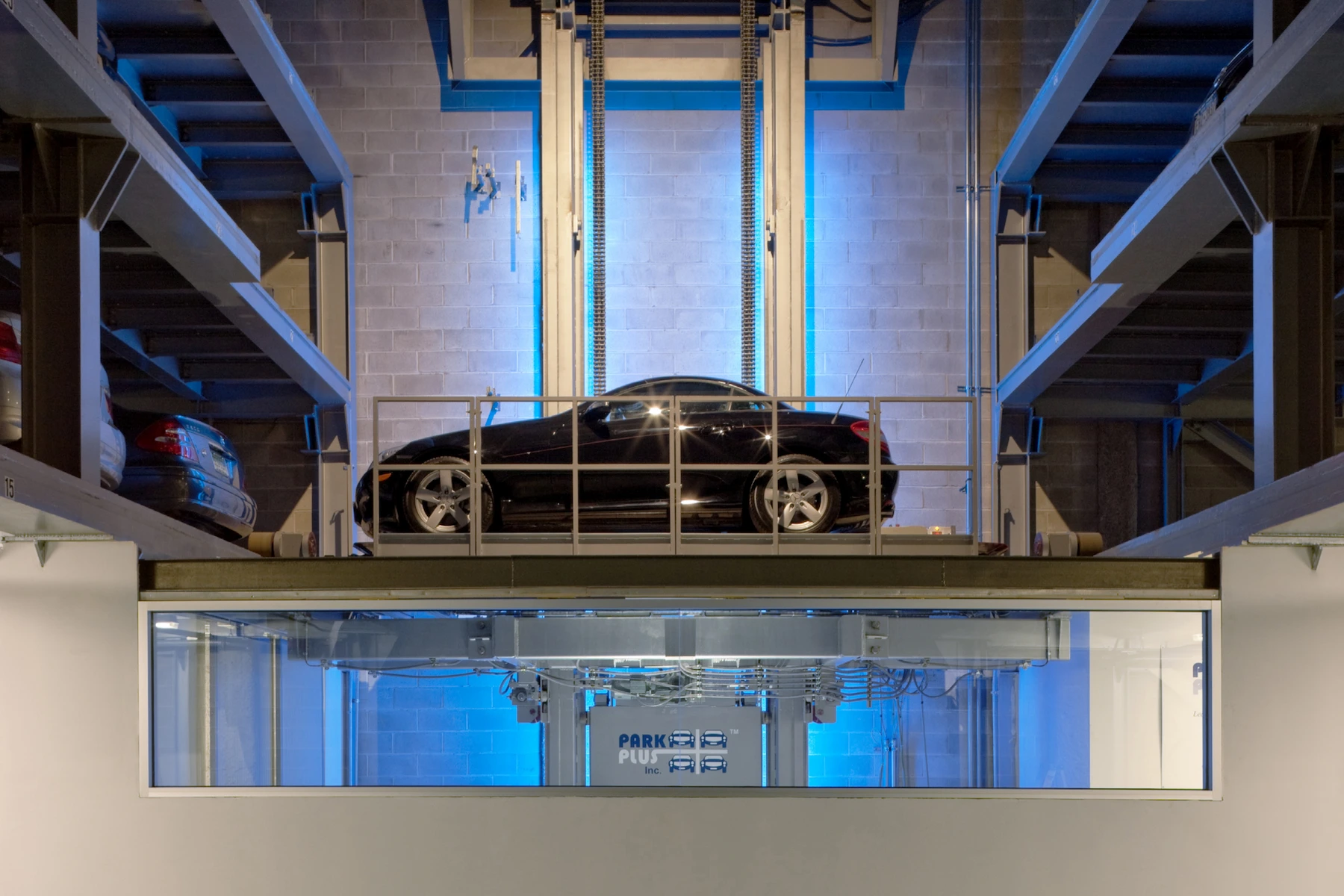
One York Residences is a 14-story luxury condominium at 1 York Street in Tribeca, designed by noted architect Enrique Norten of Ten Arquitectos New York. In 2008, ParkPlus installed a 40-space Rack & Rail automated parking system spanning one subterranean level and four upper levels, making One York the first building in the United States to use a pallet-less high-density automated vehicle storage system.
The Rack & Rail system uses computerized shuttle devices that travel along a fixed rail network to transport vehicles directly under the wheels, without the pallets or trays used in earlier automated systems. Residents drive into the entry bay, lock their vehicle, and activate the system with an access card. From that point, the shuttle handles everything: lifting, lowering, and routing the vehicle to its designated stall in the racking structure. There is no attendant, no searching for a space, and no driver access to the storage area beyond the entry bay.
The site constraint was severe. Without an automated system, the developer could achieve a maximum of 8 to 10 parking spaces. The Rack & Rail configuration across five levels delivered 40, a fourfold increase in capacity within the same building envelope.
Project Photos
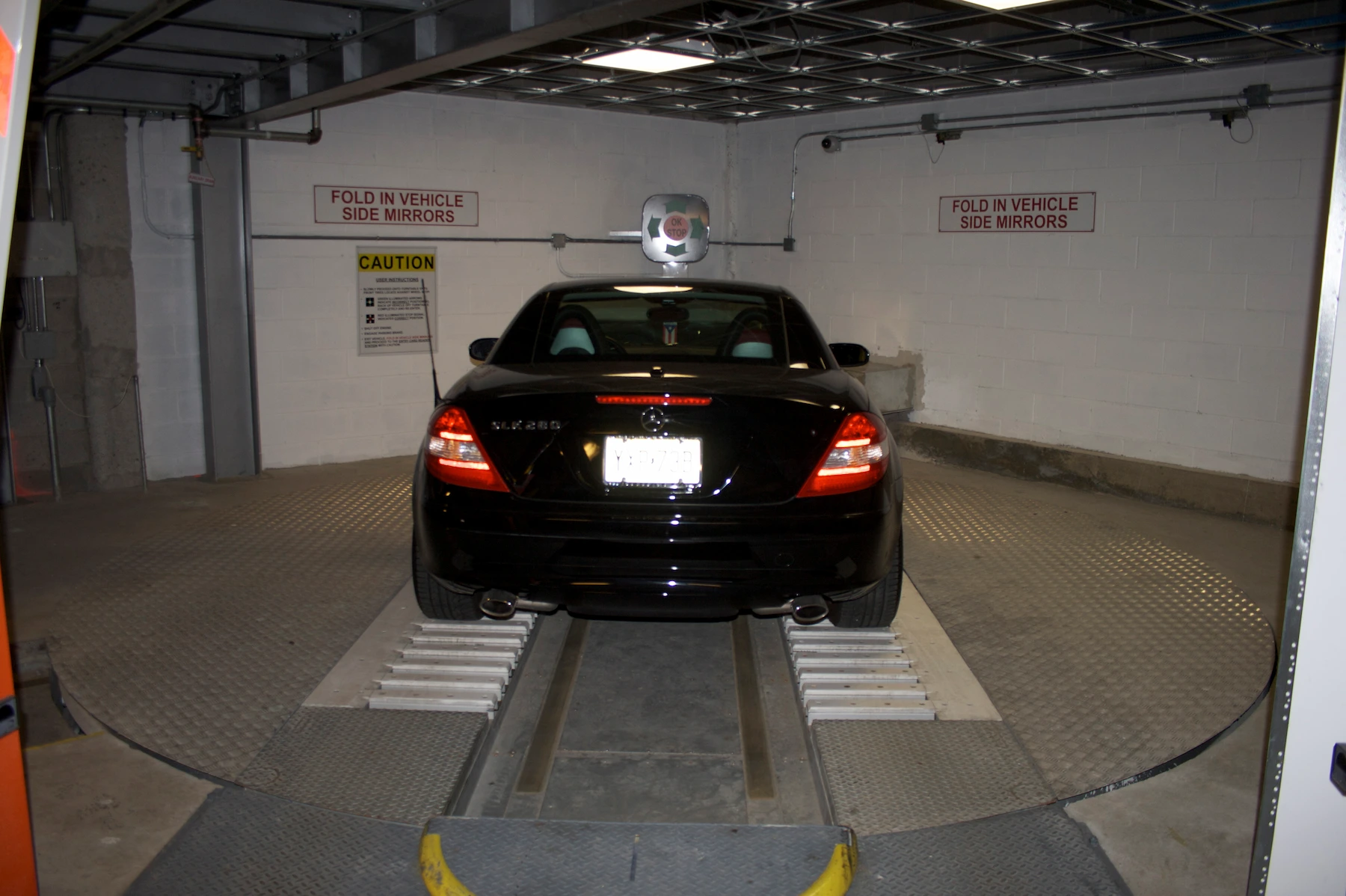
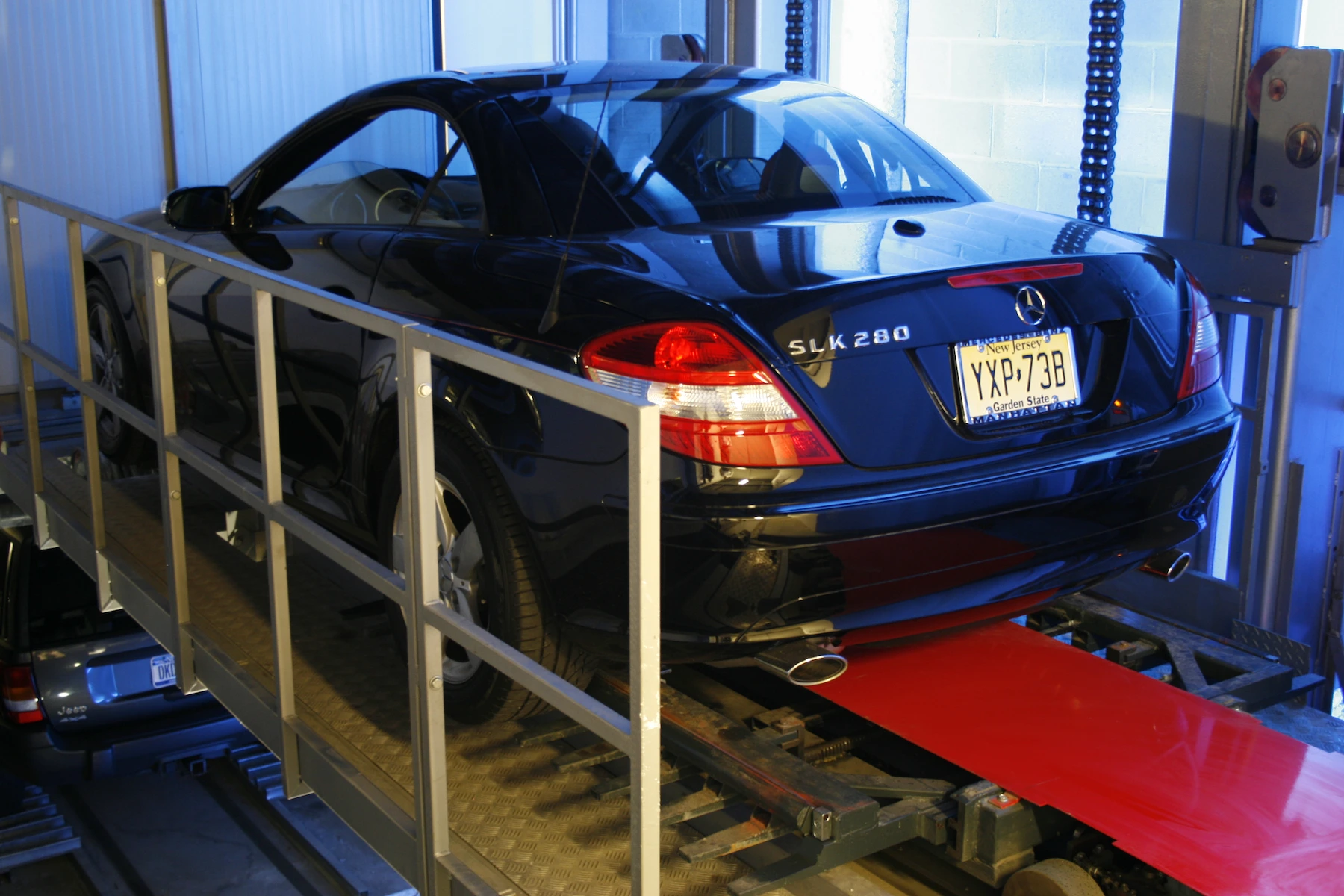
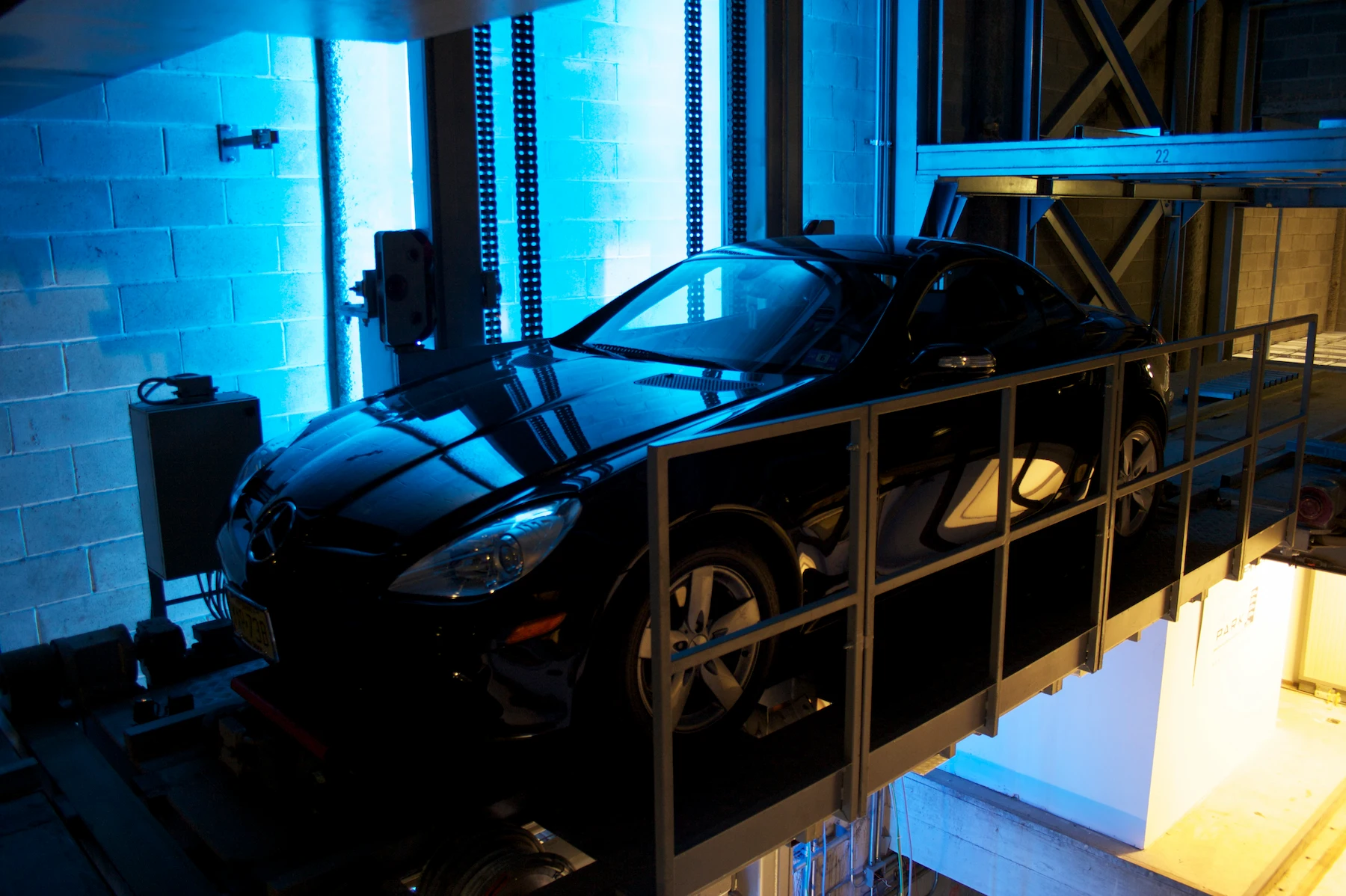
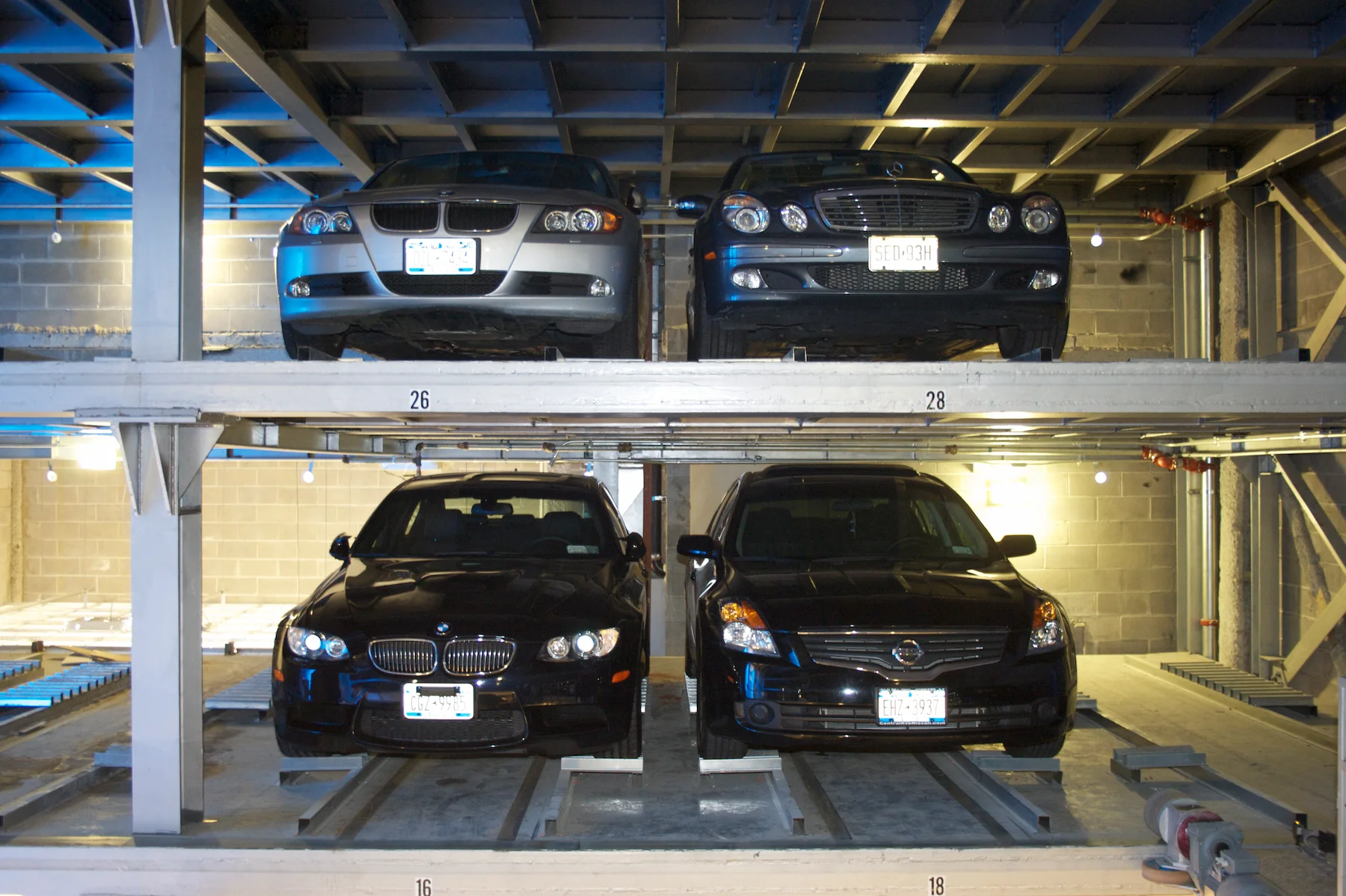
The Value Case
The site at 1 York Street could accommodate no more than 8 to 10 conventional parking spaces. For a 14-story luxury condominium in Tribeca, that shortfall would have represented a meaningful gap in the building’s amenity offering and a constraint on the number of units that could command a parking allocation. The ParkPlus Rack & Rail system resolved that gap, delivering 40 spaces within the same envelope by stacking storage across five levels without ramps, drive aisles, or manual operation.
The pallet-less design also carries direct operating advantages over earlier automated systems. Without pallets in the storage cycle, there is less mechanical complexity, lower maintenance overhead, and no pallet management requirement. The system operates with limited controlled access to the storage area, reducing liability exposure and eliminating the staffing costs associated with a conventional valet or attended garage operation.
Capacity comparison based on developer’s reported maximum achievable spaces under conventional parking configuration. Value figures are project-specific and reflect conditions at time of completion.
See It in Action

Original footage, over 100,000 views
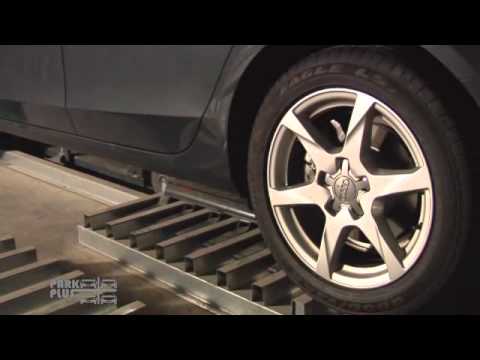
Filmed over a decade ago, this original video of the One York Rack & Rail system has been viewed more than 100,000 times on YouTube. The old logo, the early footage—it’s a look back at where it all started.
Everyone loves it. It’s super-efficient and we’re looking now at doing a couple more just like this one.
A Tribeca condo with almost no viable parking
The site geometry and zoning at 1 York Street limited conventional parking to a maximum of 8 to 10 spaces—a number that made little practical sense for a 14-story luxury condominium in one of Manhattan’s most sought-after neighborhoods. A conventional multi-level garage was not an option within the building envelope, and any solution would need to serve residents without attendants, without drive aisles wide enough for human navigation, and without the pallet-based transfer systems that had characterized earlier automated parking approaches in Europe and Asia. There was no domestic reference point: no pallet-less automated parking system had been installed in the United States before this project.
Rack & Rail across five levels, pallet-free
ParkPlus designed and installed a Rack & Rail system spanning one subterranean and four above-grade levels, delivering 40 spaces within the existing building envelope. The pallet-less shuttle devices lift and transport vehicles directly under the wheels along a fixed rail network, routing each car to its designated stall without driver involvement beyond the entry bay. Residents access the system with a card swipe; the computerized control system manages all storage and retrieval from that point. The installation established the first pallet-less automated parking operation in the United States and demonstrated the commercial viability of this technology for the American luxury residential market.
System Specifications
Common questions about the One York system
What is a pallet-less automated parking system?
In a conventional automated parking system, vehicles are loaded onto pallets or trays that the system then moves through the storage structure. A pallet-less system eliminates that intermediate step. At One York, the Rack & Rail shuttle devices lift and transport vehicles directly under the wheels, moving them along a fixed rail network to their designated stall without any pallet in the transfer cycle.
The practical benefits are reduced mechanical complexity, lower long-term maintenance requirements, and the elimination of pallet inventory management. The One York installation was the first system of this type to operate in the United States.
How does the Rack & Rail system differ from an AGV system?
A Rack & Rail system uses shuttle devices that travel along a fixed rail infrastructure embedded in the parking structure. The rails define the movement paths, and the shuttles carry vehicles between the entry point and the storage stalls along those fixed routes. An AGV (Automated Guided Vehicle) system uses free-roaming robotic units that navigate autonomously without fixed tracks, giving them more flexibility in open vault configurations.
Both are fully automated and pallet-less in ParkPlus’s current configurations. The right technology for a given project depends on the building geometry, the number of levels, and the throughput requirements of the installation.
How many spaces did One York gain by using an automated system?
The conventional parking maximum for the site was 8 to 10 spaces. The ParkPlus Rack & Rail system delivered 40, using five levels of racking within the same building envelope. That is a fourfold increase in capacity achieved without expanding the building footprint, adding a parking structure, or requiring ramps or drive aisles.
Is the One York system still operating?
Yes. Installed in 2008, the One York Rack & Rail system has been in continuous residential operation for over 15 years. ParkPlus provides ongoing service and maintenance support for all installed systems. The longevity of the One York installation is a demonstration of the durability and reliability of the Rack & Rail platform in a real-world residential environment.
Ready to discuss your project?
Every ParkPlus system is custom-engineered to the site. Talk to our team about your project requirements, site constraints, and system options.