

Fully automated parking and storage beneath a Chelsea landmark
520 West 28th Street rises along the High Line in Chelsea — one of Manhattan’s most closely watched corridors for design-led residential development. For a tower at this address, conventional parking was never an option. The site had no room for ramps, no tolerance for the horizontal circulation a traditional garage demands, and a basement envelope that had to do more than store cars.
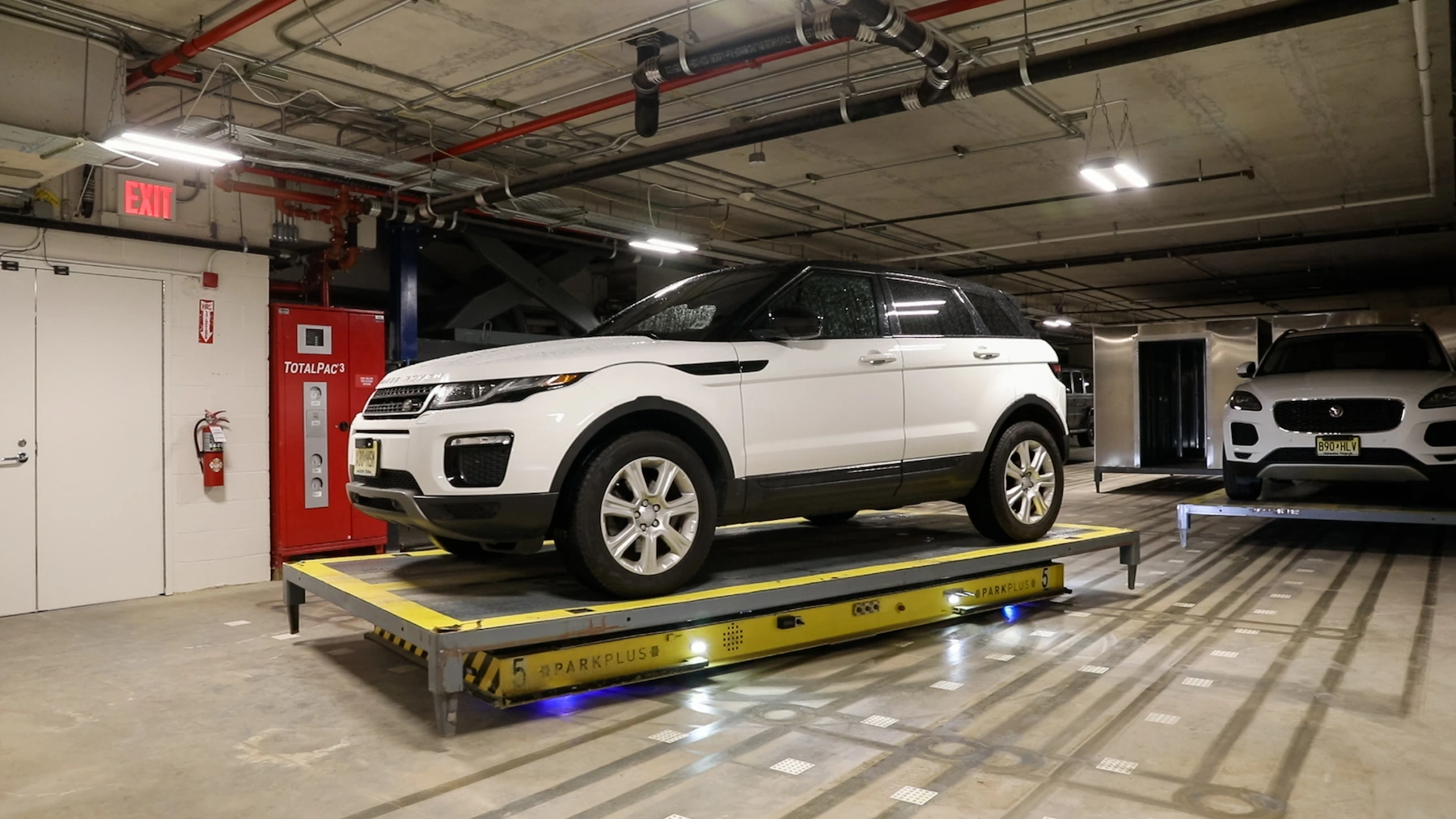
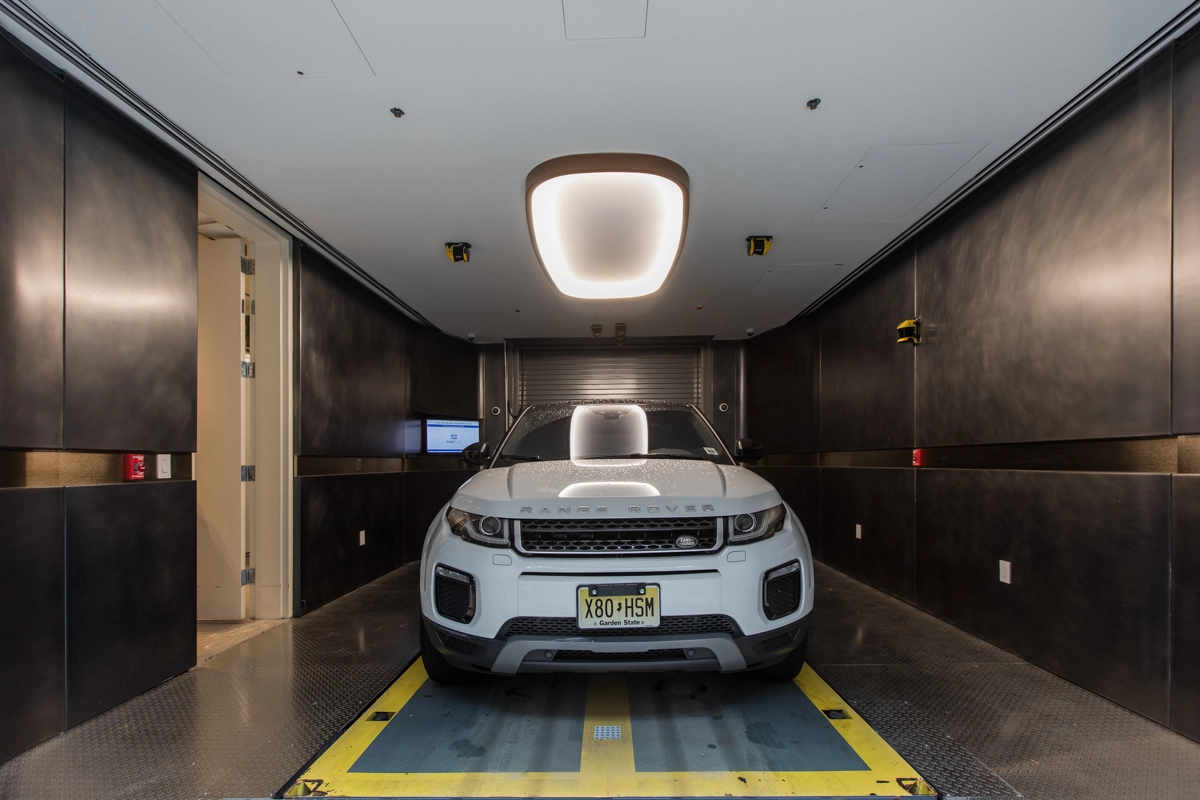
ParkPlus designed and installed a 40-space AGV automated parking system across two subterranean levels. The fully robotic system moves vehicles within the structure without drivers ever entering the garage. A single street-level transfer point handles all arrivals and retrievals, leaving the basement footprint entirely available for productive storage.
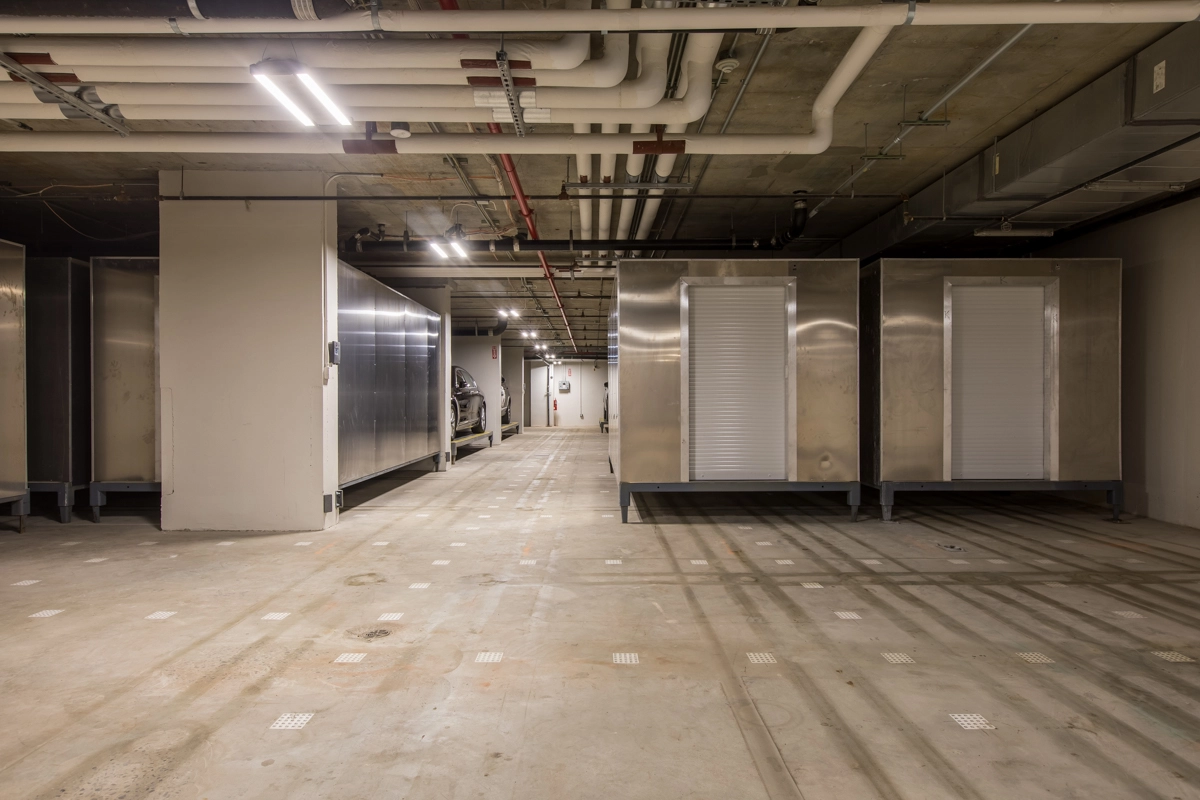
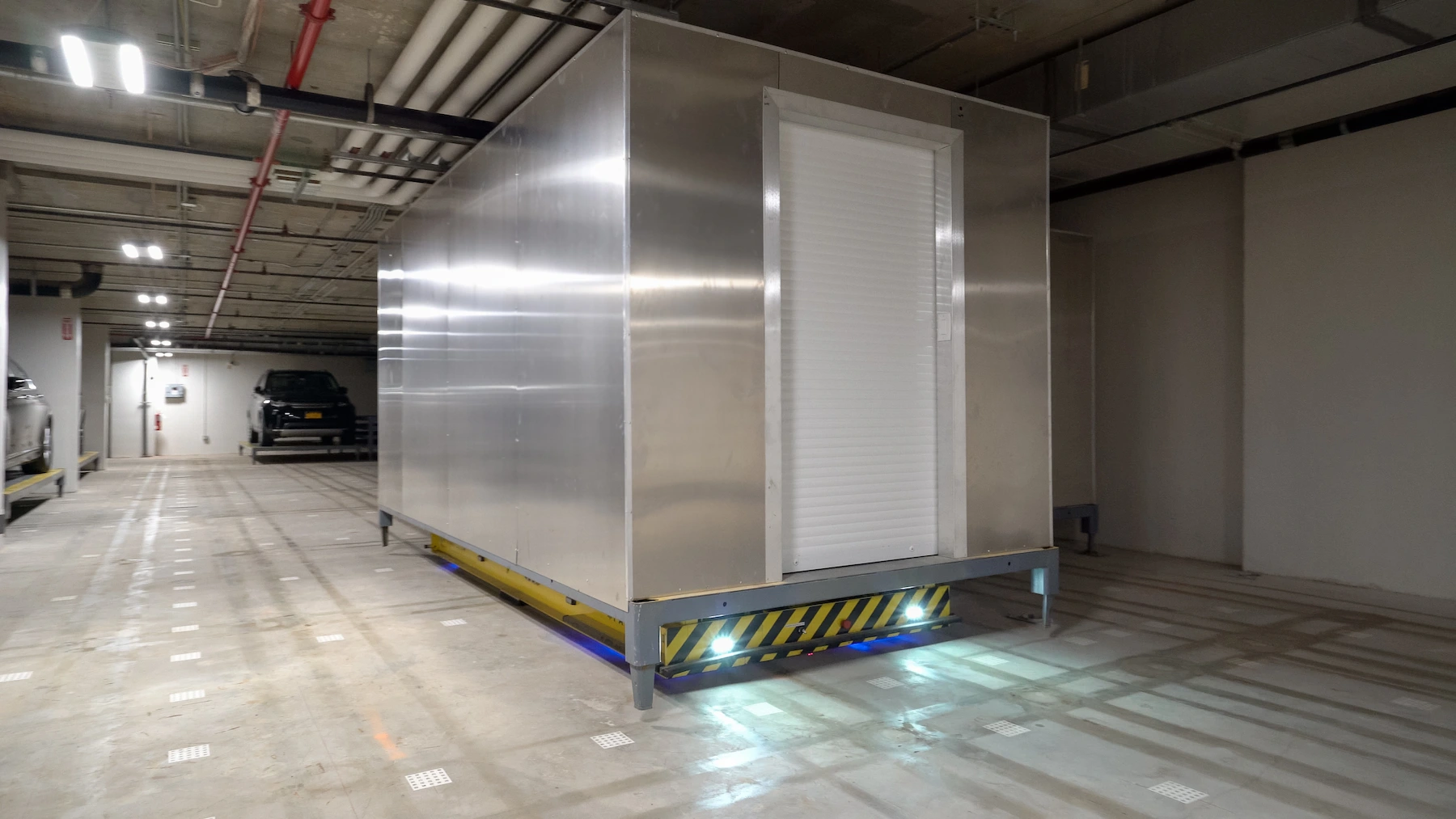
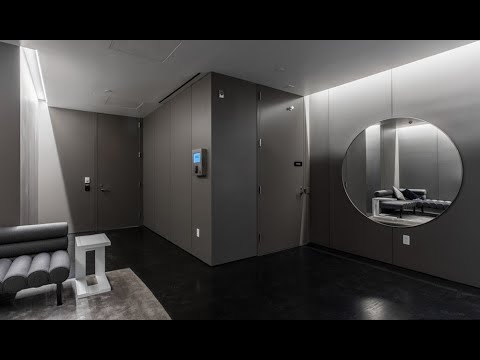
What sets this installation apart is a parallel automated storage system built on the same AGV platform. Twenty storage pods are housed in a dedicated room adjacent to the garage — beautifully appointed, resident-facing, and entirely automated. It was the first installation of its kind in a US residential building.
Two premium amenities. One robotic platform.
Land in Chelsea commands some of the highest values in Manhattan. At 520 West 28th, the economics of conventional parking were never viable — the site had no room for ramps, no margin for the floor area a traditional garage would consume, and a basement that had to earn its keep. The AGV system delivered 40 parking spaces within the existing below-grade envelope, recovering every square foot that ramps and aisles would have taken.
The storage system extended that return further. Rather than leaving residual basement space unmonetized, the 20-pod automated storage installation gave residents a best-in-class amenity — private, on-demand, beautifully presented — with no dedicated staff, no building management overhead, and no additional mechanical infrastructure beyond what the parking system already required.
Value figures are project-specific estimates based on comparable conventional parking and storage structures in this market. Recovered space valuations use local market rates at time of completion. Actual results vary by site conditions and local factors.
Project Photos
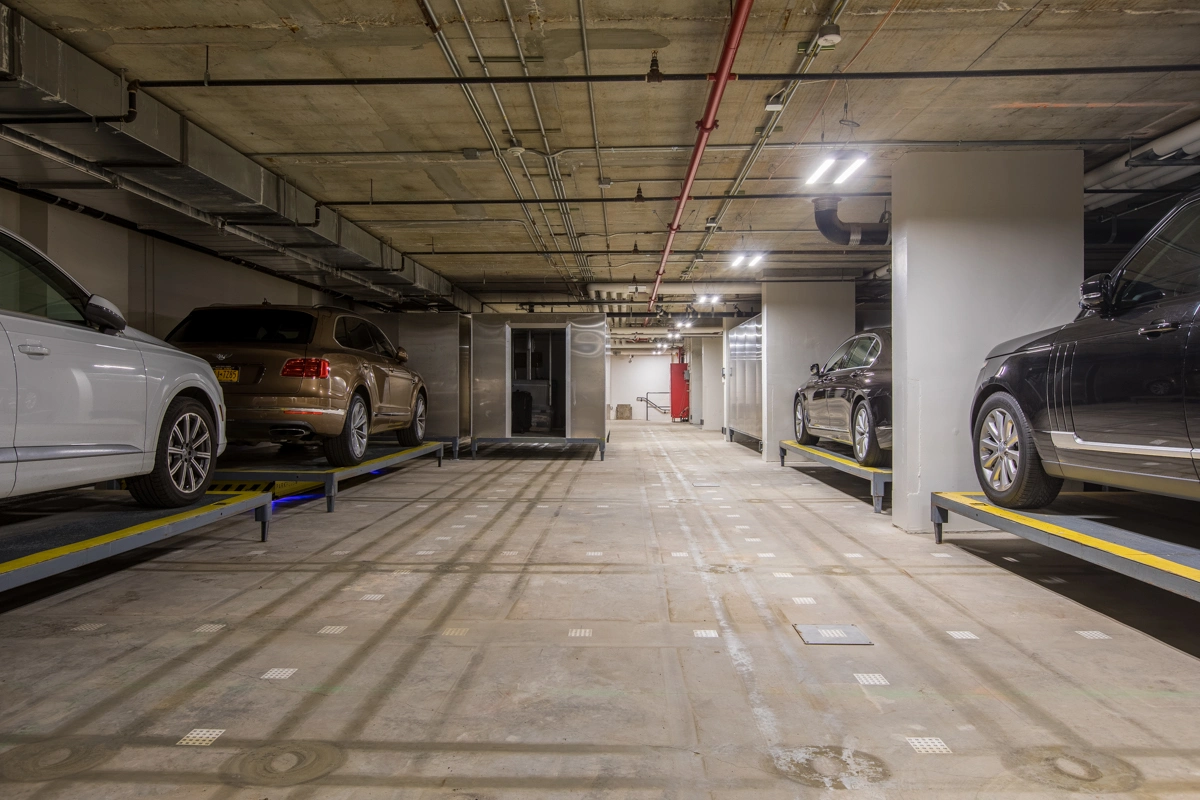
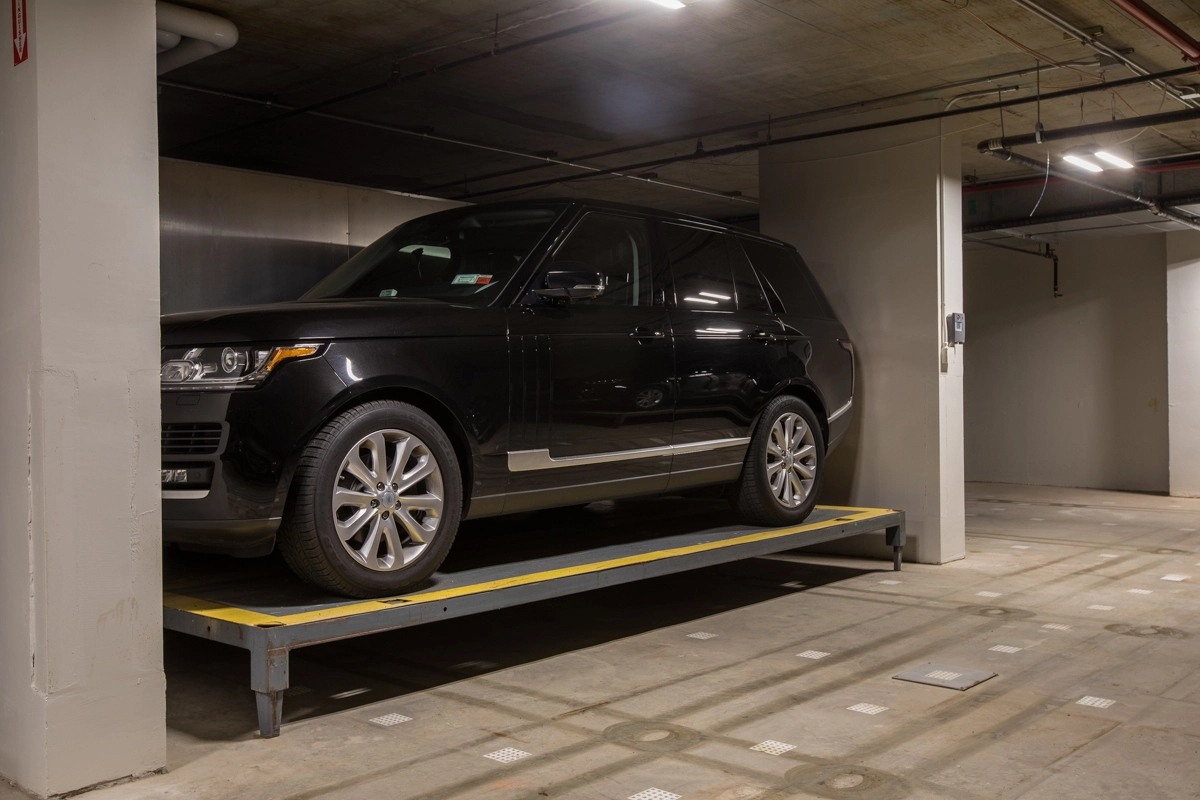
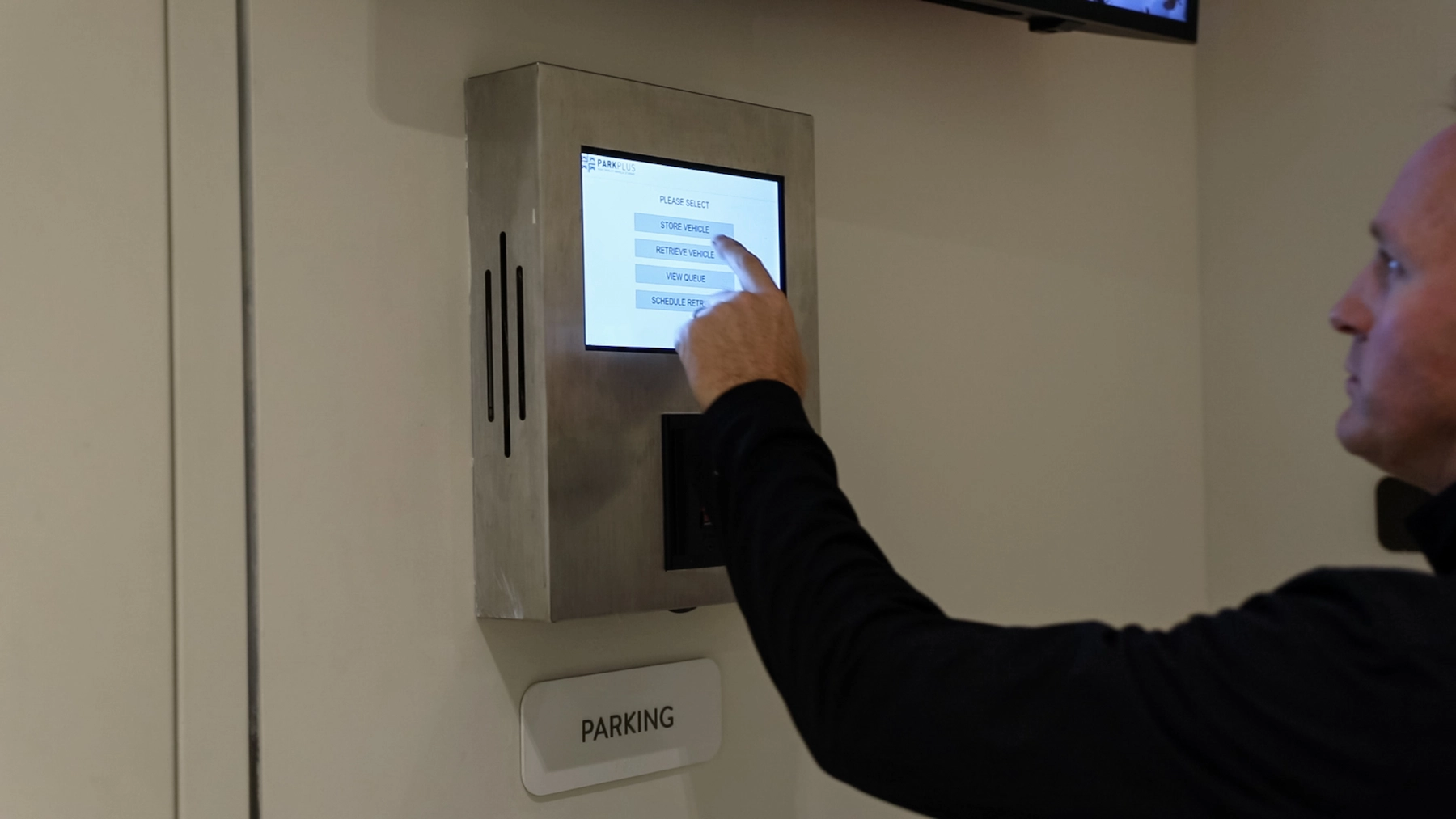
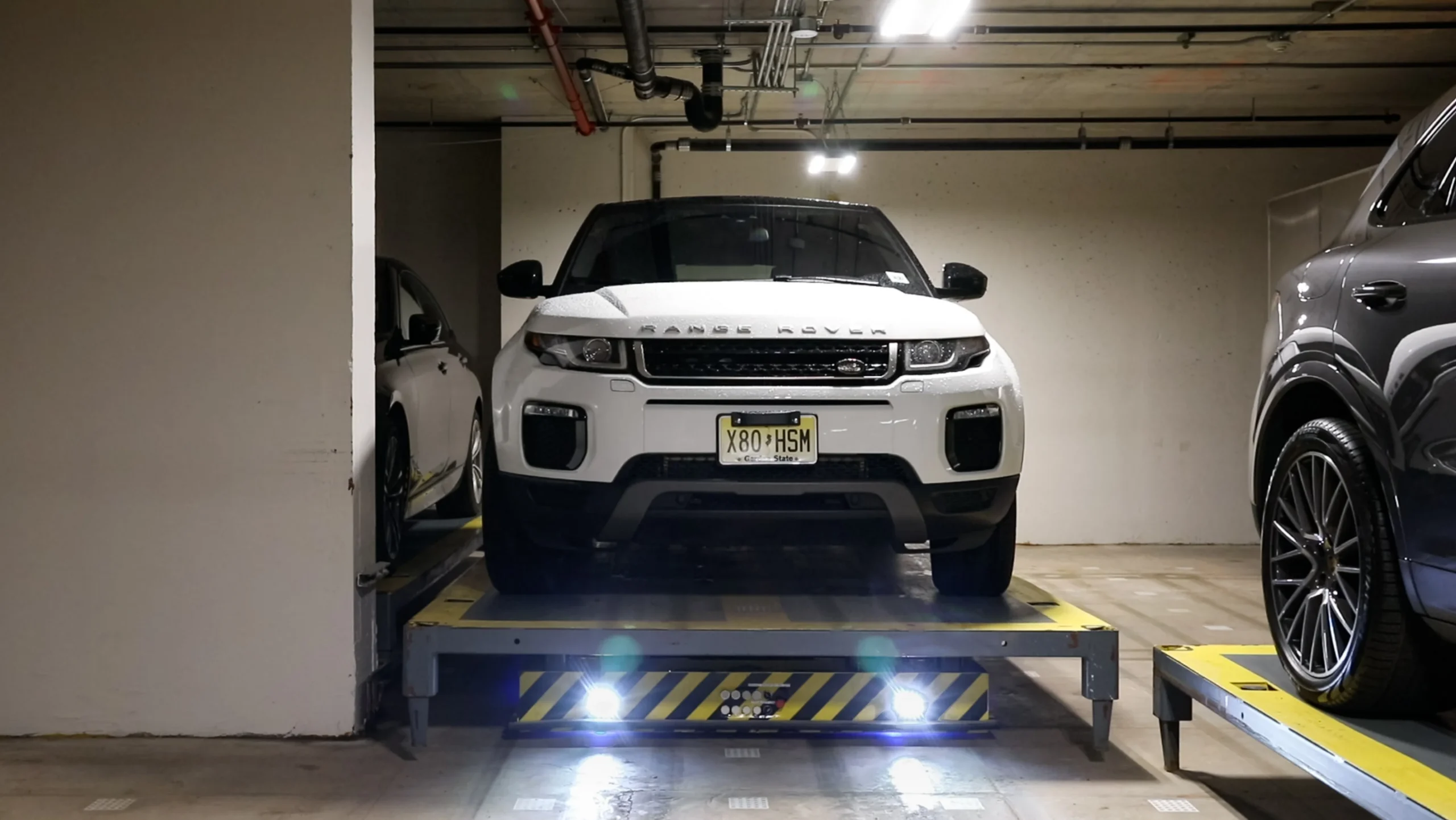
See It in Action

One of Manhattan’s tightest sites. Two requirements to solve.
Chelsea’s premium land position meant every square foot of the below-grade envelope had to perform. Conventional parking was ruled out immediately — the footprint had no room for ramps, no clearance for internal driveways, and no space to spare on the turning radii that traditional garage design requires. The building’s residents also needed storage, but the envelope had no obvious place for it.
The developer needed a system that could solve both problems simultaneously, fit within an existing basement, and match the quality standard expected at this address.
One platform. Every square foot accounted for.
The AGV system eliminates ramps and aisles entirely. Vehicles transfer at a single street-level entry point; the robotics handle all movement below grade. With the footprint freed from circulation infrastructure, 40 spaces fit in a structure that a conventional design could not have served.
The automated storage system followed the same logic. Using the same robotic platform already in the building, ParkPlus integrated 20 storage pods into a dedicated delivery room — no additional mechanical systems required, no separate infrastructure to maintain. Residents get a finished, private storage amenity that the building’s footprint appeared to have no room for.
Your things, on demand.
Adjacent to the parking structure sits a dedicated storage room — finished and appointed to match the building’s residential standard. Inside, twenty individual pods are managed by the same AGV robotics that move the cars. A resident presses a button. The system locates their pod, retrieves it, and delivers it to the room. A door opens. They step in, access their belongings privately, and leave. The pod returns to storage automatically.
No shared corridor. No rummaging past other people’s things. No staff to coordinate with. The storage amenity operates on exactly the same logic as the parking system — fully automated, always available, completely frictionless.

System Specifications
Common questions about AGV automated parking
How does an AGV automated parking system work?
AGV stands for Automated Guided Vehicle. In a parking application, robotic platforms move independently within the structure, guided by sensors and a central control system. A driver pulls to a ground-floor transfer point, steps out, and the system takes over — transporting the vehicle to an available space without the driver ever entering the garage. Retrieval reverses the process, returning the car to the transfer point on demand.
Because AGV systems require no internal driveways or ramps, every square foot of the structure stores vehicles. This makes AGV particularly well-suited to sites where conventional parking is not viable due to constrained footprints or limited below-grade clearance.
What is an automated storage pod system?
An automated storage pod system applies the same robotic retrieval logic used in AGV parking to personal storage. Individual pods are housed within a managed space; a resident or user requests their pod through a building interface, and the system retrieves and delivers it to a designated access room. The user enters privately, accesses their belongings, and the pod returns to storage automatically when they leave.
Because the storage system shares the same robotic platform as the parking system, both functions can operate within the same building envelope without duplicating mechanical infrastructure. The access room is typically finished to a residential or hospitality standard rather than a utility standard.
How many vehicles does an AGV parking system typically accommodate?
Capacity depends on the site footprint and the number of levels available. AGV systems consistently deliver more spaces per square foot than conventional structures because aisles, ramps, and turning lanes are eliminated entirely. A site that might yield 25 to 30 spaces in a conventional below-grade garage can often support 40 or more with an AGV system in the same footprint.
At 520 West 28th Street, the two-level subterranean installation accommodates 40 vehicles, served by a single entry point at street level.
What are the space requirements for an AGV parking system?
AGV systems are designed for sites where conventional parking is not viable — constrained below-grade footprints, no clearance for ramps, or buildings where every square foot needs to be productive. A single entry transfer point at grade is the only street-level requirement. The robotic structure occupies the basement envelope without the circulation overhead that traditional garage design demands.
Systems can be integrated into existing building envelopes and can accommodate irregular floor plans or split-level configurations depending on the specific site geometry.
How long does vehicle retrieval take with an AGV system?
Average retrieval time for most AGV automated parking systems is 90 seconds to 3 minutes from the moment a request is submitted. Systems with multiple AGV units running simultaneously can process concurrent retrievals, reducing wait times during peak periods. The control system manages sequencing to minimize conflicts and prioritize vehicles with active retrieval requests.
For residential buildings, most systems include a mobile or building-app interface that allows residents to request their vehicle in advance, so it is at the transfer point by the time they arrive at the lobby level.
Can an AGV parking system support EV charging?
Yes. AGV automated parking systems are compatible with EV charging infrastructure integrated at the pallet or bay level within the robotic structure. Because vehicles remain stationary in their assigned space for the duration of each stay, charging during storage is straightforward to implement and does not require the vehicle to be moved to a dedicated charging bay.
Charging level and connector compatibility depend on the building’s electrical capacity and the specific project configuration. Level 2 charging is the most common implementation in residential AGV installations.
Ready to discuss your project?
Every ParkPlus system is custom-engineered to the site. Talk to our team about your project requirements, site constraints, and system options.