
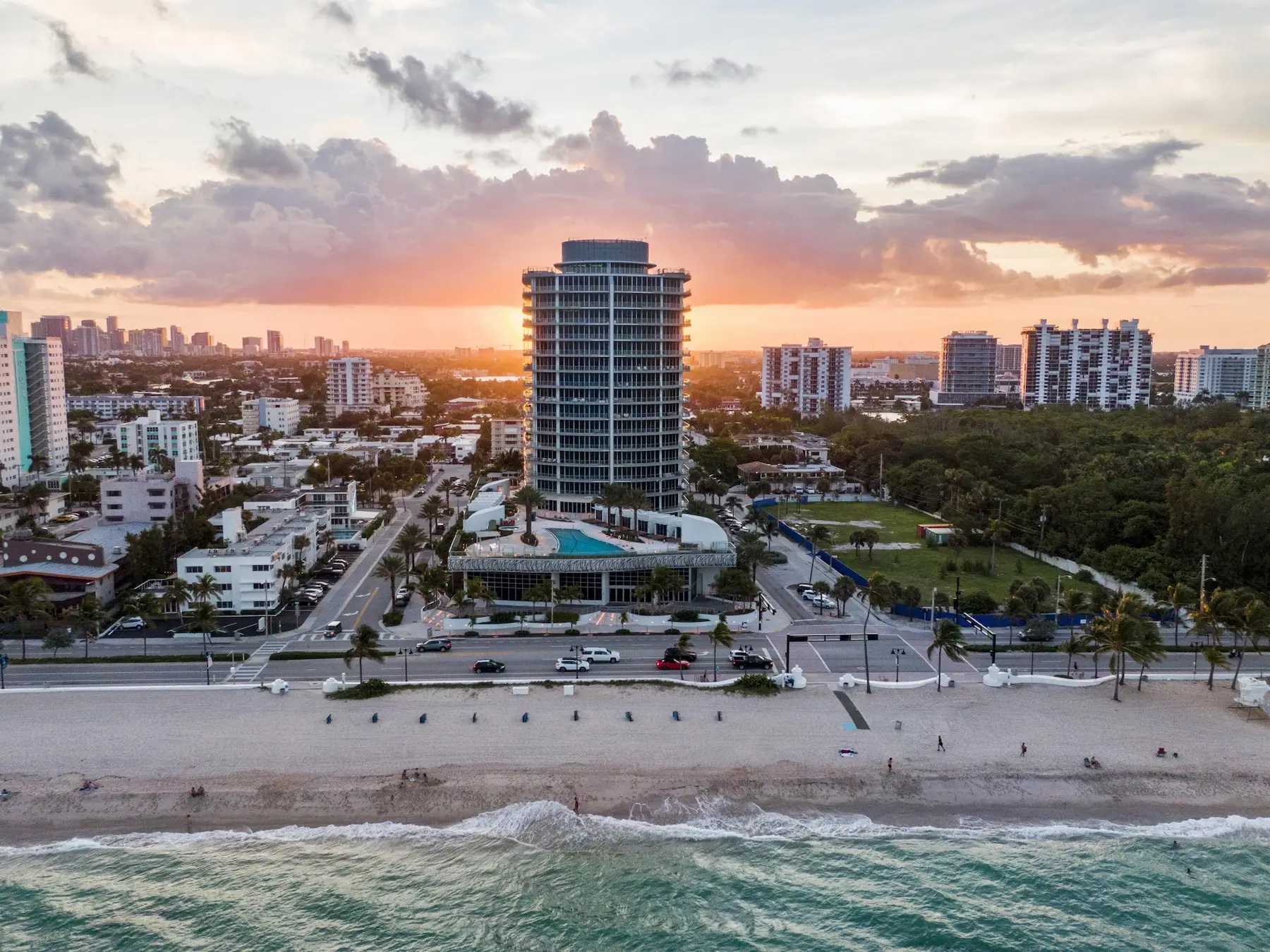
The world’s largest AGV parking system at the time. One floor below grade.
Paramount Residences sits at the edge of Fort Lauderdale Beach with unobstructed ocean views to the east and the Intracoastal behind it. The 18-story tower has 95 luxury units, and the developer’s requirement was straightforward: at least two parking spaces per unit. What made it difficult was everything beneath the building — a water table sitting close to the surface and a site narrow enough to make a conventional two-level ramp garage impractical and expensive.
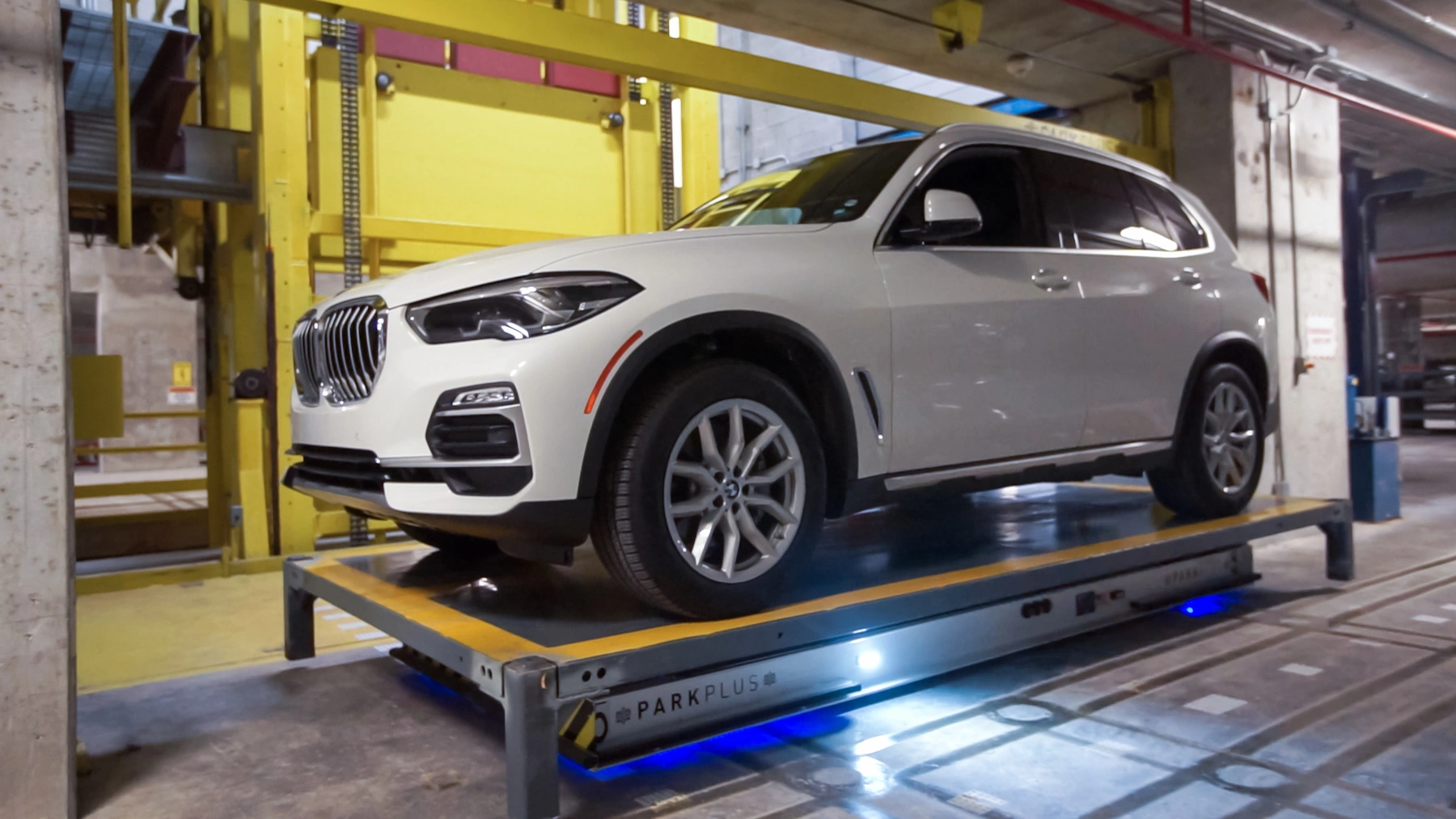
ParkPlus designed and installed a 221-space AGV automated parking system on a single subterranean floor. Eight autonomous robotic vehicles operate within the structure, moving cars on trays without drivers ever entering the garage. The system replaced what would have been two levels of costly below-grade excavation with one — achieving greater capacity in a fraction of the footprint a conventional garage would have required.
When the installation was completed in 2018, it was the largest fully autonomous robotic AGV parking system in the world. For developer Royal Palm Companies, it was also a statement of intent — a deliberate bet on where parking technology was heading, made at a point when few developers were willing to be first.
221 spaces. One floor. Half the footprint.
A conventional ramp garage serving 95 units at two spaces each would have required two levels of below-grade excavation. At Paramount’s oceanfront location, that meant cutting through a high water table — an undertaking that would have added significant time and cost to the construction programme before a single parking space was built.
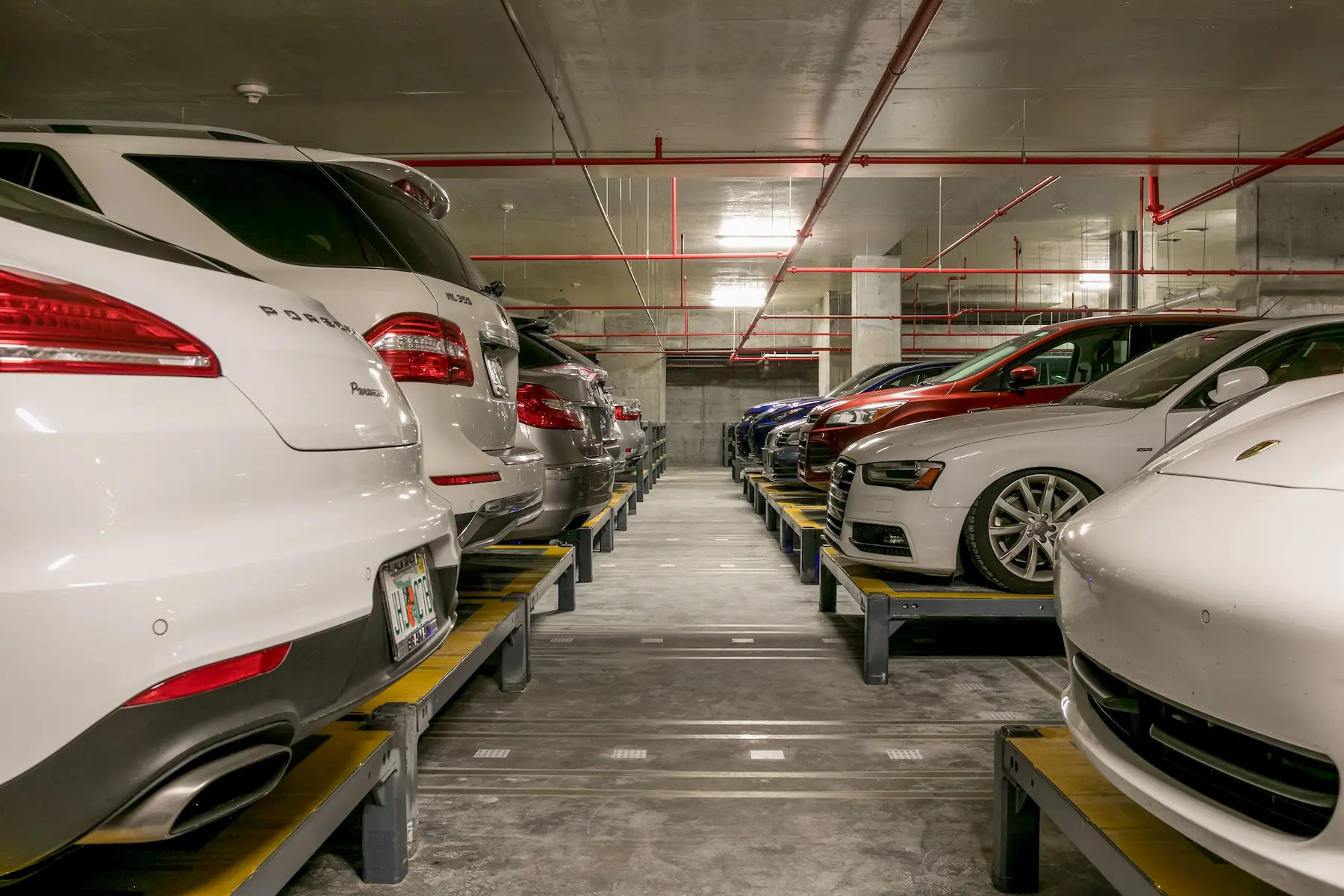
The AGV system delivered the full 221-space requirement on a single subterranean level, in approximately 50,000 square feet — roughly half the footprint a conventional structure would have occupied. The water table problem was removed entirely. The construction timeline compressed. And the above-grade envelope remained fully available for the residential floors the developer was actually building to sell.
Value figures are project-specific estimates based on comparable conventional parking structures in this market. Recovered space valuations use local market rates at time of completion. Actual results vary by site conditions and local factors.
Project Photos
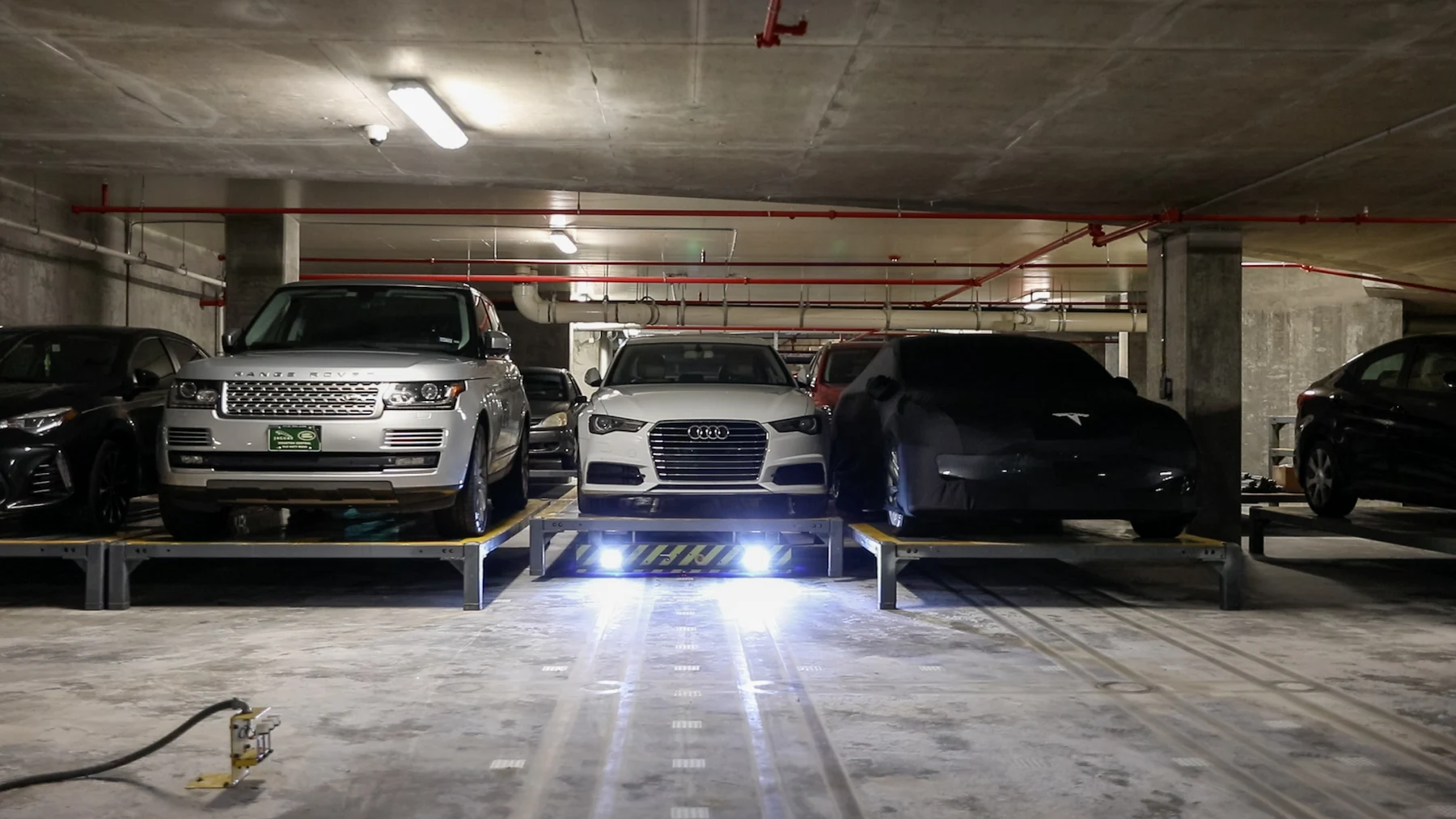
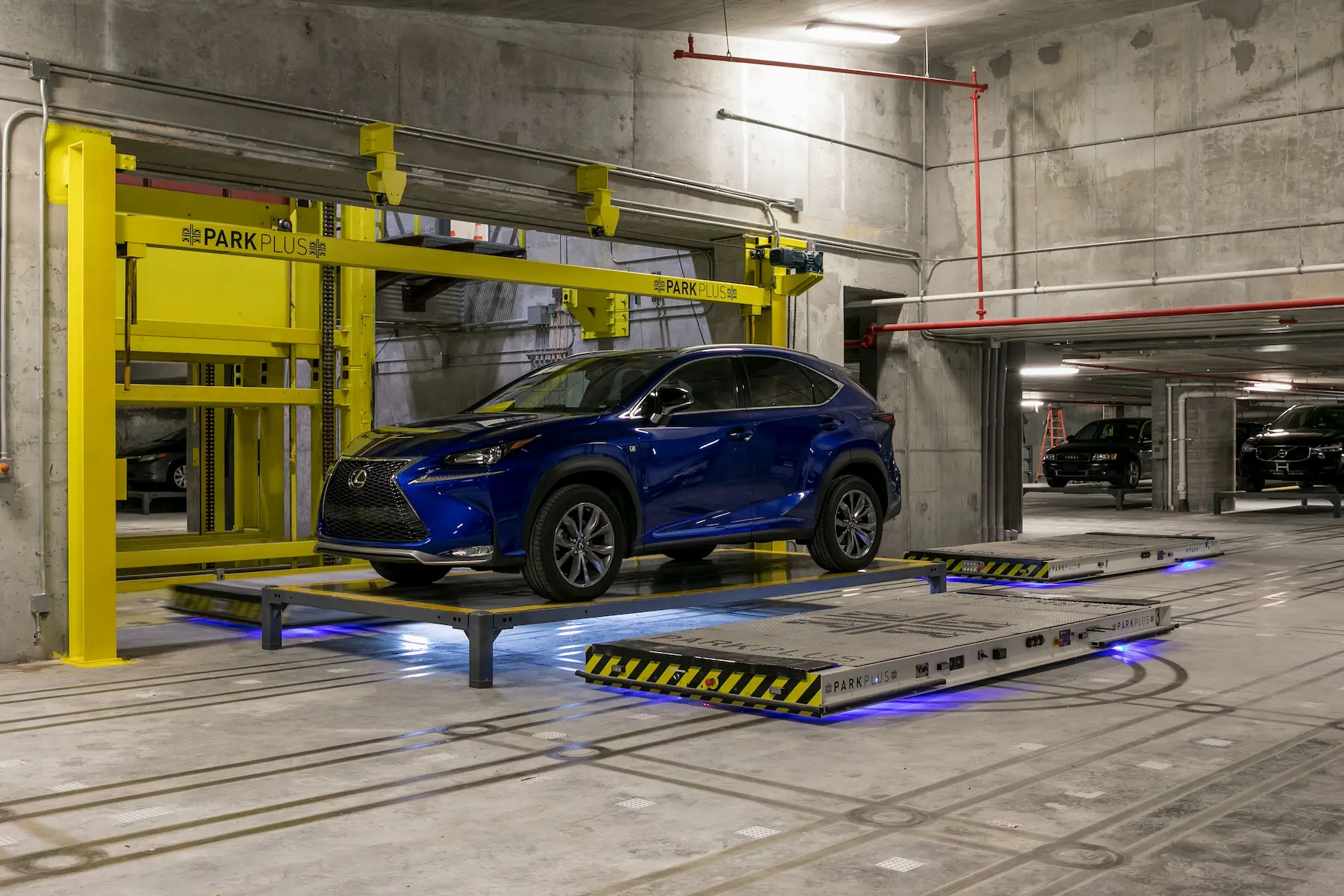
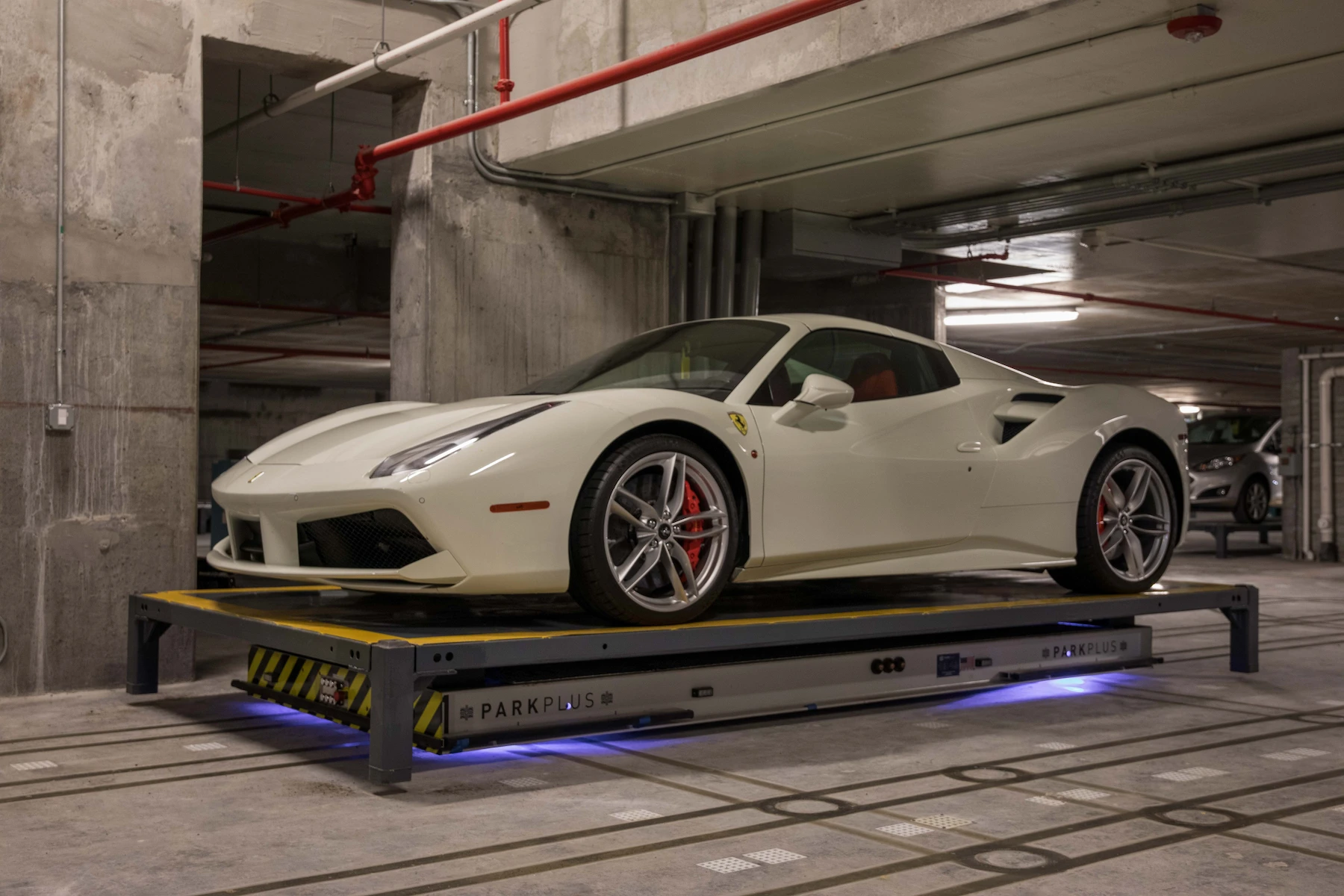
See It in Action
“It was less about saving money and more about being up-to-date on technology. We saw this as being the future.”
Dan Kodsi, CEO, Royal Palm Companies
Oceanfront site. High water table. Two spaces per unit required.
Paramount’s location directly on Fort Lauderdale Beach is its greatest asset and its greatest constraint. The proximity to the ocean means the water table sits close to the surface — deep excavation is expensive, technically complicated, and time-consuming. A conventional two-level underground garage would have required exactly that, compressing the construction budget and pushing out the delivery schedule.
The developer needed to deliver 221 parking spaces on a site where going deep was not a viable strategy, without sacrificing the above-ground envelope or the project economics.
One level. Eight robots. Every space accounted for.
The AGV system eliminates the ramps and drive aisles that force conventional garages to spread horizontally. Eight autonomous robots move vehicles on trays within the single-level structure, achieving a density that a ramp garage would need two levels to match. The water table constraint was resolved not by engineering around it, but by removing the need to dig into it.
The system is fully unattended. Residents use the ParkPlus mobile app to call for their vehicle; it is at the valet station when they arrive. Over time, the system learns usage patterns and positions frequently accessed vehicles in more retrievable locations — shortening average retrieval times without any manual configuration.
System Specifications
Common questions about AGV automated parking
How does the AGV automated parking system at Paramount work?
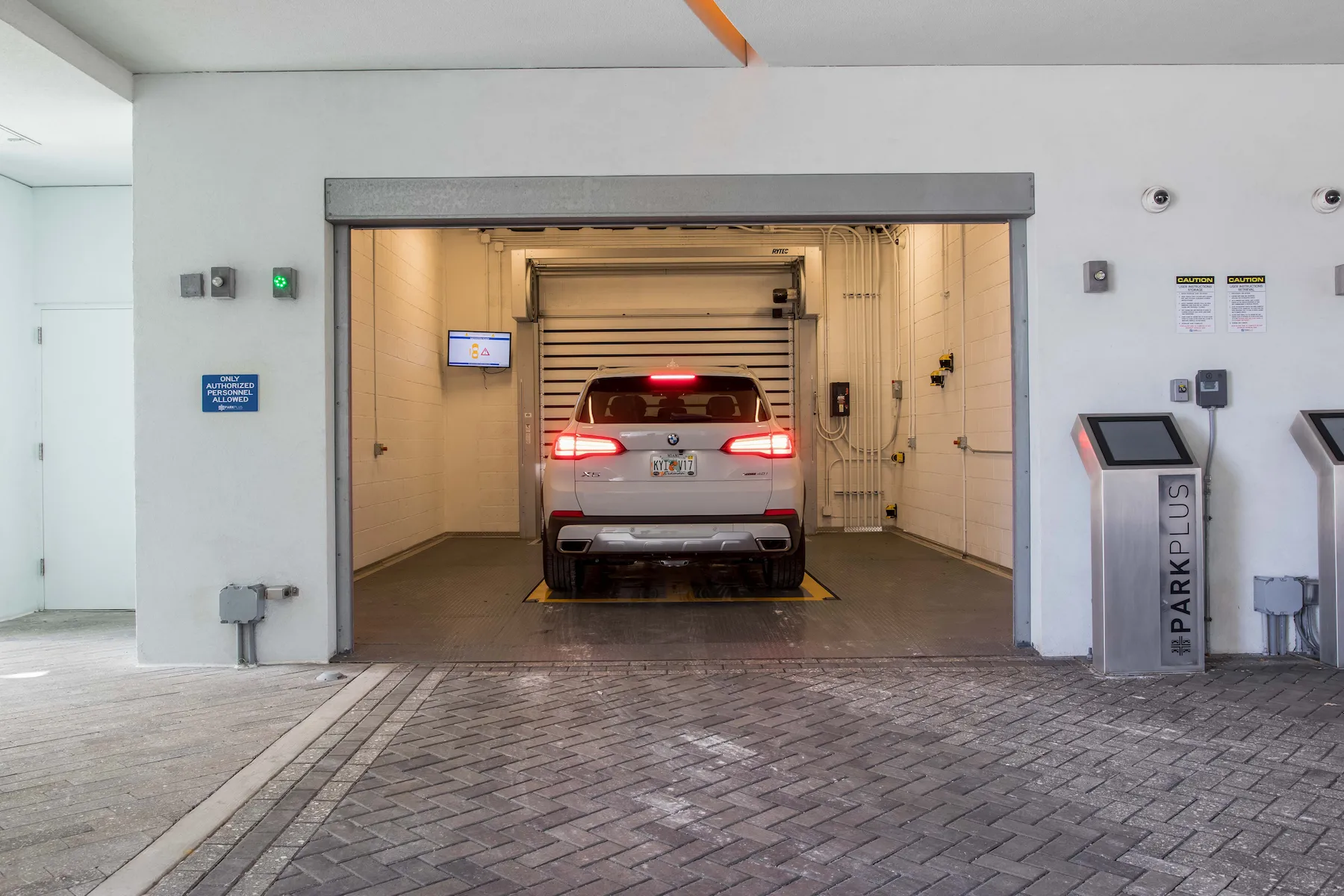
Eight autonomous robotic vehicles operate within the single-level subterranean garage, moving cars stored on flat trays. Residents pull to a street-level loading bay where laser sensors measure the vehicle’s dimensions in real time. An AGV then transports the car to an available space below. Retrieval is initiated through the ParkPlus mobile app, and the system brings the vehicle to the valet station on demand.
No driver ever enters the garage. The system operates without attendants and is monitored remotely by ParkPlus.
Why was an AGV system chosen instead of a conventional ramp garage?
Paramount’s oceanfront location meant the water table sat close to the surface. A conventional ramp garage would have required two levels of below-grade excavation — a technically demanding and costly undertaking in that environment. The AGV system delivered the full parking requirement on a single subterranean level, in roughly half the footprint a ramp structure would have needed, while avoiding the deeper excavation entirely.
The developer also identified automated parking as the direction the industry was heading and chose to get ahead of that curve rather than build a conventional structure that would age less gracefully.
How long does vehicle retrieval take?
Average retrieval time at Paramount is approximately four minutes. Residents request their vehicle through the ParkPlus mobile app in advance, so the car is typically waiting at the valet station by the time they reach the lobby level. Vehicles stored in long-term tandem positions, up to three cars deep, may take slightly longer as the system coordinates multiple robots to retrieve them.
The system learns over time, moving frequently used vehicles to more accessible positions to reduce average wait times without manual intervention.
What does “world’s largest AGV parking system” mean in practice?
At the time of completion in 2018, Paramount Residences housed more AGV-managed parking spaces under a single roof than any other installation globally. The 221-space system demonstrated that AGV technology was not limited to boutique applications — it could deliver the kind of scale that large residential developments require. That milestone has since been surpassed by subsequent ParkPlus installations, including Brickell House in Miami.
For developers evaluating automated parking at the time, Paramount was the reference project that validated the technology at a scale relevant to their own programmes.
Can an AGV parking system be installed near the ocean or in a high water table environment?
AGV systems are well-suited to high water table environments precisely because they minimise the depth of excavation required. By eliminating ramps and internal driveways, AGV technology achieves conventional parking capacity on fewer below-grade levels — in many cases reducing a two-level requirement to one. This is a significant advantage on coastal sites where deep excavation is expensive and technically challenging.
Each project requires a site-specific structural assessment, but the reduced excavation demand is a consistent advantage of AGV over conventional ramp garages in oceanfront or high water table locations.
Does the AGV system at Paramount support electric vehicle charging?
ParkPlus AGV systems are EV-ready, with charging infrastructure integrated at the tray or bay level within the robotic structure. Because vehicles remain stationary in their assigned space for the duration of each stay, charging during storage is straightforward to implement without requiring vehicles to be moved to dedicated charging bays. The specific EV configuration at Paramount reflects the electrical infrastructure in place at time of completion; the system architecture supports charging expansion as demand requires.
Ready to discuss your project?
Every ParkPlus system is custom-engineered to the site. Talk to our team about your project requirements, site constraints, and system options.