

38-space AGV system beneath an Isay Weinfeld landmark in Chelsea
The Jardim is an 11-story luxury condominium at 527 W 27th St in Chelsea, developed by Centaur Properties and Greyscale Development Group and designed by Isay Weinfeld. Thirty-six residences are distributed across two towers surrounding a shared base with two private gardens — a genuinely rare amenity in New York City. ParkPlus designed and installed a 38-space AGV Automated Parking System on a subterranean level, completed in 2019.
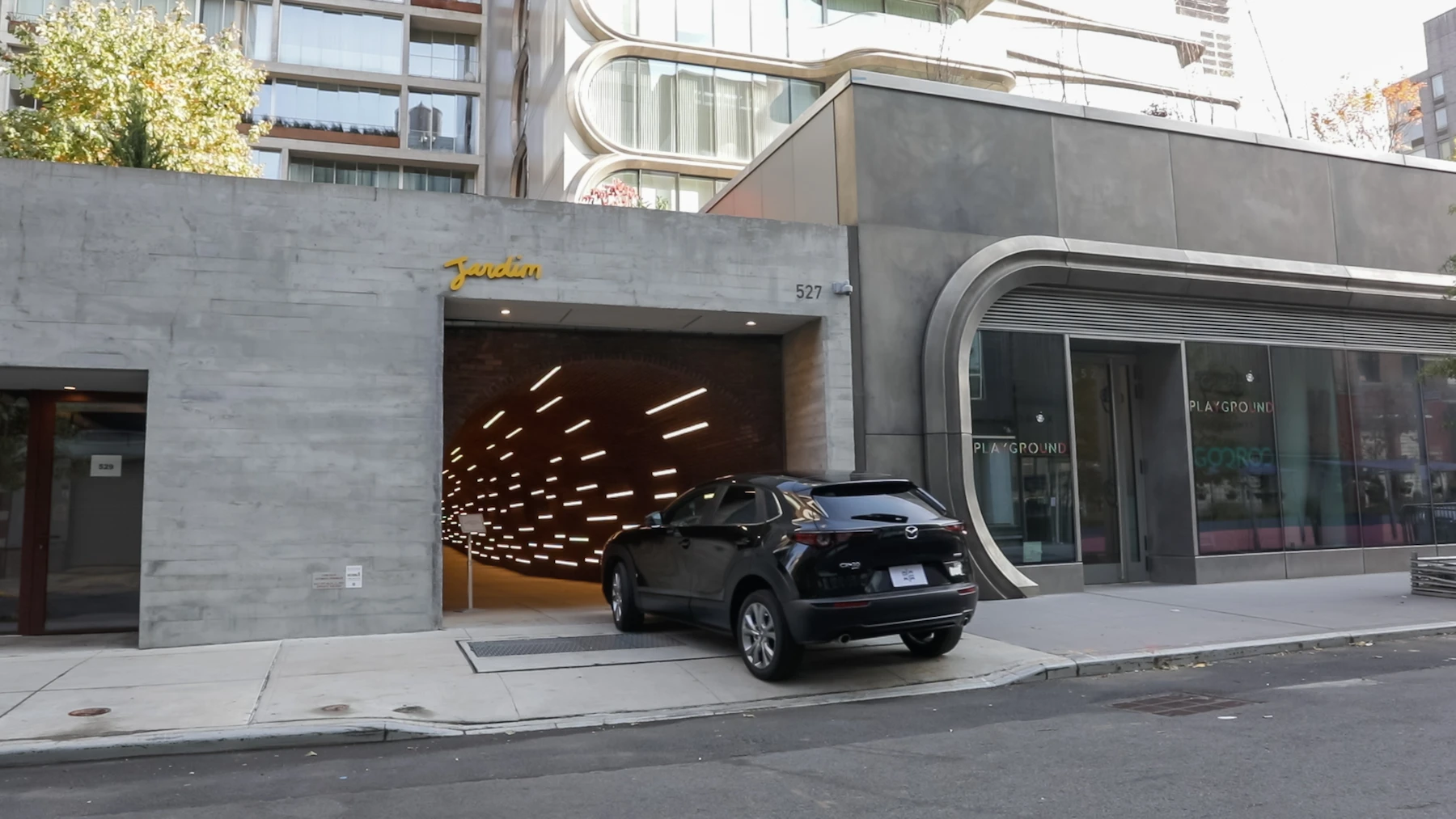
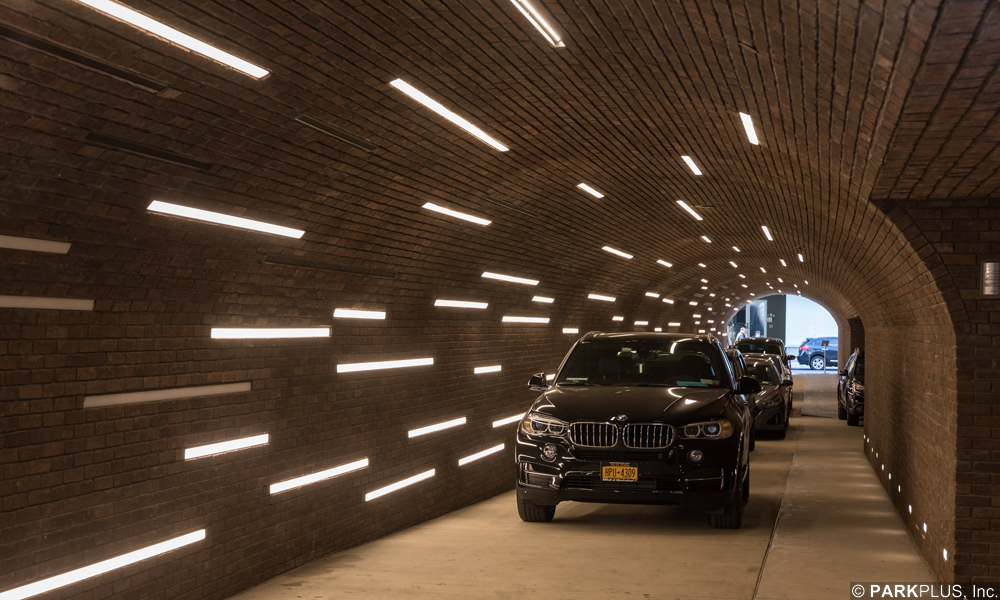
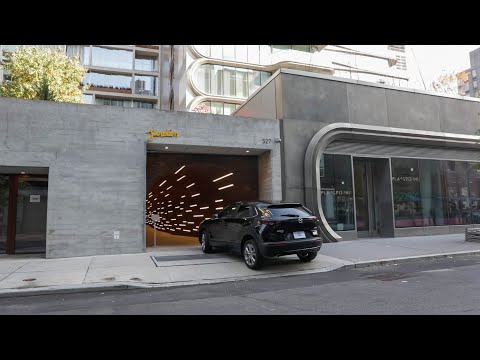
The entry experience was designed to match the building’s architecture. Residents approach via a brick-vaulted private drive connecting West 27th and West 28th Streets — a sheltered, private arrival sequence that leads directly to the lobby with floor-to-ceiling windows overlooking the gardens. The parking system is accessed from this same arrival sequence, placing automated parking within the building’s overall design logic rather than as a separate utility.
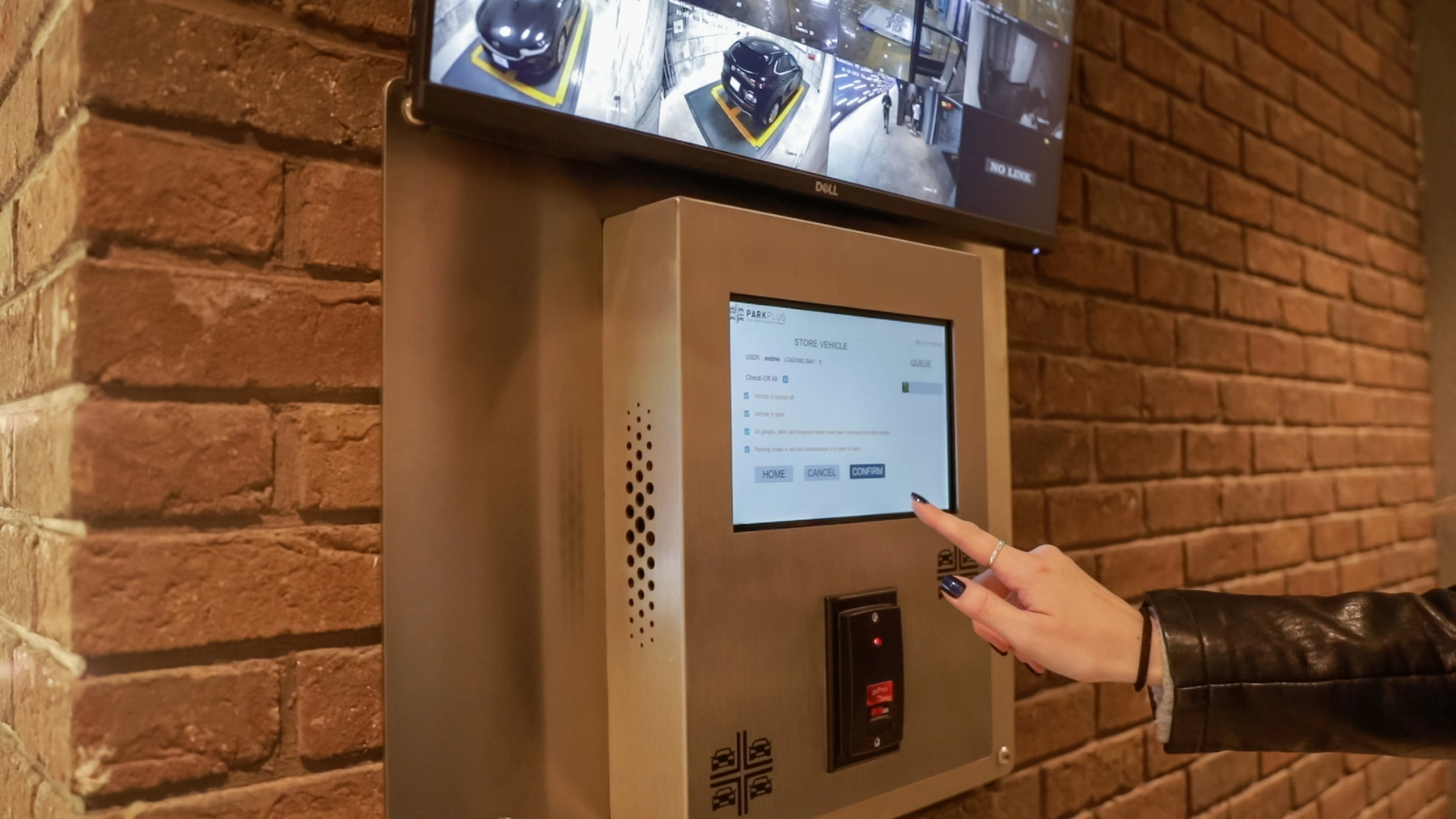
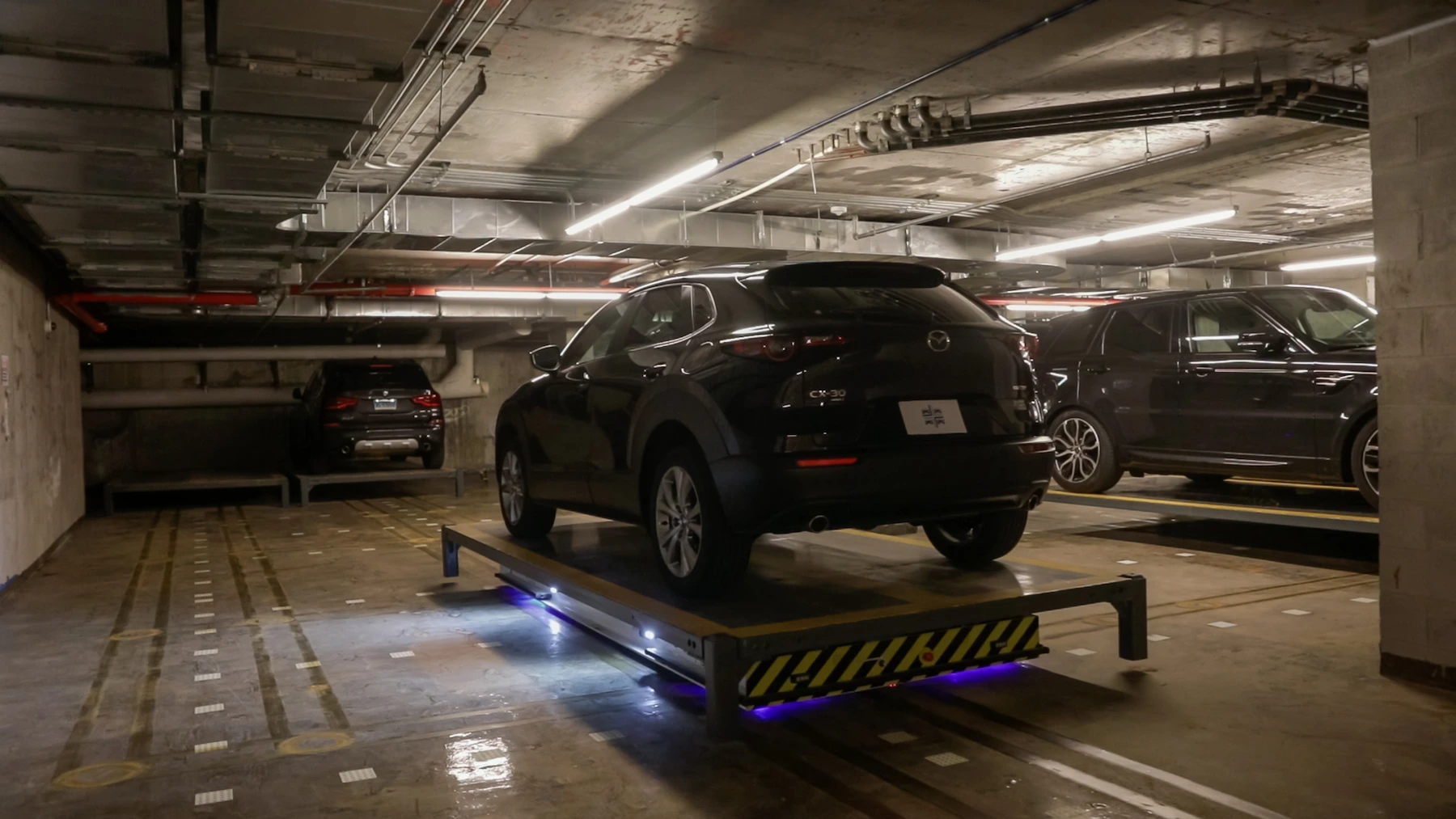
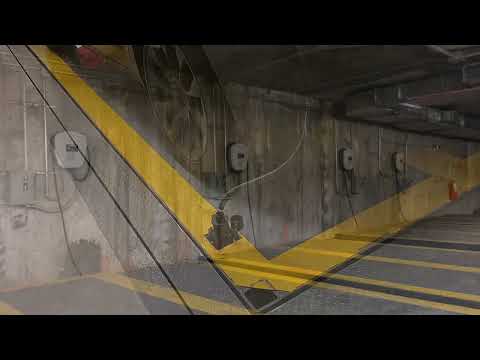
Free-roaming, self-charging, omni-directional AGV robots manage all storage and retrieval below grade. Residents request their vehicle via touchscreen kiosk or smartphone. The system was initially installed with 4 EV charging stations and is being expanded to 20 — a 5x increase that reflects both the building’s resident profile and New York City’s regulatory direction on EV provisioning.
38 spaces below grade. Arrival experience intact.
Chelsea land values leave no room for conventional parking infrastructure. A ground-level or above-grade garage for 38 spaces would have consumed area that, at Jardim’s scale and positioning, is far more valuable as garden, lobby, or residential footprint. The AGV system delivers the full parking requirement in a compact subterranean vault, with no ramps, drive aisles, or above-grade parking presence of any kind.
The more distinctive value at The Jardim is the integration of parking within the building’s arrival experience. The brick-vaulted private drive that connects West 27th and West 28th Streets is a design element, not just access infrastructure. Parking arrives and departs through the same sequence. There is no separate service entrance, no utility zone visible to residents. The system supports the building’s design intent rather than working against it.
The EV expansion from 4 to 20 stations demonstrates a specific and important value proposition: AGV systems can be reconfigured to increase EV provisioning without rebuilding the parking structure. The charging infrastructure is embedded in the storage trays. Adding capacity is a targeted upgrade, not a reconstruction. For buildings completing in a regulatory environment that will continue to mandate higher EV ratios, that scalability has direct economic value.
EV station count per installed and planned configuration. Expansion timeline subject to building management schedule.
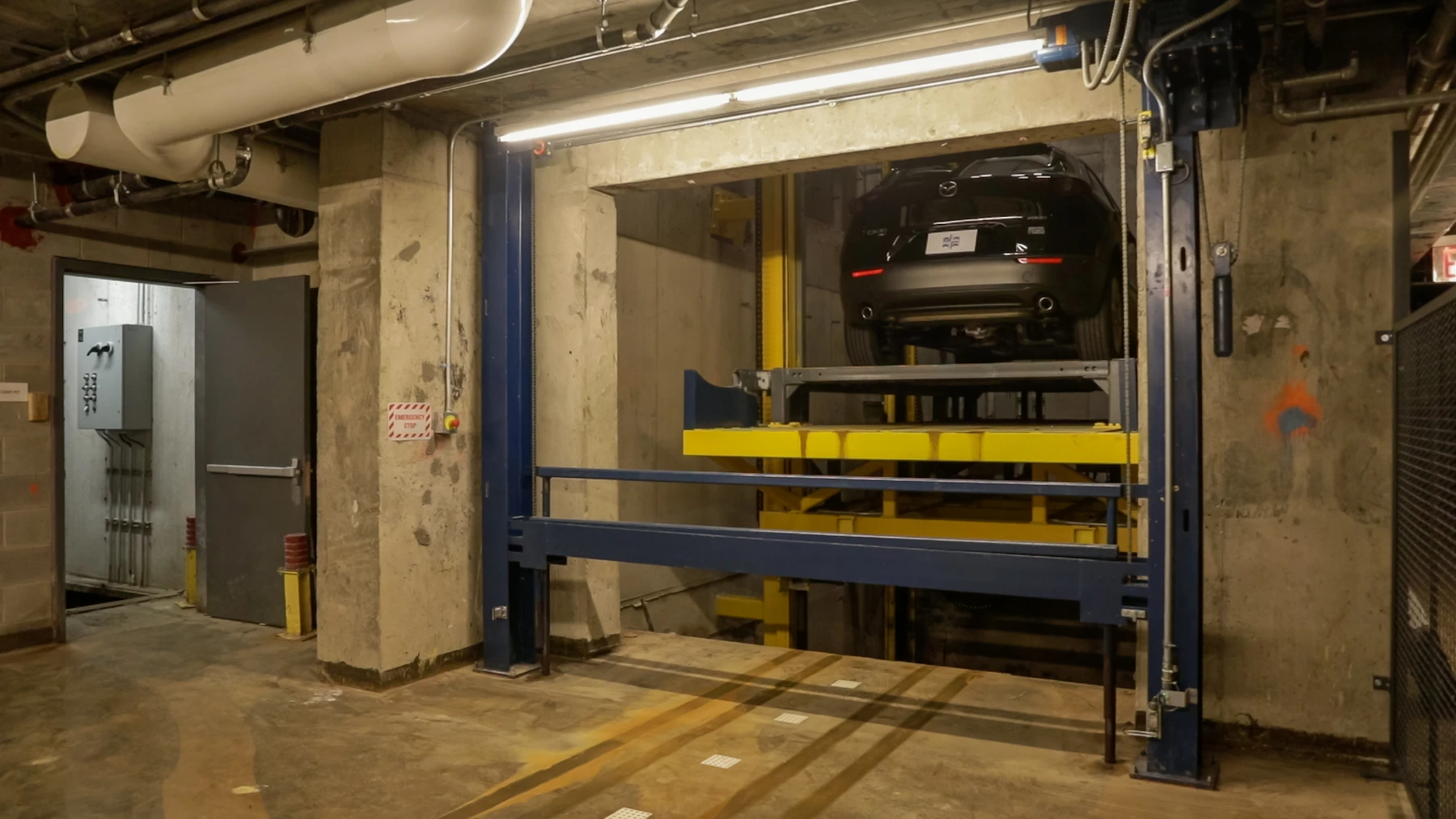
Project Photos
See It in Action
38 spaces in Chelsea without compromising a landmark building’s arrival experience
The Jardim’s architecture is built around the arrival sequence: the brick-vaulted private drive, the lobby with garden views, the two towers surrounding shared green space. Placing conventional parking infrastructure — ramps, an entrance separate from the main drive, above-grade parking structure — anywhere within that composition would have worked against the building’s fundamental design logic. And in Chelsea, the land area consumed by conventional parking has a direct cost in residential sellable area and garden space.
The project also needed the parking system to accommodate the EV provisioning required at permitting, while being capable of scaling as the regulatory environment moved.
Subterranean AGV vault accessed through the building’s own arrival drive
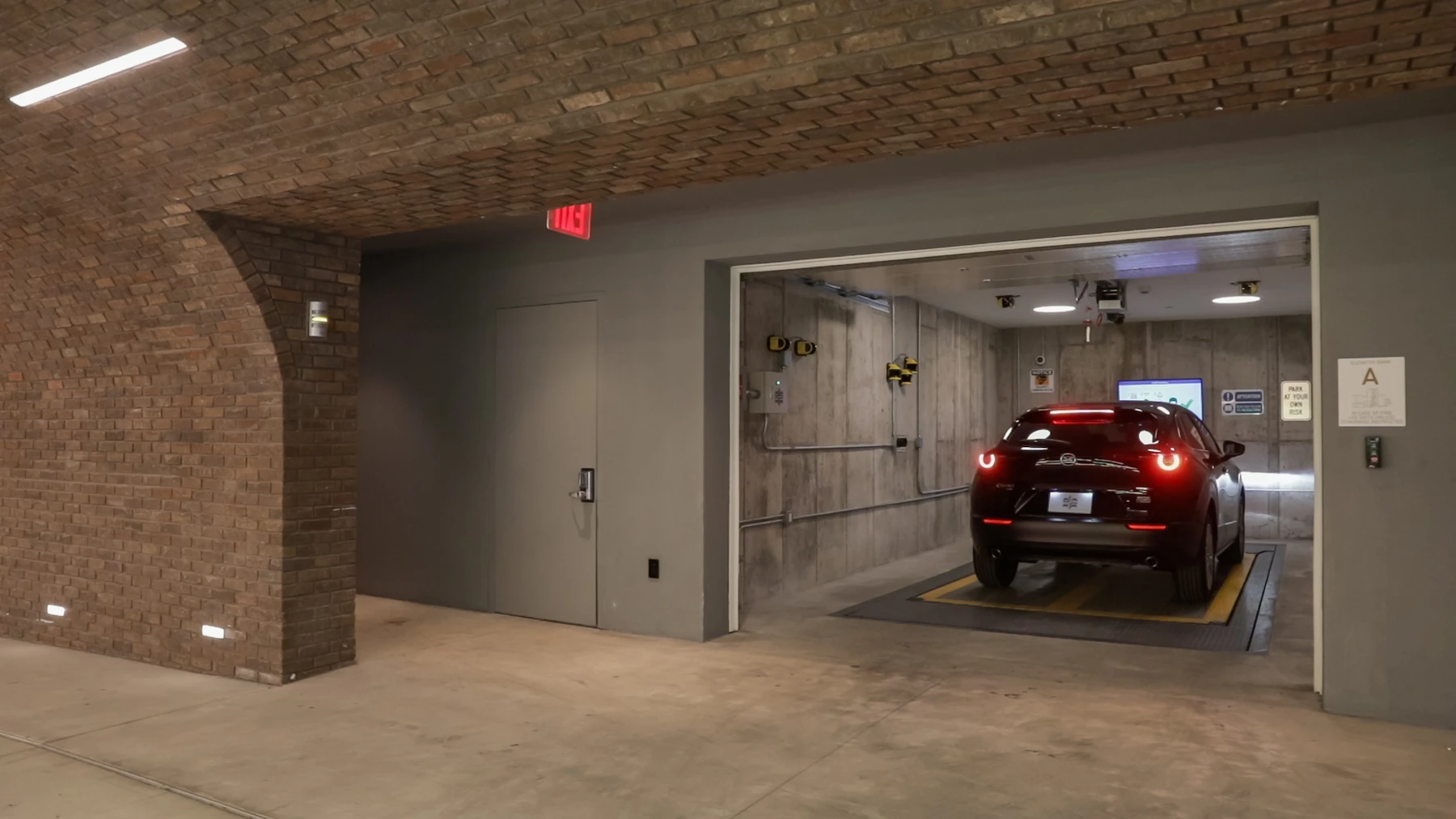
ParkPlus installed a 38-space AGV system in the subterranean level, with vehicle entry and retrieval accessed directly from the brick-vaulted private drive. Residents arrive, the system receives the vehicle at the entry point on the drive, and the AGV robots handle everything below. No separate parking entrance. No ramp visible from the street or gardens. Parking is present in the building’s arrival experience only as a seamless handoff point.
The freestanding AGV vault configuration and tray-based EV charging made the subsequent expansion from 4 to 20 EV stations a targeted reconfiguration rather than a structural intervention — exactly the flexibility the building’s ownership required as New York City’s EV mandates evolved.
From 4 to 20. The system scales. The building doesn’t have to change.
The Jardim was installed in 2019 with 4 EV charging stations integrated into the AGV parking trays. As EV adoption has grown — and as New York City has progressively mandated higher EV provisioning ratios in residential buildings — the system is being expanded to 20 charging stations.
This is a targeted upgrade, not a structural project. EV charging in an AGV system is embedded in the storage trays. Adding capacity means reconfiguring trays and their charging connections within the existing vault. The building envelope, the entry sequence, the subterranean structure — none of it changes. The parking system adapts to the regulatory environment; the building does not have to.
For developers designing buildings today, the implication is clear: an AGV system installed with the EV provisioning required at permitting can be upgraded as requirements increase — without rebuilding the garage.
System Specifications
Common questions about AGV automated parking in luxury residential buildings
How does AGV parking work at The Jardim?
Residents drive into the entry point on the brick-vaulted private drive and exit the vehicle. The system is activated via touchscreen kiosk or smartphone app. Free-roaming AGV robots retrieve the vehicle’s storage tray and transport it to a designated space in the subterranean vault. When the resident requests retrieval, the system locates the vehicle, dispatches a robot, and delivers it to the entry point. The resident drives out via the same private drive.
No driving in the garage. No walking between levels. No interaction with parking infrastructure other than the entry handoff point on the drive.
How can EV charging be expanded in an existing AGV system?
In an AGV system, EV charging is integrated into the parking trays rather than into fixed wall or floor-mounted chargers. Expanding EV capacity means reconfiguring trays and their charging connections within the existing vault. The building structure, the entry sequence, and the subterranean configuration do not change. At The Jardim, this allows the EV station count to grow from 4 to 20 — a 5x increase — without any structural intervention in the building.
For developers, the implication is that an AGV system’s EV capacity can be designed to meet current permitting requirements and upgraded as regulatory mandates increase — without rebuilding the parking garage.
Is automated parking appropriate for boutique luxury residential buildings?
Yes. The Jardim demonstrates AGV parking at a boutique scale: 38 spaces, 36 residences, one subterranean level. The system is designed to the same standard regardless of building size. Residents at a boutique building have the same arrival experience — a clean handoff point, touchscreen or app retrieval, no contact with parking infrastructure — as residents in a larger tower. The Jardim also shows how automated parking can be integrated within an architect-designed arrival sequence rather than existing as a separate utility entrance.
How does AGV parking affect the design of a luxury residential building?
An AGV system eliminates the above-grade parking footprint entirely — no ramps visible from the street, no dedicated parking entrance separate from the building’s main arrival sequence, no parking structure consuming ground-level or podium area. At The Jardim, this meant the entire ground-level program could be dedicated to the private drive, lobby, and garden access, with parking accessible from the same drive rather than from a separate utility zone. The result is a building where parking is present as a function but invisible as an infrastructure element.
For architects and developers, automated parking creates the option to design the arrival experience around the building’s residential program rather than around parking geometry.
How does New York City’s EV mandate affect residential parking design?
New York City has adopted legislation progressively mandating EV provisioning in new residential construction, with charging-ready spaces required as a percentage of total parking spaces. The requirements are expected to increase over time. For developers, this means parking infrastructure installed today needs to either meet future requirements or be capable of upgrading to meet them. AGV systems with tray-integrated EV charging are expandable without structural intervention, which positions them well for the evolving regulatory environment. ParkPlus has completed multiple EV-enabled AGV systems in New York City, including The Jardim, 200 East 83rd Street, Greenwich West, 111 Varick St, and 70 Vestry St.
Ready to discuss your project?
Every ParkPlus system is custom-engineered to the site. Talk to our team about your project requirements, site constraints, and system options.