
The most technically ambitious collector car storage facility ever built with quad stackers
Westside Car Collectors Storage in Culver City, Los Angeles is a purpose-built collector vehicle facility founded by Matt Farah, host of The Smoking Tire — one of the most widely followed automotive podcasts in the United States. The flagship location was four years in the making, built entirely from the ground up to Matt’s exact specifications for what a world-class collector car facility should be.
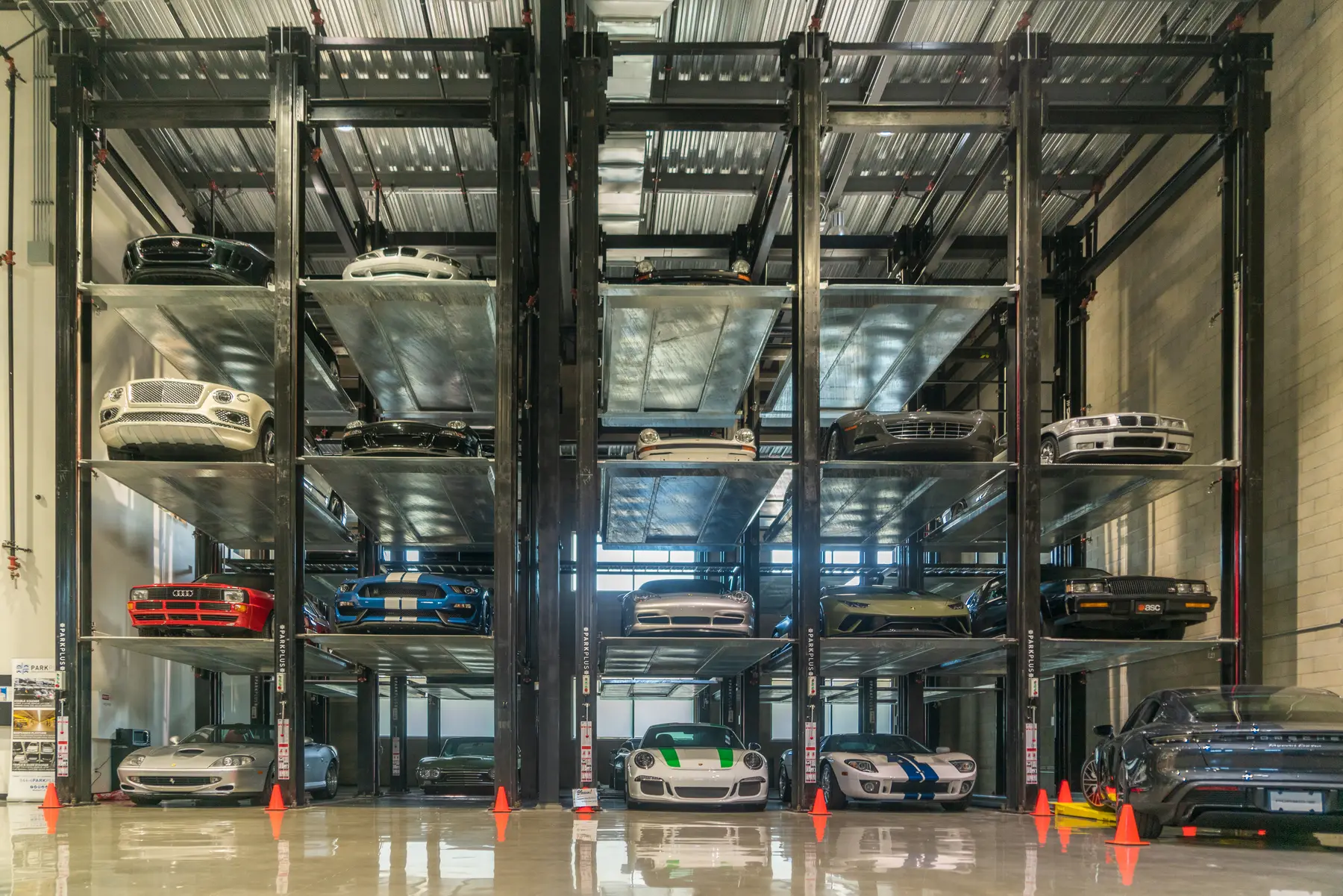
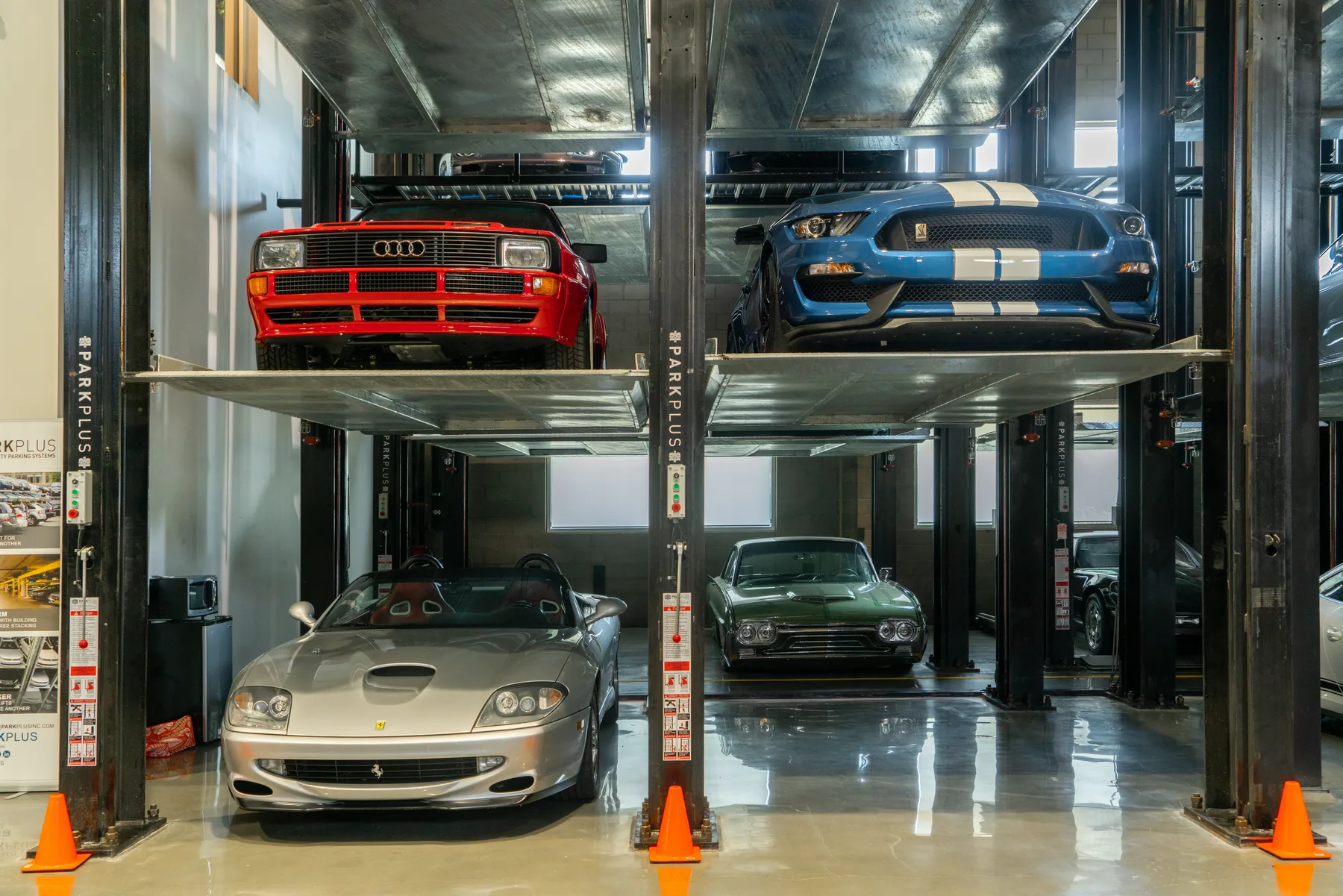
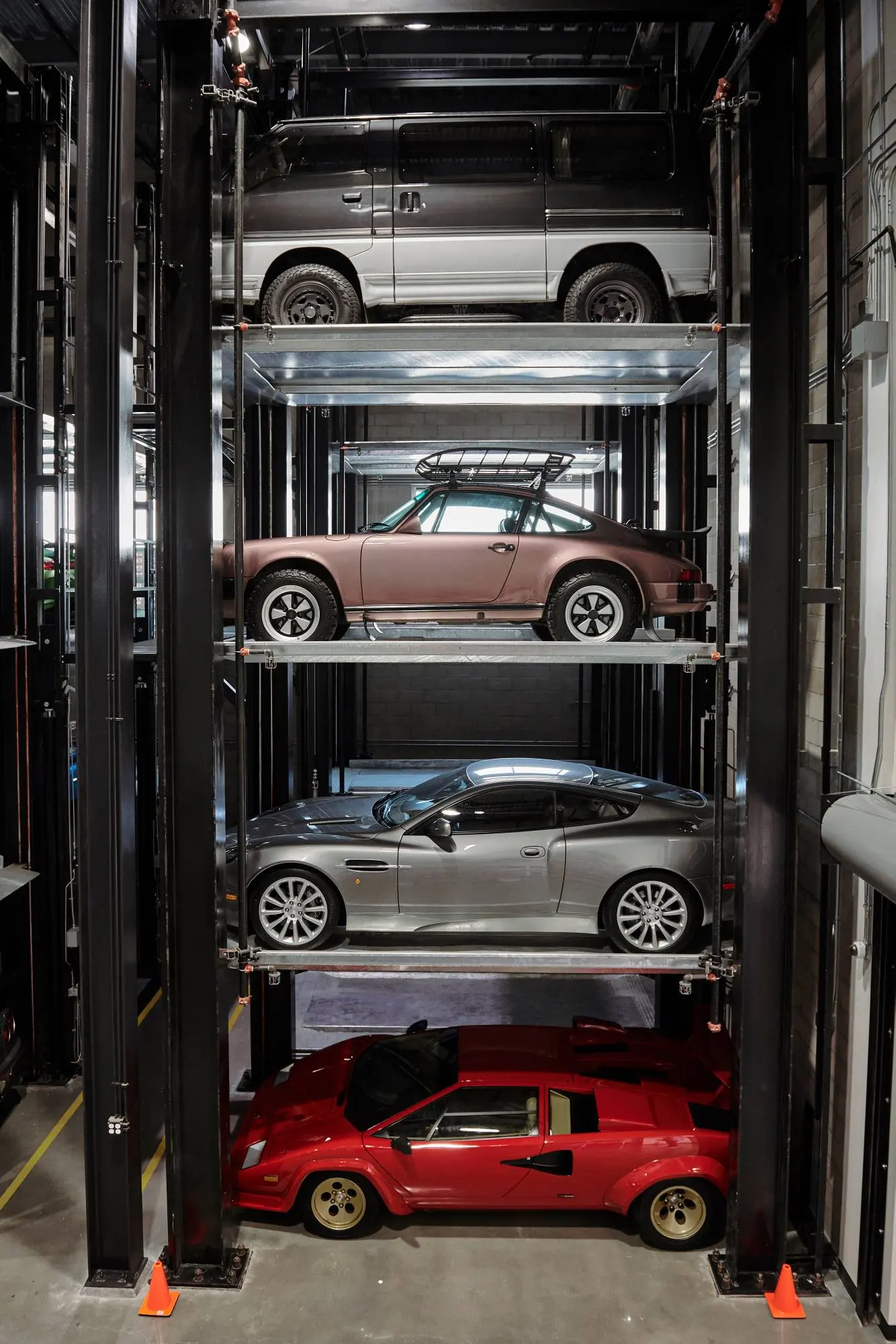
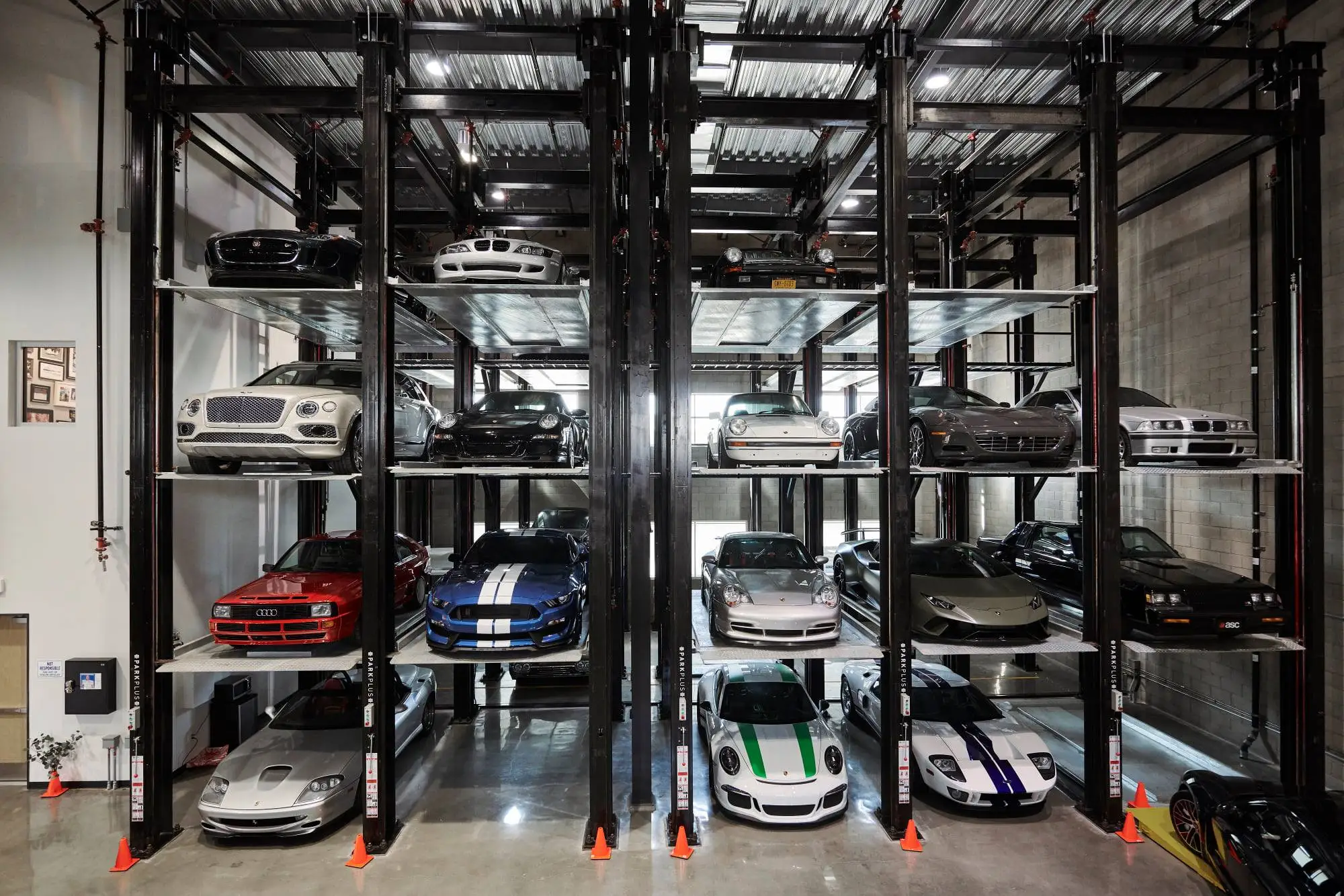
At the center of the building is what Matt calls the cathedral room: a 45-foot-tall main hall housing 18 ParkPlus QP1000 Quad Stacker parking lifts delivering 72 storage positions across four levels. The room can hold up to 90 vehicles including floor-level spaces. An underground level adds 40 further spaces, bringing total operational capacity to 110 cars. Every vehicle is on a battery tender at all times. A fully permitted indoor wash and detail bay with a recycled water system completes the facility.
The QP1000 installation at Westside Car Collectors represents five engineering firsts simultaneously — a combination that had never been attempted before this project.
Five things that had never been done before — all in one building
When Matt Farah specified the QP1000 Quad Stacker system for Westside Car Collectors Storage, he was entering territory where no quad stacker installation had gone before. Documented across two separate facility tours recorded for major automotive media audiences, Matt put it plainly: “We have 18 of them indoors here. No one has done quite a few things that we’ve done before.”
Inside the Cathedral Room

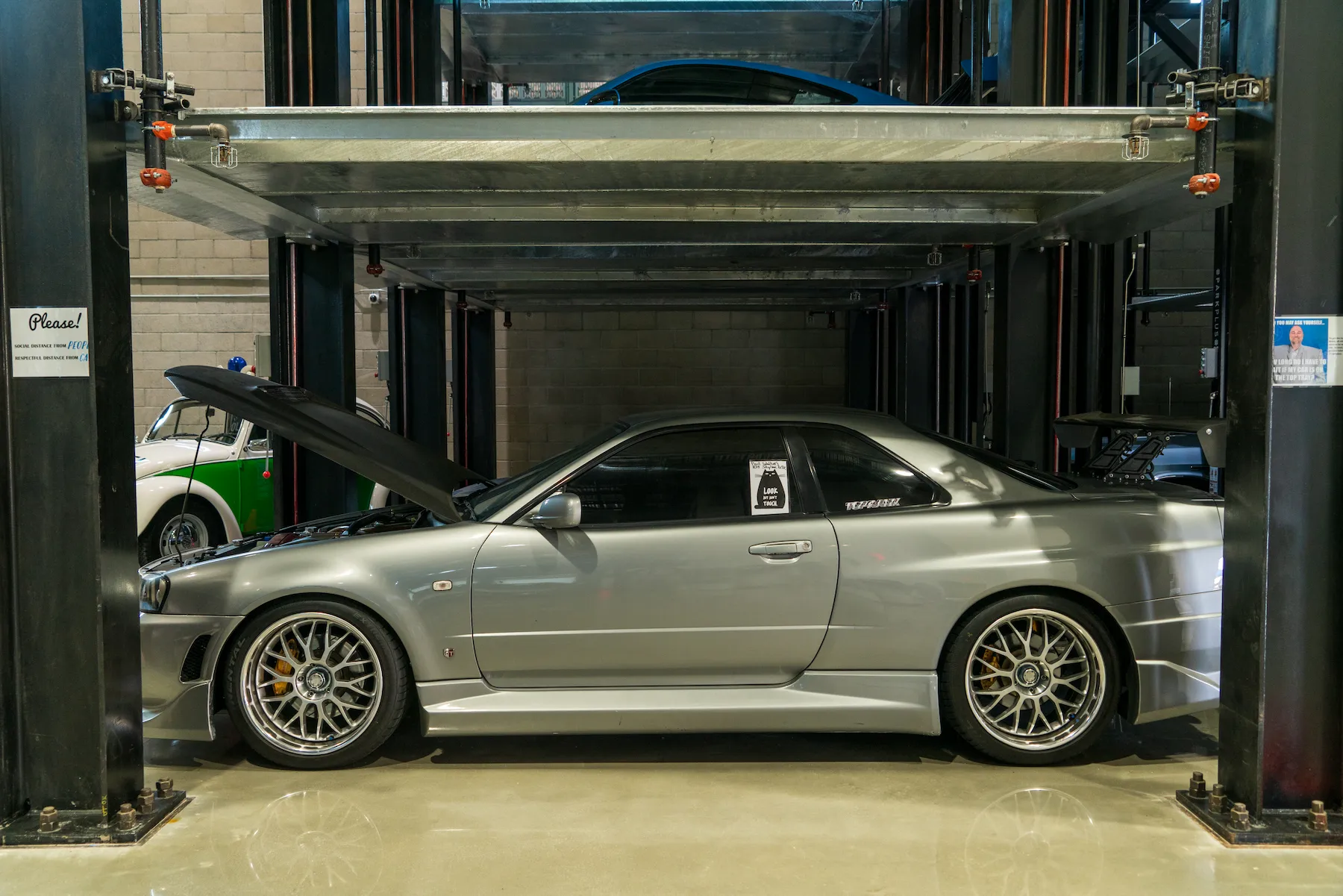
In Matt’s Own Words
Two independent automotive media features — both centered on the engineering story behind the ParkPlus QP1000 installation.
We are the first people to ever do indoor quad vehicle stackers — the first to do quad stackers over a basement, and the first to do quad stackers in a seismic zone. Certainly the first to do all of those things together at once.
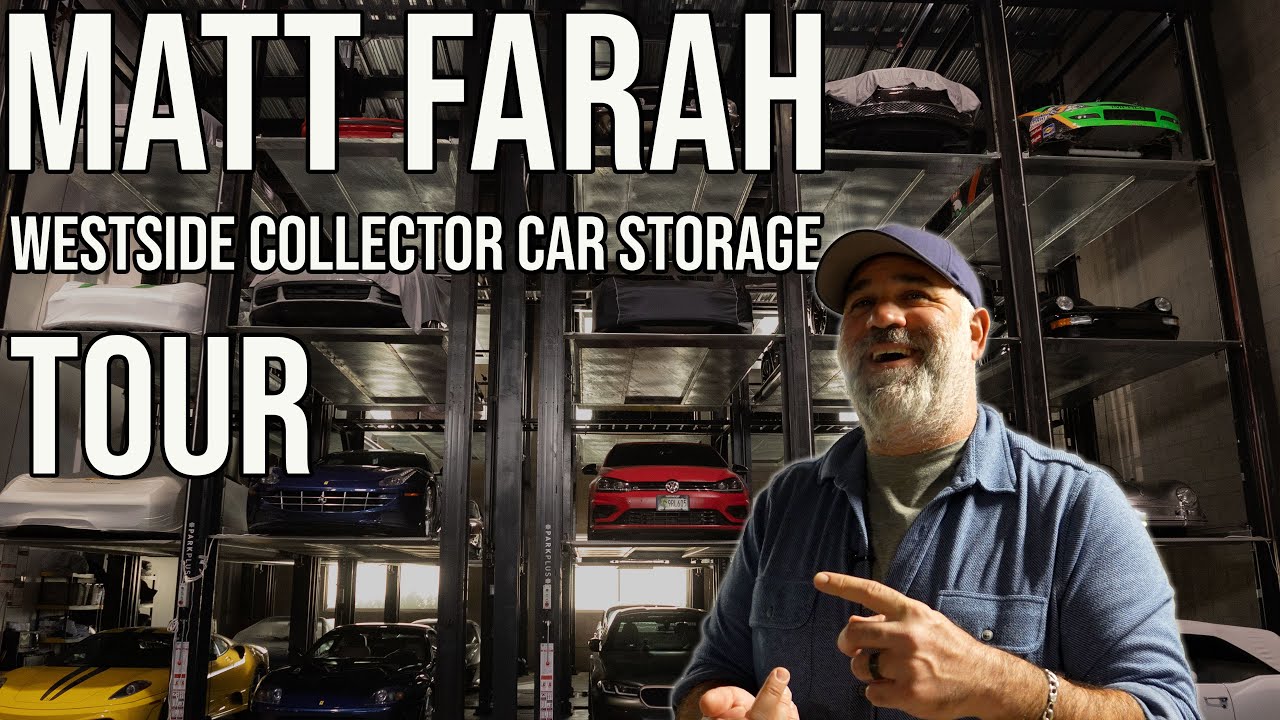
Matt walks through the cathedral room, explains the five engineering firsts, demonstrates the lift system, and tours the underground level, podcast studio, and member lounge.
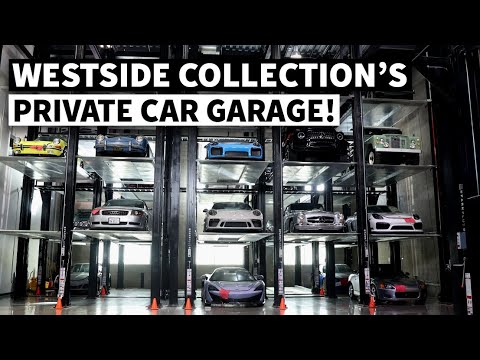
Photographer and filmmaker Larry Chen visits Westside Car Collectors Storage with Hoonigan Autofocus, covering the facility design, lift system, underground level, and the four-year engineering story behind the build.
Four years of engineering problems nobody had solved before
Matt Farah built Westside Car Collectors Storage from the ground up over four years. The decision to use QP1000 Quad Stackers introduced five structural and systems engineering challenges simultaneously — none of which had precedent in any prior quad stacker installation. Indoor installation at full four-level height. A basement directly beneath the cathedral room requiring a foundation engineered to carry the system load over a below-grade structure. Seismic compliance in one of the most earthquake-prone cities in the country. Battery tending to every storage level including the topmost positions. And per-level fire suppression — which required helping fund the fire department’s creation of new regulations, since no code existed for this building type.
The structural numbers tell the story: 30 inches of poured high-density concrete beneath the lift lines, 18 inches in general slab areas, a 36-inch underground foundation wall, and 14-inch shotcrete side walls. The amount of steel and concrete in the building is, in Matt’s own words, “wild.”
Purpose-built for every constraint — foundation, seismic, fire, and power
ParkPlus worked with the Westside Car Collectors Storage project team to engineer a QP1000 installation that addressed all five constraints. The system was specified for a 45-foot indoor cathedral room, with full seismic engineering, a foundation purpose-built to support the system over the underground level, and fire suppression integrated down every lift column with dedicated nozzles at each storage level.
Three 20-horsepower hydraulic motors — each powering six lifts — drive the system. Battery tenders run to every storage position on a constant-tension roller system that keeps each tender connected through the full range of lift travel. Every car is maintained and ready regardless of where it sits in the stack.
The cathedral room stays between 55 degrees F in winter and 77 degrees F in summer — maintained passively through the sealed concrete structure, a white reflective roof, HEPA filtration, and a 36,000 CFM evacuation system. No mechanical air conditioning required. Effectively dust-free year-round.
System Specifications
Quad stacker parking lifts for collector car storage
What is a quad stacker parking lift and how does it work?
A quad stacker parking lift creates four independently accessible vehicle storage positions within the footprint of a single bay, stacking vehicles across four levels. The system uses tandem platforms on each side — the rear position is accessible by moving the front platform forward without removing any other car from the stack.
At Westside Car Collectors Storage, cars most likely to be driven are kept at lower levels, with longer-term storage vehicles positioned higher. Even retrieving a car from the furthest, highest position takes approximately 10 minutes. Staff manage all lift operations for members.
Can quad stacker parking lifts be installed in seismic zones?
Yes, with appropriate seismic engineering. The system must be designed for lateral seismic loads, affecting both the lift anchoring and foundation requirements. ParkPlus engineers seismic-compliant installations for California and other high-seismicity markets.
Westside Car Collectors Storage was the first quad stacker installation ever completed in a seismic zone. The floor beneath the lift lines is 30 inches of poured high-density concrete, general slab areas are 18 inches thick, and the underground foundation uses 36-inch poured concrete walls — all engineered specifically for the seismic and load requirements of the QP1000 in this configuration.
What ceiling height is required for a quad stacker parking lift?
Quad stacker parking lifts require significantly more ceiling height than double or triple stackers, accommodating four vehicle levels plus mechanical clearance above the top platform. The exact requirement depends on the vehicle profile and system configuration. ParkPlus assesses ceiling height, structural loading, and spatial layout during the design phase of every project.
The cathedral room at Westside Car Collectors Storage was built to a 45-foot ceiling height specifically for the QP1000 system. Ceiling height requirements should be confirmed with ParkPlus during early project design.
How is fire suppression handled on a quad stacker system?
Standard overhead sprinklers cannot reach vehicles on elevated quad stacker platforms. The solution is fire suppression lines running down the lift columns with dedicated nozzles at each storage level. At Westside Car Collectors Storage, all 18 QP1000 units have per-level fire suppression integrated into the lift structure — a configuration that required developing new fire regulations with the local fire department. A two-hour fire-rated wall separates the storage area from the lounge, office, and podcast studio.
What makes a collector car storage facility different from a standard parking garage?
Collector car storage facilities are designed around vehicles that require a higher standard of care — temperature regulation, battery management, per-level fire suppression, and on-demand retrieval without disturbing other vehicles. Westside Car Collectors Storage features battery tenders at every storage position on all four levels, per-level fire suppression on all lifts, passive temperature regulation at 55-77 degrees F year-round, and on-site staff managing all vehicle retrieval.
ParkPlus has completed quad and triple stacker installations for private collector facilities, car clubs, and specialty storage buildings nationally. View the full project portfolio.
Ready to discuss your project?
Every ParkPlus system is custom-engineered to the site. Talk to our team about your project requirements, site constraints, and system options.