
AGV Automated Parking System
The ParkPlus AGV automated robotic parking system delivers free-roaming, fully automated vehicle storage and retrieval with zero driver involvement.
How it works
The ParkPlus AGV automated robotic parking system uses battery-operated, omni-directional robotic vehicles guided by traffic management software, vision systems, and lasers to store and retrieve cars automatically. Designed for enclosed parking vaults, the system works above, on, and below grade in regular and irregular configurations to maximize capacity for any building footprint.
Driver pulls into the loading zone and exits the vehicle. No further action required.
The system is activated via touchscreen kiosk, mobile app, key fob, or remote control.
The AGV robot transfers the vehicle on its tray to the designated storage space in the vault.
When requested, the AGV retrieves the vehicle and presents it at the loading zone.
Why choose AGV automated robotic parking
No attendants required. Vehicles are stored and retrieved without any driver involvement beyond the loading zone.
Installs in regular and irregular floor plans, above grade, at grade, and below grade. Adapts to the building, not the other way around.
Proprietary software coordinates all robotic movement, optimizes throughput, and manages system-wide traffic in real time.
Touchscreen kiosk, mobile app, key fob, and remote control give operators and users flexible access methods.
Integrated monitoring with remote access for continuous oversight and rapid response.
ADA van-accessible loading zones can be accommodated. Coordinate with local planning and building departments.
What’s included
The AGV Parking System is built around six integrated components working together.
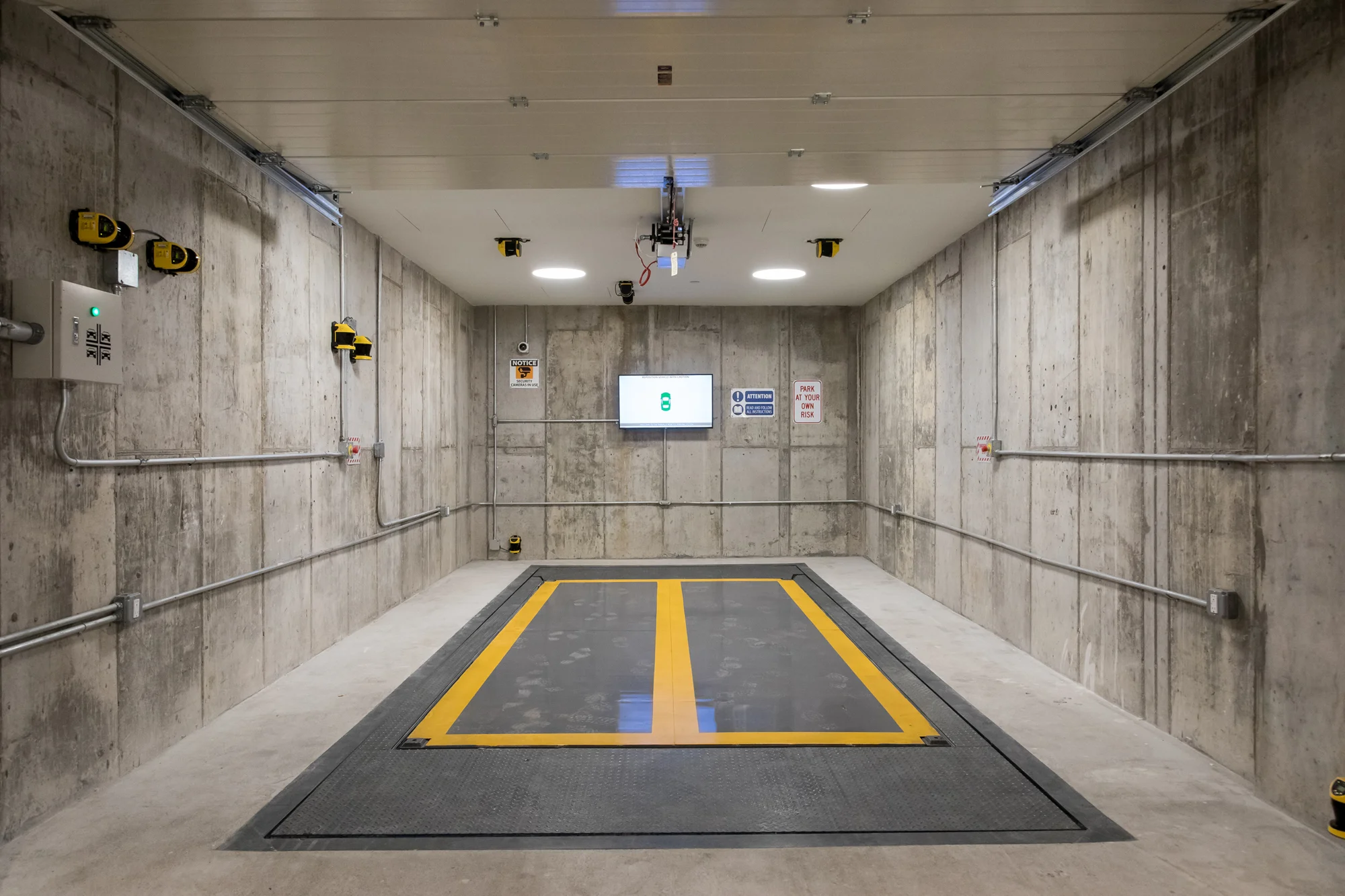
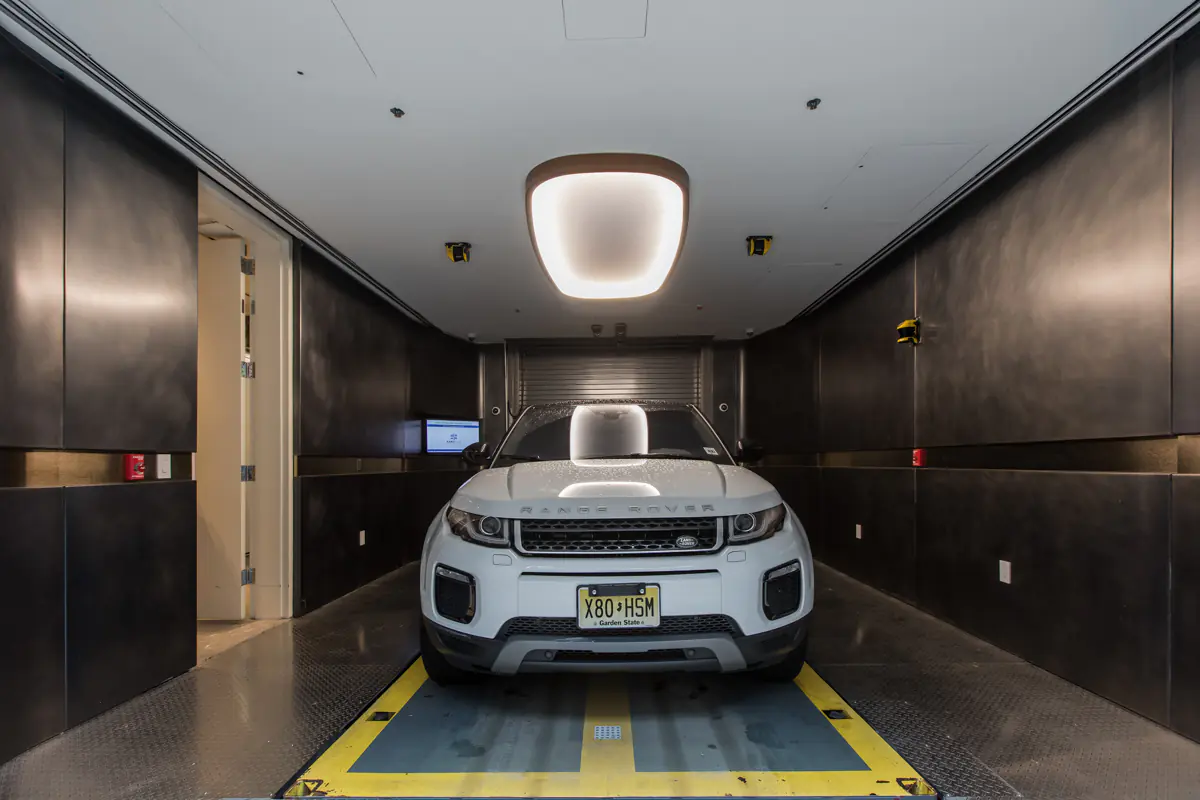
Loading Zone
Entry and exit area where drivers park and retrieve their vehicle. Available in standard and ADA van-accessible configurations.
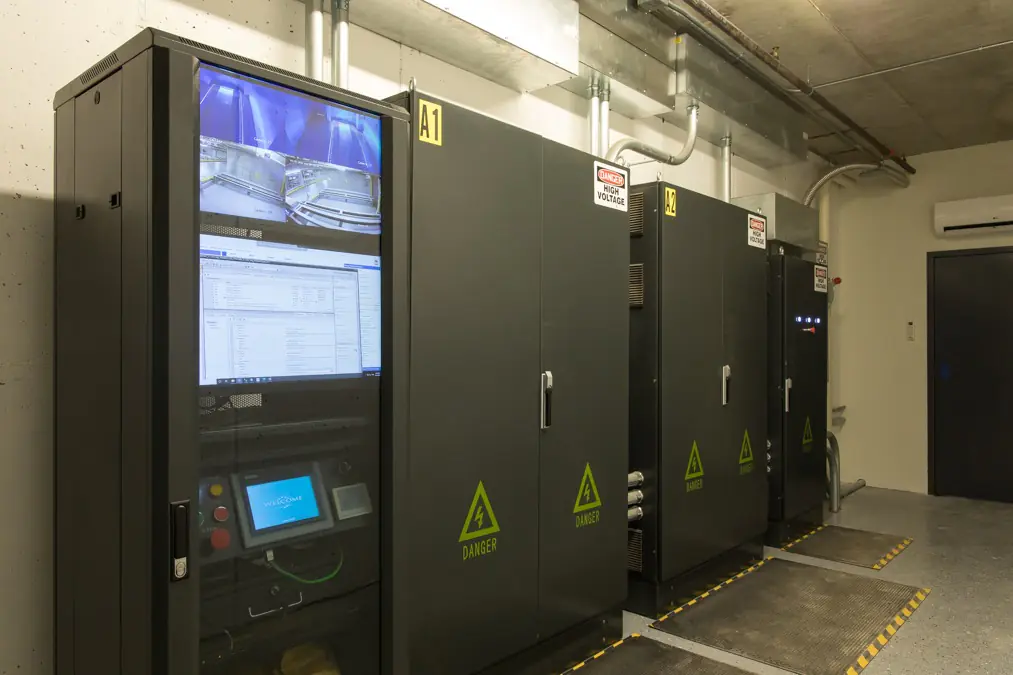
Control System
The ParkPlus Maestro Traffic Management Platform coordinates all automated storage, retrieval, and robotic movement.
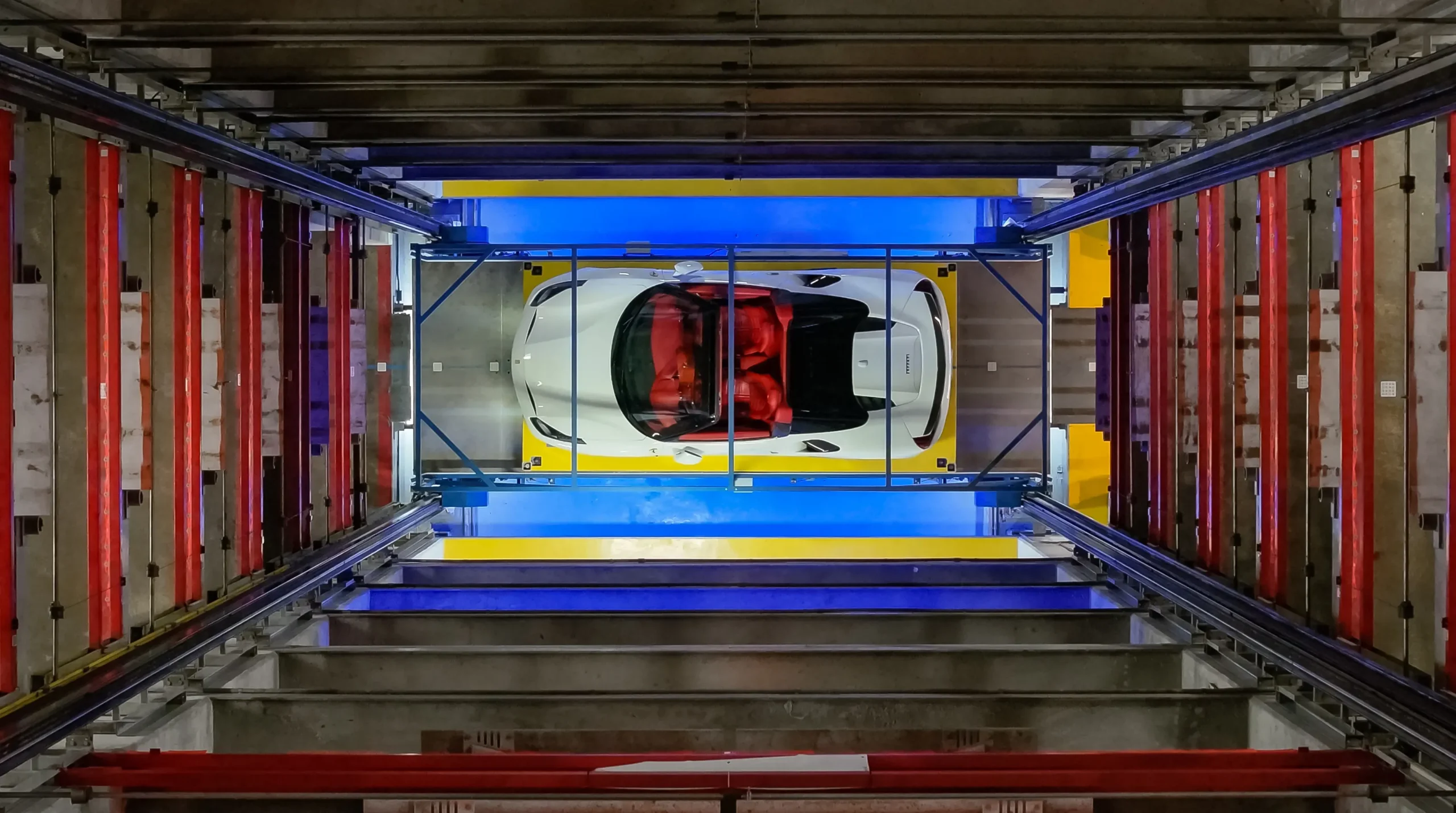
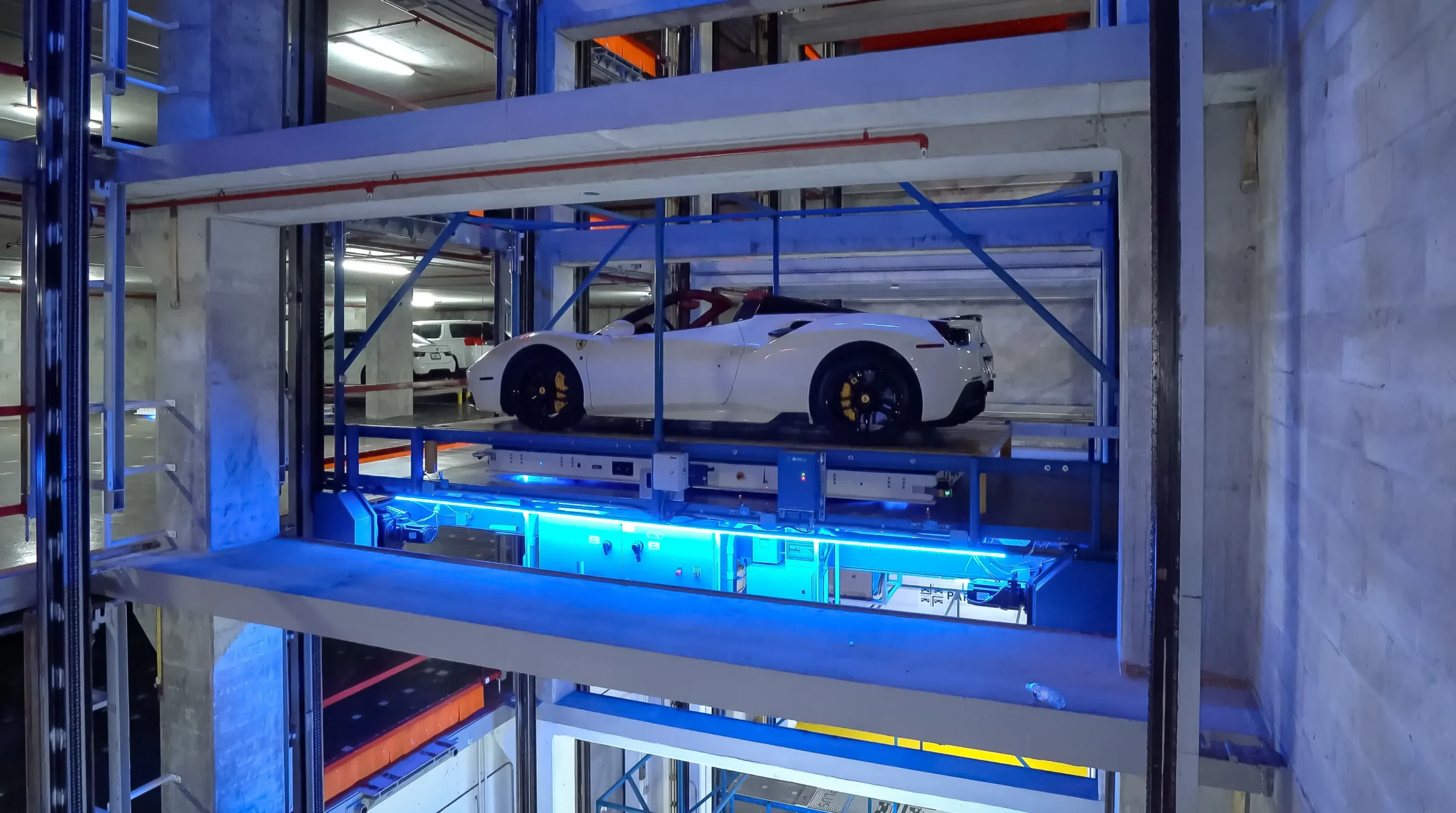
Vertical Reciprocating Conveyor (VRC)
Car lift that transports vehicles between floors and levels within the storage vault.
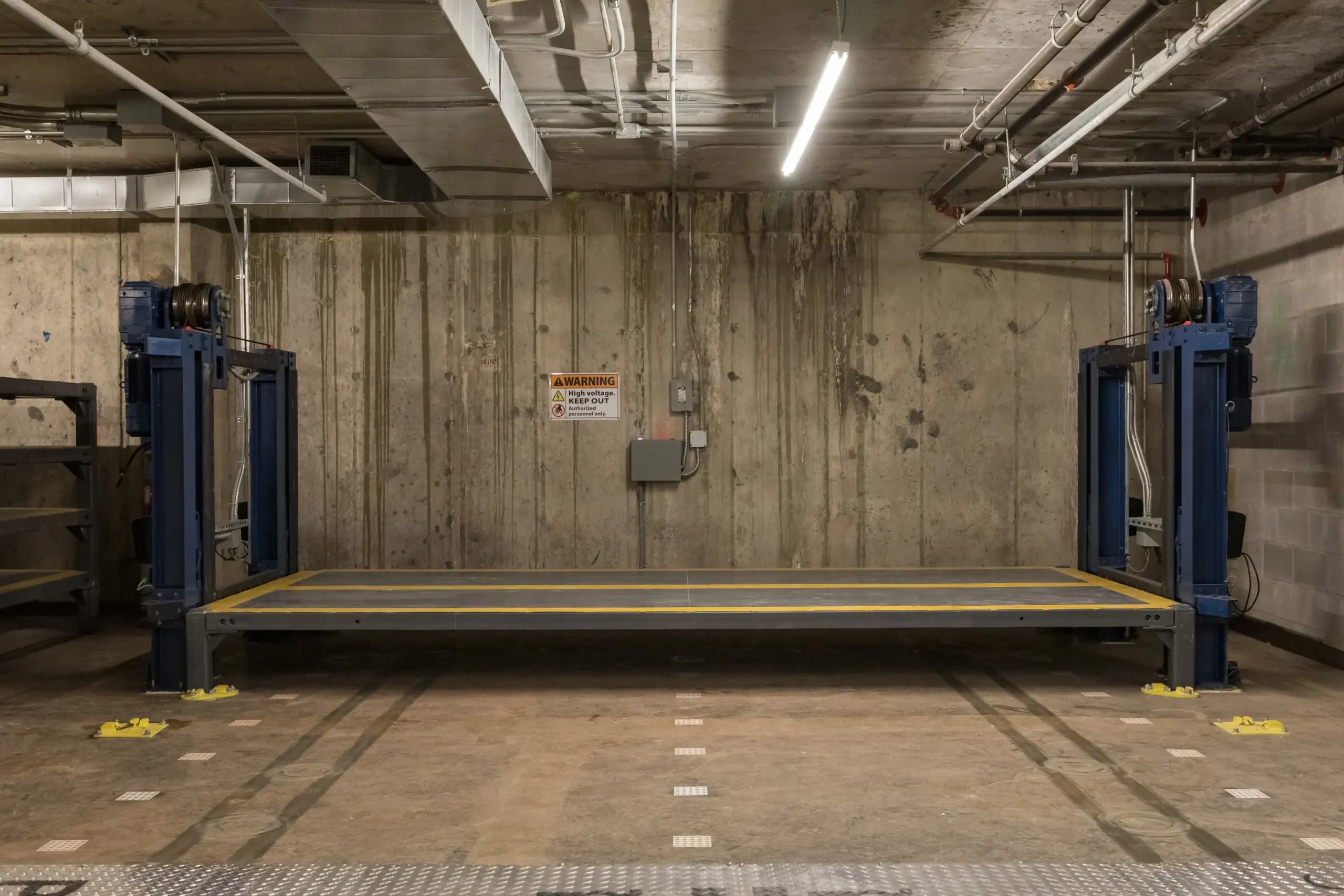
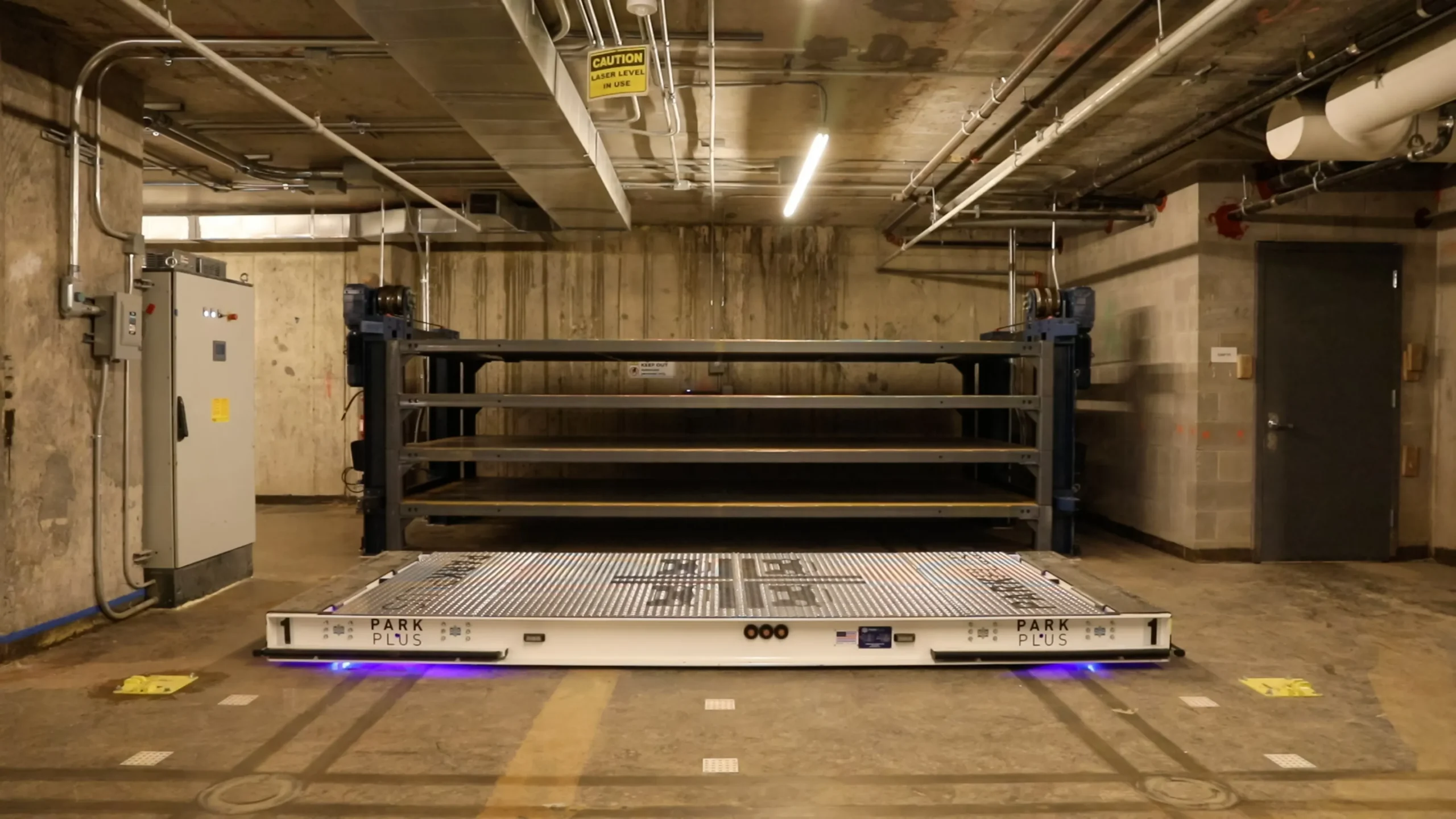
Tray Accumulator
Stacks vehicle trays to maximize storage efficiency within the vault.
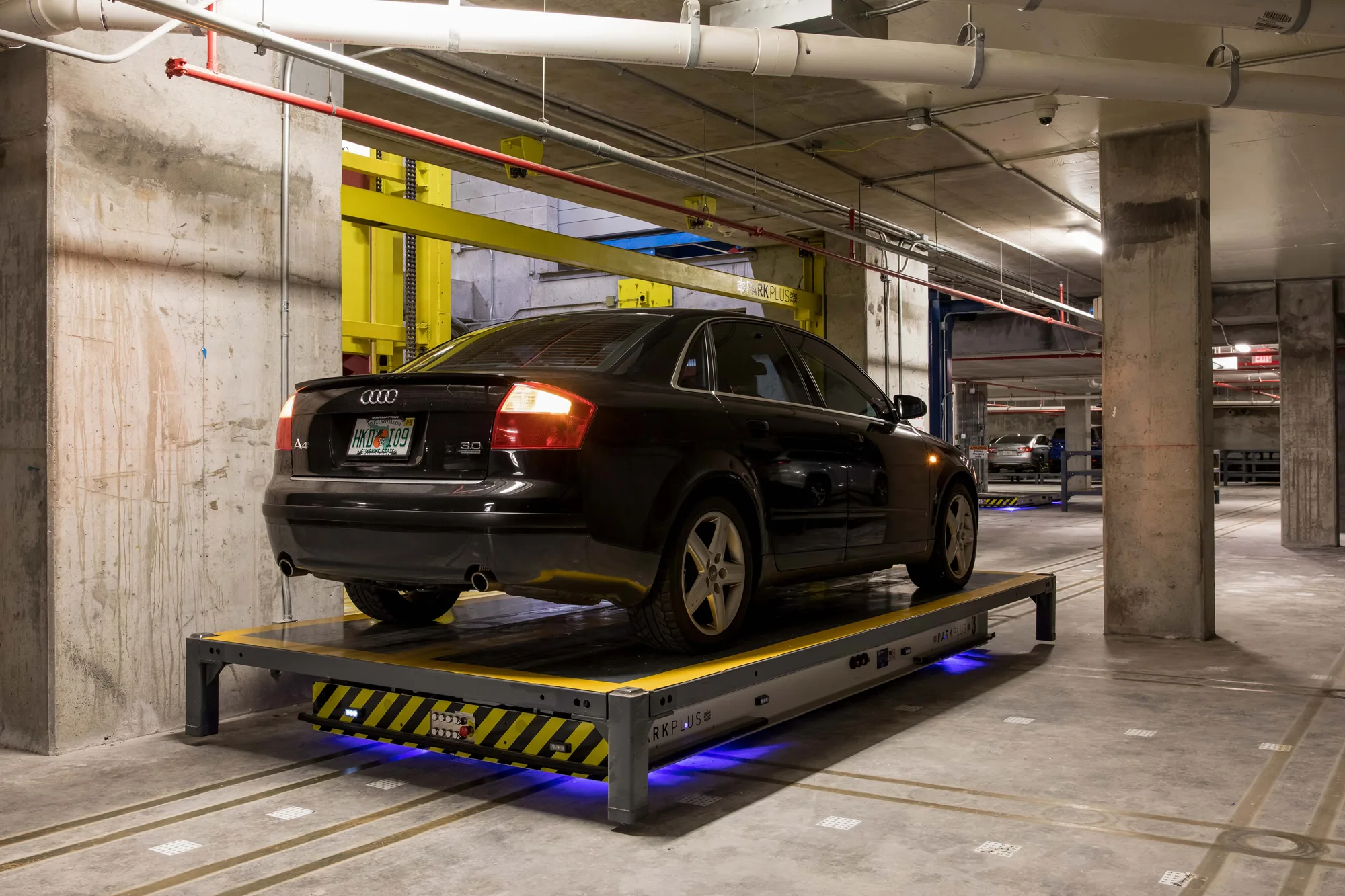
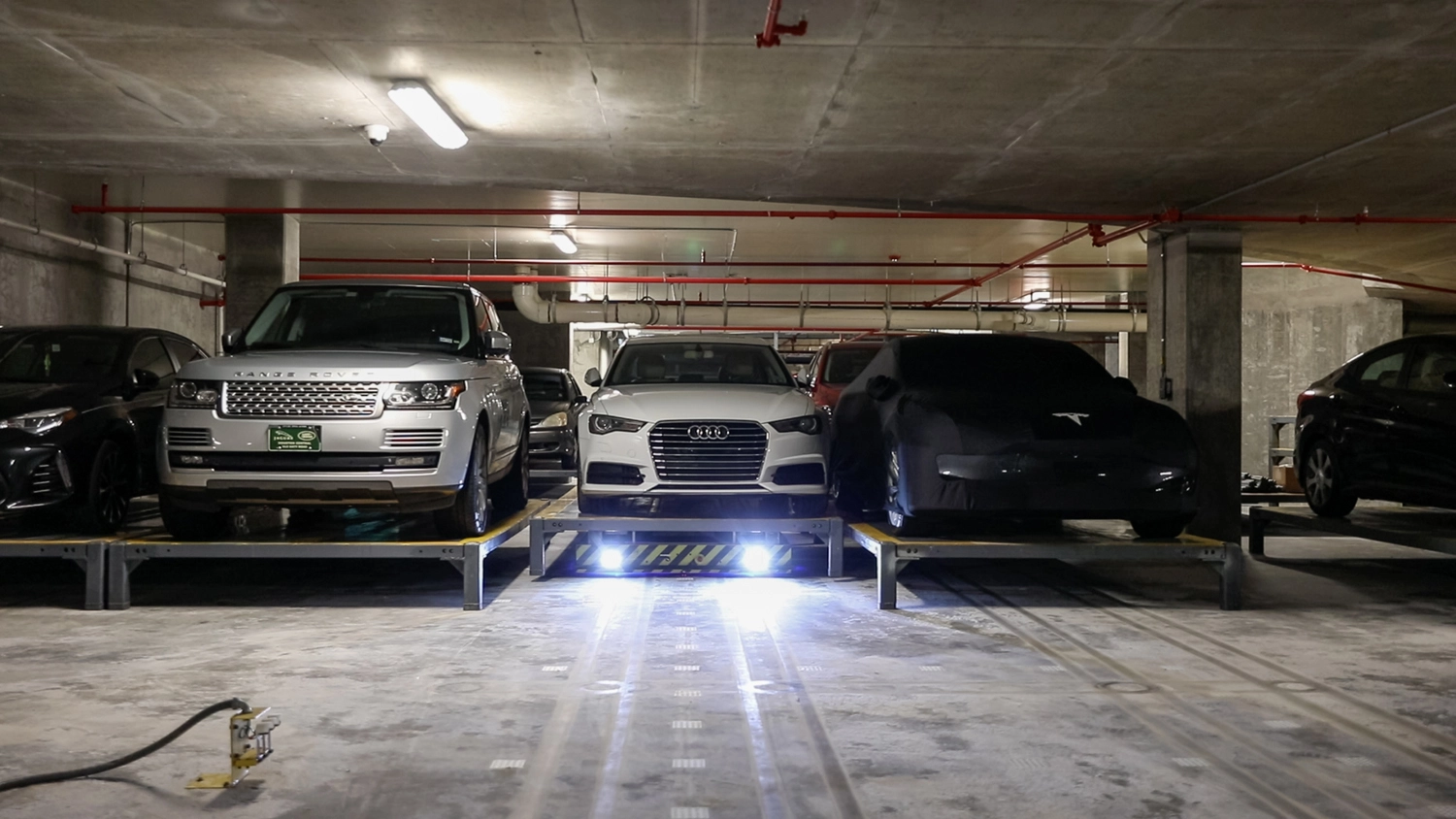
Vehicle Storage Tray
The platform each vehicle parks on. Handled by the AGV to transfer vehicles to and from the storage vault.
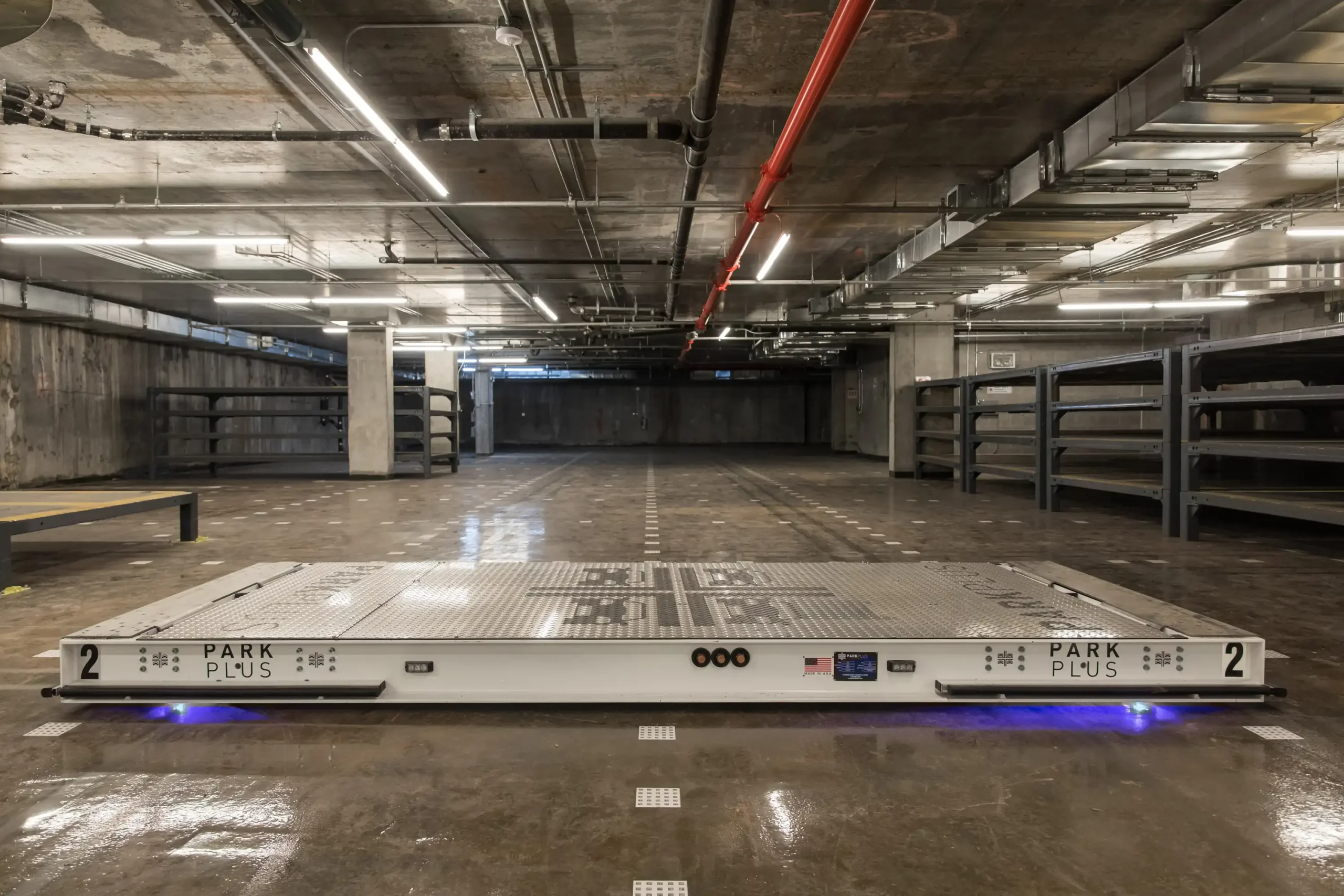
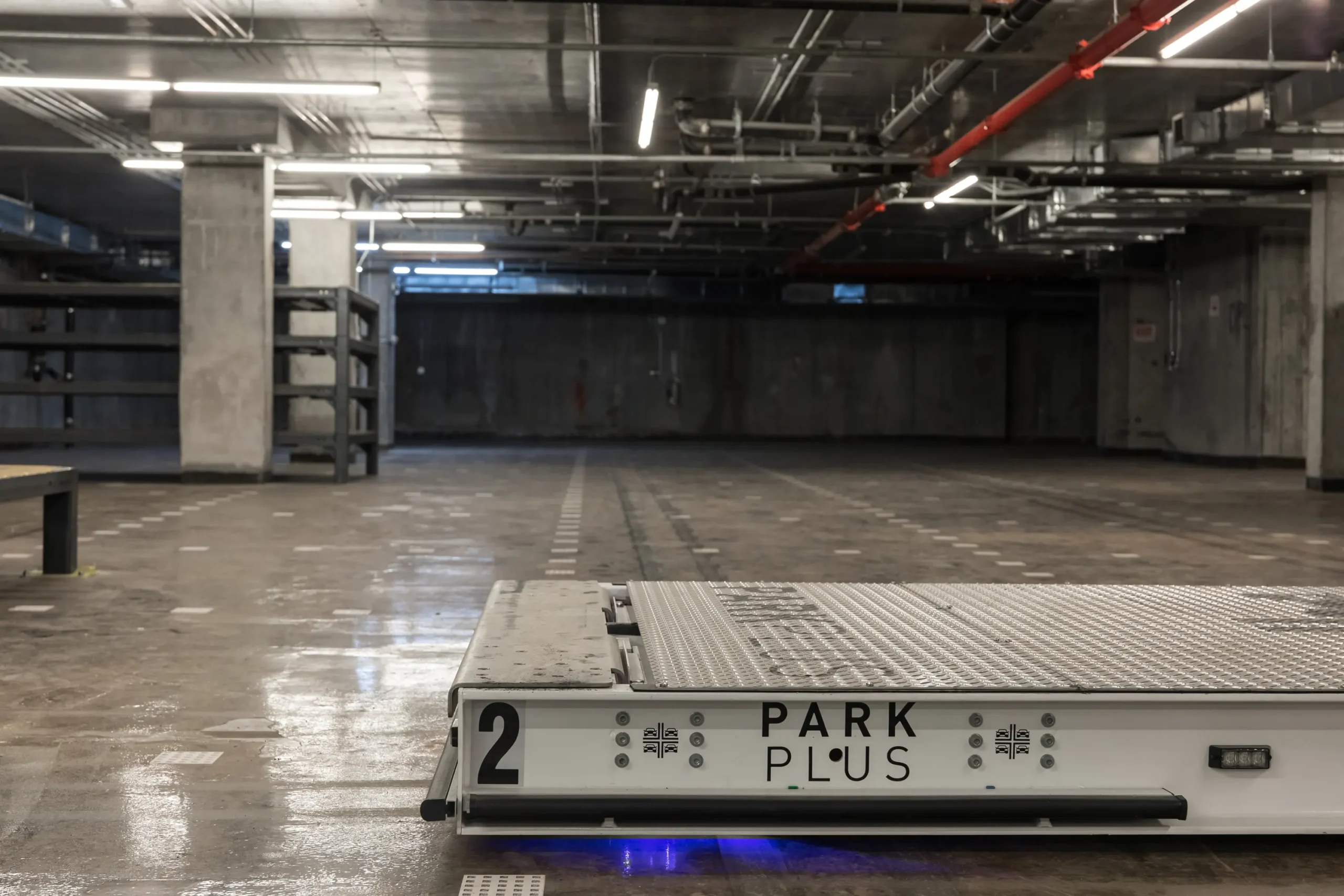
Automated Guided Vehicle (AGV)
The battery-operated robotic device that moves vehicles through the system using vision systems, lasers, and proprietary guidance software.
Built to perform
Every AGV system is engineered and manufactured in-house to the specific demands of each project.
| Vehicle Load | 6,000 lbs. max. |
| Vehicle Length | 18′ max. |
| Vehicle Width | 7′-3″ max. |
| Vehicle Height | 6′-8″ max. |
| Power | 208V, 3 Phase. Approx. 300 to 1,000 Amps depending on system size. |
| Control Options | Touchscreen Kiosk, Mobile App (optional), Key Fob (optional), Remote Control (optional) |
| Operating Temp. | 50°F to 105°F |
| Operating Humidity | 50% max. |
| Warranty | 12-month standard manufacturer’s warranty. Extended warranty and service maintenance agreement available. |
Plan Your Project
Every AGV installation is engineered to the specific demands of the project. Contact ParkPlus to discuss capacity requirements, floor plan configuration, and lead times.
Start a ConversationEV charging ready
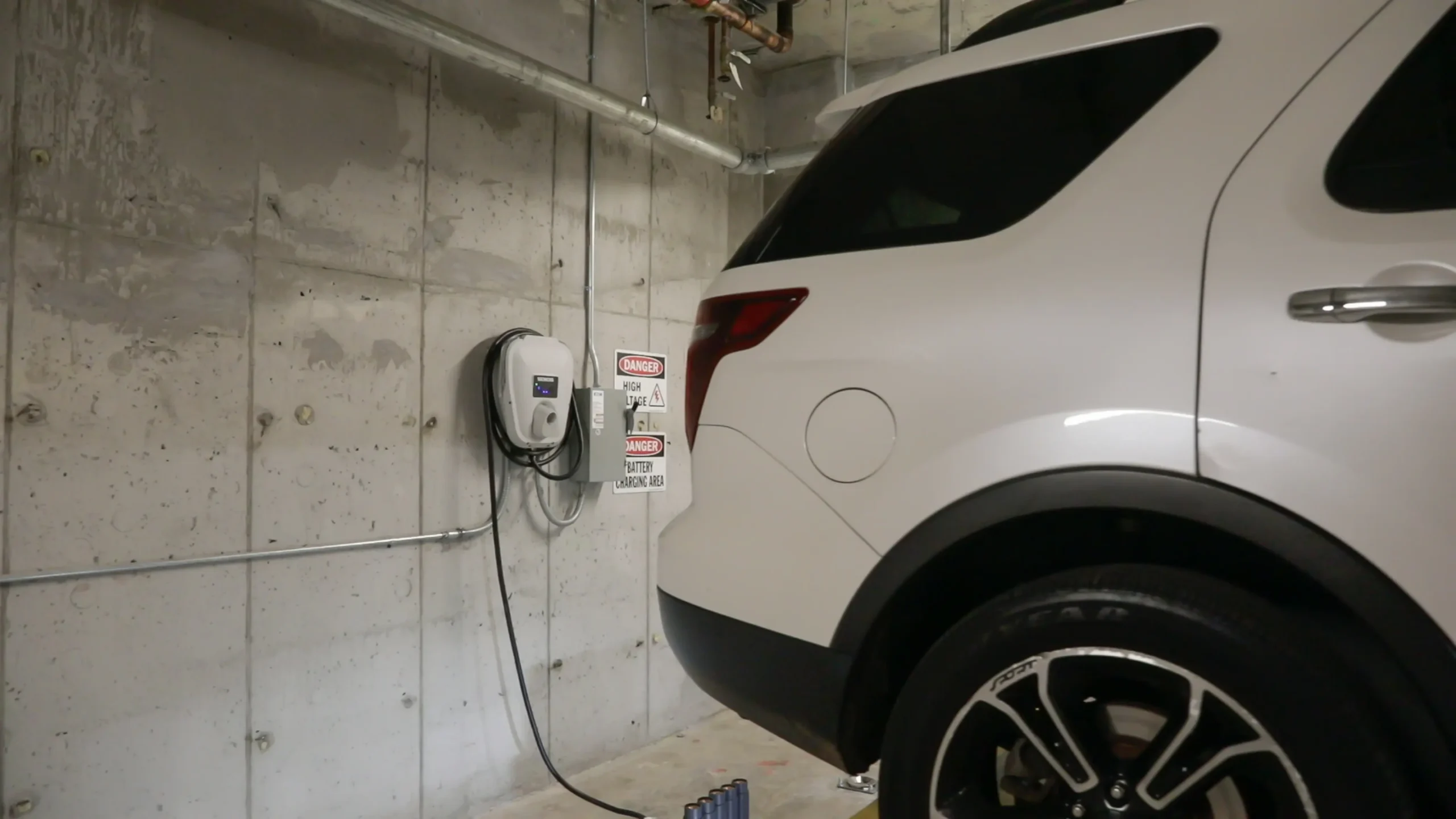
The AGV system supports integrated EV charging. Charging stations connect to vehicles automatically when the storage tray arrives at its designated parking space in the vault.
EV charging spaces are dedicated to individual users and can be metered for billing and reimbursement. The system is compatible with SAE J1772-compliant vehicles.
Contact ParkPlus for project-specific EV charging requirements and current specifications.
Certified across America
The AGV system meets the most demanding building codes in the United States, with certifications in the country’s largest and most regulated markets.
System Safety
The AGV system includes visual and audible alarms, emergency stops, and sensors that confirm vehicle positioning before any movement begins. Motion detectors and lasers halt operation if an obstruction is detected. The system requires an operator reset following any emergency stop. Limit switches control motion boundaries at all levels. An optional secondary safety gate system is available. All sensor signals, door signals, and PLC program logic ensure the system operates only as programmed. Manual override capability is included.
Fire Protection
In most metropolitan areas, automated parking systems are reviewed similarly to high-piled storage. Fire rating of structural racking components is generally not required. Sprinkler systems may be required per local code. Sprinkler plans must be filed and approved by the local municipality and designed to NFPA 13 standards. Clear building height must accommodate equipment height plus sprinkler coverage requirements. Each jurisdiction may have different fire department guidelines.
Certifications
- OTCR Compliant — City of New York
- Los Angeles County Approved
- ISO Compliant
- California Seismic Code Compliant
- Miami-Dade County Compliant
- Approved in multiple U.S. cities
Where the AGV works
The AGV automated robotic parking system is designed for enclosed, self-park installations including:
Multi-Family Residential Buildings
Apartments, condominiums, and residential developments where maximizing parking within a limited footprint is critical.
Low and High Rise Buildings
Works above, on, and below grade in regular and irregular configurations. Adapts to any building footprint.
Indoor Installations
Enclosed parking vaults designed for controlled environments. Operating temperature range of 50°F to 105°F.
Commercial Buildings
Offices, mixed-use developments, and commercial properties where capacity needs to increase without expanding footprint.
See what automated parking changes
Enter your project parameters to compare a conventional parking structure against an AGV automated system. Every project is site-specific — use this as a starting point, then talk to us for a detailed analysis.
Above-grade structure. Adjust the construction cost benchmark below for your market.
Above-grade national median $29,900/space (WGI, drawing from the AIA Architecture Billings Index). Adjust for your market.
Industry range $400 to $600 per space per year (NAIOP). Adjust for your market.
Above-grade conventional construction $50/sq ft (AIA Course: High-Density Parking Systems, Slide 30). Adjust for your market.
Every project is different. Industry averages: ~220 sq ft/space above-grade, ~250 sq ft/space below-grade. Adjust for your system layout and site.
Construction cost benchmarks: above-grade median $29,900/space (WGI Annual Parking Structure Cost Outlook, drawing from the AIA Architecture Billings Index); below-grade $50,000/space (national range $25,000–$50,000/space; urban markets typically $65,000–$100,000+). Footprint estimates and construction cost per sq ft per AIA Course: High-Density Parking Systems (Slide 30). Operational cost benchmark $400–$600/space/year (NAIOP). AGV system cost is not included — every automated project is custom-engineered to site. Figures are illustrative. Actual savings vary by location, site conditions, system configuration, and project scope. Contact us for a project-specific analysis.
Ready to explore the AGV system for your project?
ParkPlus handles every stage of AGV automated robotic parking: design, engineering, manufacturing, installation, and service. Let’s talk about what the system can do for your building.